Martin Luther — "Their prayer books and Talmudic writings, in which such idolatry, lies, cursing,…"
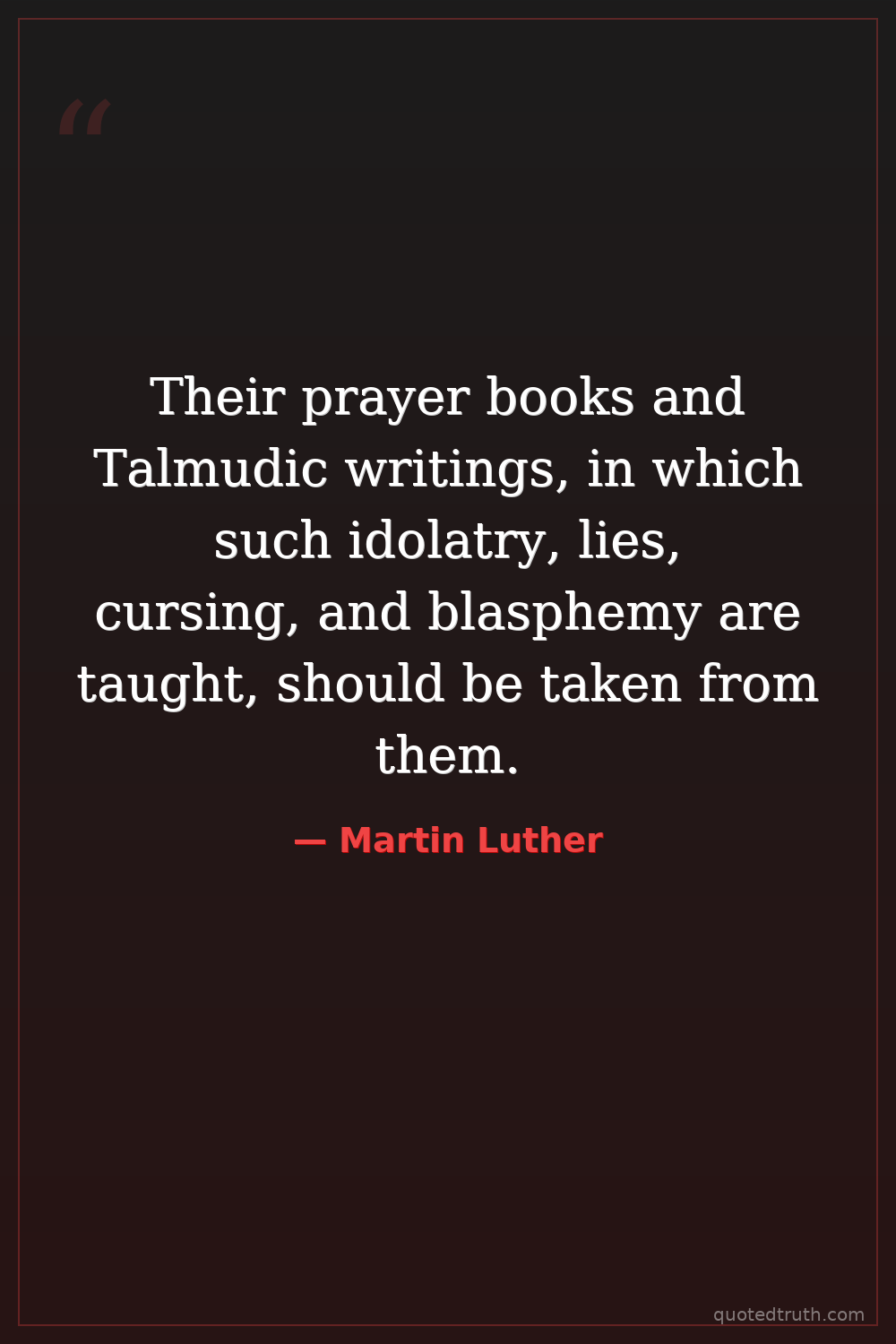
Their prayer books and Talmudic writings, in which such idolatry, lies, cursing, and blasphemy are taught, should be taken from them.
Their prayer books and Talmudic writings, in which such idolatry, lies, cursing, and blasphemy are taught, should be taken from them.
Click any product to generate a realistic preview. Up to 3 at a time.
* Initial load can take up to 90 seconds — revising the preview in another color is nearly instant.
"A man should not lie with his wife before she has been three nights in bed."
"God foreknows nothing by contingency, but that He foresees, purposes, and does all things according to His immutable, eternal, and infallible will. By this thunderbolt, 'Free-will' is thrown prostrate…"
"The hair is the finest ornament women have."
"The Devil is a great artist, but he has no colors."
"Fourthly, their rabbis must be forbidden under threat of death to teach any more."
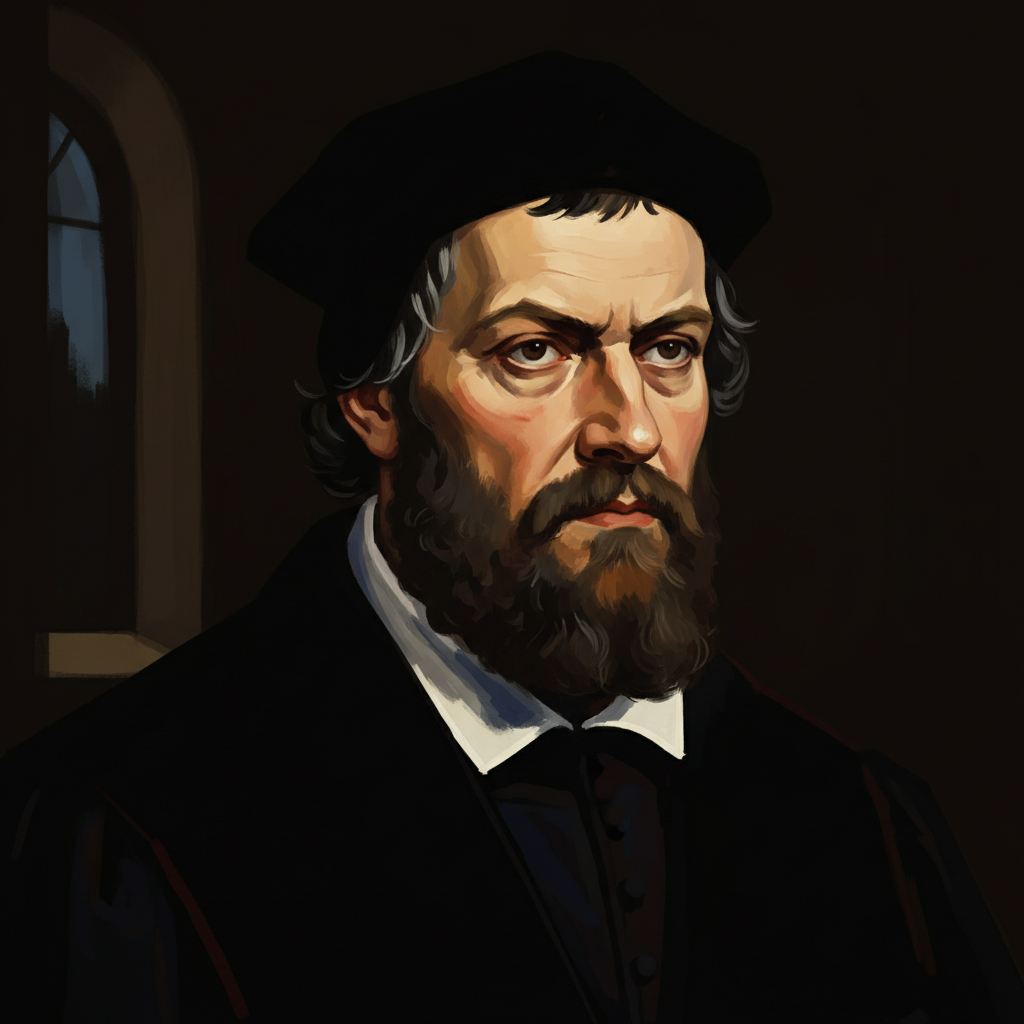
German theologian whose 95 Theses (1517) launched the Protestant Reformation and broke the Catholic Church's monopoly on Western Christianity. Closely associated with Philipp Melanchthon (Lutheran systematizer) and John Calvin (later Reformer who built on Luther's break). For an intellectual contrast, see Pope Leo X, Renaissance pope (1513-1521) — Leo X's indulgence sales triggered Luther's break and Leo excommunicated him in 1521 — Luther's entire Reformation is structured as a direct answer to the indulgence-funded Vatican Leo represented.
Found in 1 providers: gemini
1 source checked
This statement calls for confiscating Jewish religious texts, claiming they contain false worship, lies, curses, and insults against Christianity. The speaker argues that removing these books is justified because the teachings inside are harmful and sacrilegious. In plain terms, it advocates stripping a religious minority of their scriptures and scholarly writings on the grounds that the content itself is dangerous and offensive to the dominant faith.
Luther wrote this in his 1543 treatise On the Jews and Their Lies, late in his life after decades of failed attempts to convert Jews to his reformed Christianity. Once sympathetic in his 1523 essay, his bitterness hardened into explicit calls for burning synagogues, seizing texts, and expelling Jewish communities. This shows the darker side of the reformer whose theology reshaped Europe but whose anti-Jewish writings were later weaponized by Nazi propagandists.
Early modern Europe was convulsed by the Protestant Reformation Luther had ignited in 1517, fracturing Christendom into warring confessions. Jewish communities lived precariously under expulsion edicts across Spain, England, and many German territories. Religious identity defined civic belonging, and printed polemics spread rapidly via Gutenberg's press. Luther wrote amid wars of religion, peasant uprisings, and Ottoman pressure on Vienna, when theological disputes routinely escalated into state-sanctioned violence against minorities.
AI-generated insights based on extensive research and information for context. Factual errors? Email [email protected].
Your cart is empty