John Calvin — "Servetus suffered the penalty due his heresies, but was it by my will. Certainly…"
Servetus suffered the penalty due his heresies, but was it by my will. Certainly his arrogance destroyed him not less than his impiety.
Servetus suffered the penalty due his heresies, but was it by my will. Certainly his arrogance destroyed him not less than his impiety.
Click any product to generate a realistic preview. Up to 3 at a time.
* Initial load can take up to 90 seconds — revising the preview in another color is nearly instant.
"It is not enough to have a good cause, but we must also have a good conscience."
"But if we are elected in Christ, we cannot find in ourselves the reason of our election; neither can we, by any means, comprehend it in our own understanding."
"I am unwilling to pledge my word for his safety, for if he shall come [to Geneva], I shall never permit him to depart alive, provided my authority be of any avail."
"He who has God for his father has the church for his mother."
"The salvation of the elect depends on the free election of God."
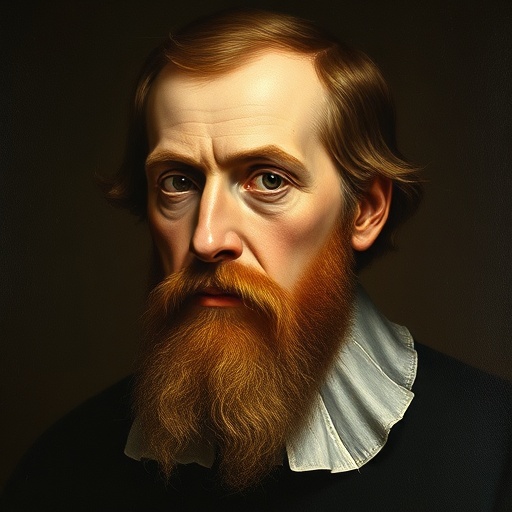
French theologian whose Institutes of the Christian Religion (1536) systematized Protestant Reformed doctrine, including predestination. Closely associated with Martin Luther (Reformation founder, Calvin's predecessor). For an intellectual contrast, see Jacobus Arminius, Dutch Reformed theologian (1560-1609) — Arminius's rejection of strict double-predestination founded Arminianism — the theological tradition modern Methodism, most evangelicalism, and Pentecostalism descend from. The Calvinist-Arminian debate has divided Protestantism for 400 years.
Found in 1 providers: gemini
1 source checked
Calvin acknowledges Servetus was justly executed for heresy but distances himself from personal blame. He argues Servetus's own arrogance—his refusal to recant, his combative spirit—contributed equally to his fate alongside his theological errors. It's a rhetorical move: Calvin accepts the verdict as right but rejects sole ownership of the outcome, framing the execution as justice rather than personal vendetta.
Calvin built Geneva into a Reformed theocracy where doctrinal precision was a civic duty. He had personally engaged Servetus in correspondence and arranged his arrest. Yet Calvin was acutely sensitive to charges of tyranny; he lobbied for beheading over burning as a mercy. This quote reveals his characteristic tension—absolute confidence in Reformed doctrine combined with a need to justify himself against accusations of cruelty and overreach.
In 1553, heresy was a capital crime across Catholic and Protestant Europe alike. The Servetus execution shocked reformers like Sebastian Castellio, sparking the first major Western argument for religious toleration. Reformation Europe treated theological deviance as civic treason—Geneva's city council, not Calvin alone, voted to burn Servetus. The case forced Protestant Europe to confront whether the Reformation had simply replaced one form of doctrinal coercion with another.
AI-generated insights based on extensive research and information for context. Factual errors? Email [email protected].
Your cart is empty