John Calvin — "Therefore, the bondage of the will to sin remains and yet such slavery is a volu…"
Therefore, the bondage of the will to sin remains and yet such slavery is a voluntary and willful captivity.
Therefore, the bondage of the will to sin remains and yet such slavery is a voluntary and willful captivity.
Click any product to generate a realistic preview. Up to 3 at a time.
* Initial load can take up to 90 seconds — revising the preview in another color is nearly instant.
"Our salvation depends on the free election of God."
"God's sovereignty is absolute."
"Many people have accused me of such ferocious cruelty that I would like to kill again the man I have destroyed. Not only am I indifferent to their comments, but I rejoice in the fact that they spit in…"
"The human mind is, so to speak, a perpetual forge of idols."
"We shall never be clearly persuaded, as we ought to be, that our salvation flows from the wellspring of God's free mercy until we come to know his eternal election, which illumines God's grace by this…"
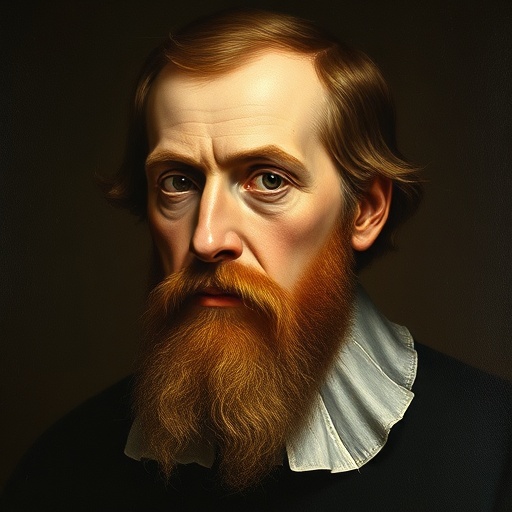
French theologian whose Institutes of the Christian Religion (1536) systematized Protestant Reformed doctrine, including predestination. Closely associated with Martin Luther (Reformation founder, Calvin's predecessor). For an intellectual contrast, see Jacobus Arminius, Dutch Reformed theologian (1560-1609) — Arminius's rejection of strict double-predestination founded Arminianism — the theological tradition modern Methodism, most evangelicalism, and Pentecostalism descend from. The Calvinist-Arminian debate has divided Protestantism for 400 years.
Institutes of the Christian Religion, Book II, Chapter 3, Section 5
Date: 1559
Social & RacialFound in 1 providers: gemini
1 source checked
Humans are enslaved to sin — incapable on their own of genuinely choosing good or obeying God — yet this captivity is not imposed from outside against their wishes. Sinners willingly sin because their corrupted nature desires it. The paradox is that complete bondage coexists with complete willingness. You cannot escape sin unaided, yet you are no reluctant prisoner — you embrace it. Only divine grace can reorient the will itself toward genuine freedom.
Calvin built his entire theological system on this tension. His Institutes of the Christian Religion devoted extensive chapters to total depravity and the enslaved will, following Augustine and Luther. As Geneva's reformer shaping both church and civil governance, he held this doctrine foundational: without grasping humanity's radical inability to choose good independently, God's sovereign grace and predestination become unnecessary. He wrote directly against Erasmus's position that humans retain some cooperative moral freedom toward salvation.
The 16th-century Reformation made free will the defining theological battleground. Luther's 1525 treatise against Erasmus set the terms Calvin inherited. Renaissance humanism simultaneously celebrated human agency and reason, making radical depravity claims culturally provocative. The Council of Trent formally defended human cooperative will in salvation as a Catholic counter-position. Religious wars fractured Europe along these doctrinal lines, giving Calvin's abstract claim about sinful captivity urgent political and social consequences inside his Reformed Geneva experiment.
AI-generated insights based on extensive research and information for context. Factual errors? Email [email protected].
Your cart is empty