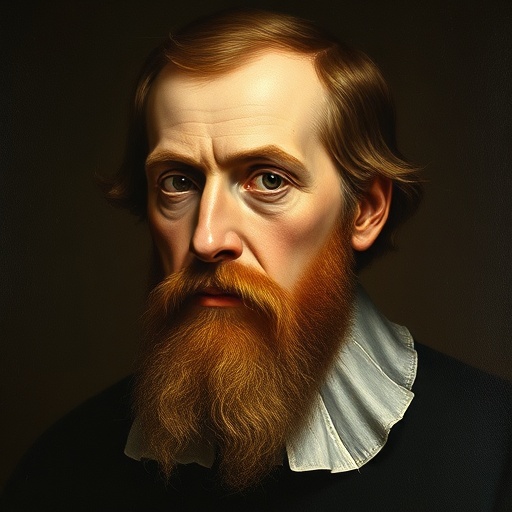
John Calvin — "All events are governed by the secret counsel of God."
All events are governed by the secret counsel of God.
All events are governed by the secret counsel of God.
Click any product to generate a realistic preview. Up to 3 at a time.
* Initial load can take up to 90 seconds — revising the preview in another color is nearly instant.
"...those whom God passes over [praeterit], he condemns [reprobat]; and this he does for no other reason than that he wills to exclude them from the inheritance which he predestines [praedestinat] for …"
"The true way to learn God's will is to listen to his Word."
"The reprobate are not able to repent, because God does not give them the grace of repentance."
"God has no greater enemy than the proud man."
"Our salvation depends on the free election of God."
French theologian whose Institutes of the Christian Religion (1536) systematized Protestant Reformed doctrine, including predestination. Closely associated with Martin Luther (Reformation founder, Calvin's predecessor). For an intellectual contrast, see Jacobus Arminius, Dutch Reformed theologian (1560-1609) — Arminius's rejection of strict double-predestination founded Arminianism — the theological tradition modern Methodism, most evangelicalism, and Pentecostalism descend from. The Calvinist-Arminian debate has divided Protestantism for 400 years.
Found in 1 providers: deepseek
1 source checked
Nothing in the universe happens by chance or human will alone — every event, from the mundane to the catastrophic, unfolds according to God's hidden, sovereign plan. Whether war, death, prosperity, or personal failure, each outcome is already determined by divine decree. Human choices matter, but God's inscrutable will remains the ultimate cause behind everything that occurs in history and in individual life.
Calvin built his entire theological system — most fully expressed in the Institutes of the Christian Religion — on divine providence and predestination. Exiled from France for his Reformed faith, then governing Geneva's church-state for decades, he interpreted every political upheaval, plague, and personal hardship as God's purposeful hand. He believed God not only foreknew but actively decreed every outcome, making this statement the cornerstone of Calvinist theology.
Calvin lived during the Protestant Reformation (1509–1564), when Europe was fracturing from Catholic authority. Religious wars, plague, political executions, and collapsing medieval certainties made God's sovereignty a urgent question. The printing press spread competing theologies rapidly. Catholics, Lutherans, Anabaptists, and Reformed Christians each claimed divine backing. Calvin's insistence on God's total control offered stability and meaning amid a continent in violent, chaotic transformation.
AI-generated insights based on extensive research and information for context. Factual errors? Email [email protected].
Your cart is empty