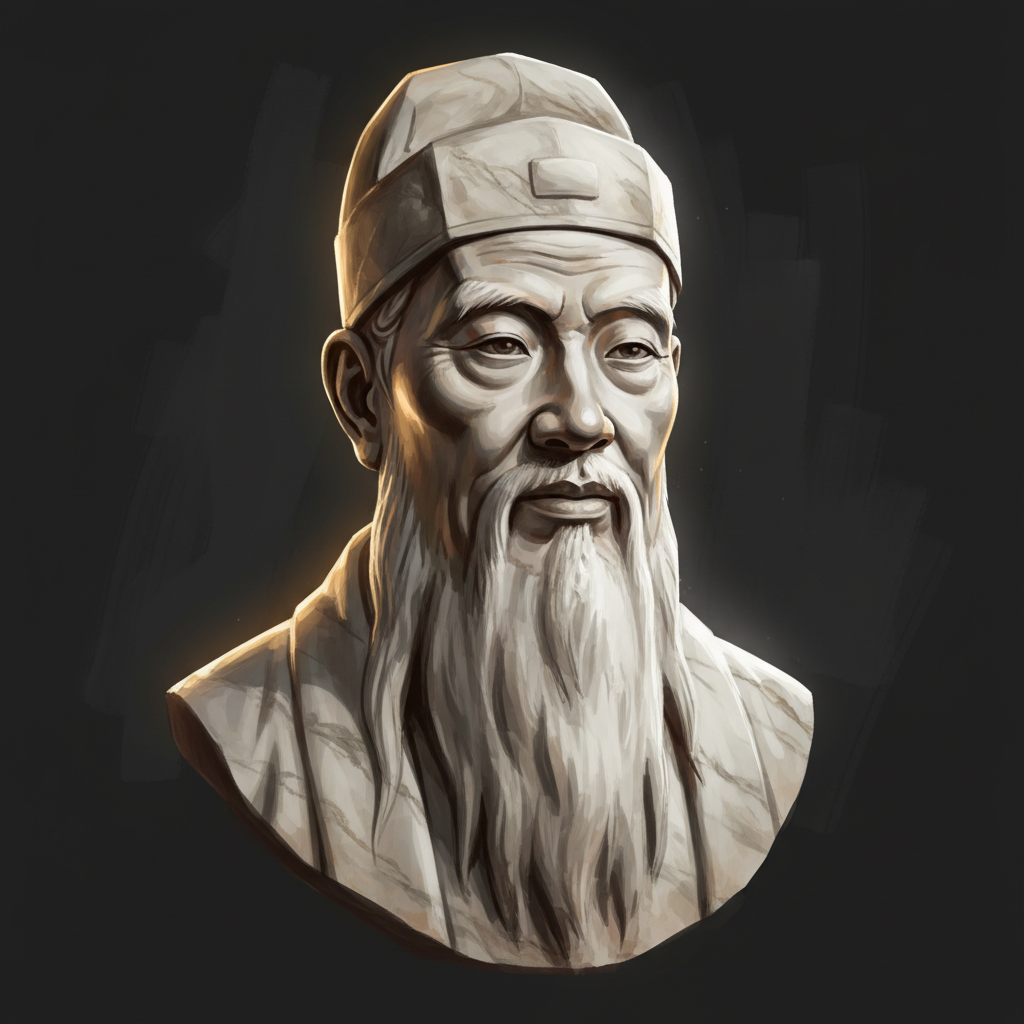
Confucius — "When you have faults, do not fear to abandon them."
When you have faults, do not fear to abandon them.
When you have faults, do not fear to abandon them.
Click any product to generate a realistic preview. Up to 3 at a time.
* Initial load can take up to 90 seconds — revising the preview in another color is nearly instant.
"The wise find pleasure in water; the virtuous find pleasure in mountains. The wise are active; the virtuous are tranquil. The wise are joyful; the virtuous are long-lived."
"Hold faithfulness and sincerity as first principles. Then no friends will be unlike yourself."
"The gentleman seeks to be slow in speech and earnest in action."
"The gentleman considers righteousness to be essential. He performs it according to the rules of propriety. He brings it forth in humility. He completes it with sincerity. This is indeed a gentleman."
"The superior man, in the world, does not set his mind either for anything, or against anything; what is right he will follow."
Chinese philosopher and teacher whose teachings (compiled by his students in the Analects) became the foundational ethical framework of East Asian civilization for 2,500 years. Closely associated with Mencius (his most-influential follower a century later). For an intellectual contrast, see Laozi, near-contemporary Chinese sage and Tao Te Ching author — Confucius systematized social order through ritual and family hierarchy; Laozi's Taoist effortless-action philosophy argued such systems were the disease, not the cure. The two founding poles of Chinese moral philosophy — every East Asian moral tradition since has positioned itself between them.
The standard scholarly entry points to Confucius's work: Philip J. Ivanhoe (Georgetown, Chinese philosophy) — Confucian Moral Self Cultivation (2000); Edward Slingerland (UBC, Asian Studies) — Effortless Action: Wu-wei as Conceptual Metaphor (2003); Tu Weiming (Harvard, Confucian scholar) — Confucian Thought: Selfhood as Creative Transformation (1985). These are the works graduate seminars cite when teaching Confucius.
Found in 1 providers: grok
1 source checked
Owning your mistakes and correcting them takes courage, but clinging to them out of pride or fear only makes things worse. The advice is simple: when you notice a flaw in yourself, do not hesitate, rationalize, or double down. Let it go and change. Growth depends on the willingness to drop what is wrong, even when admitting the error feels uncomfortable or damaging to your self-image.
Confucius built his teachings around self-cultivation, moral honesty, and the lifelong project of becoming a junzi, or exemplary person. As a teacher and failed government advisor, he valued sincere self-correction over saving face, insisting rulers and students alike examine their own conduct daily. This line fits his emphasis on ren (humaneness) and yi (rightness), where virtue is a practice of continuous adjustment, not a fixed status earned once and defended forever.
Confucius lived during the late Spring and Autumn period (551–479 BCE), when the Zhou dynasty's authority was collapsing and rival states fought for dominance. Rituals were decaying, corruption was rampant, and rulers clung to power through image rather than merit. In that climate, urging people to openly abandon faults was radical. Confucius traveled between courts seeking leaders willing to reform themselves, believing social order could only be rebuilt through individual moral honesty starting at the top.
AI-generated insights based on extensive research and information for context. Factual errors? Email [email protected].
Your cart is empty