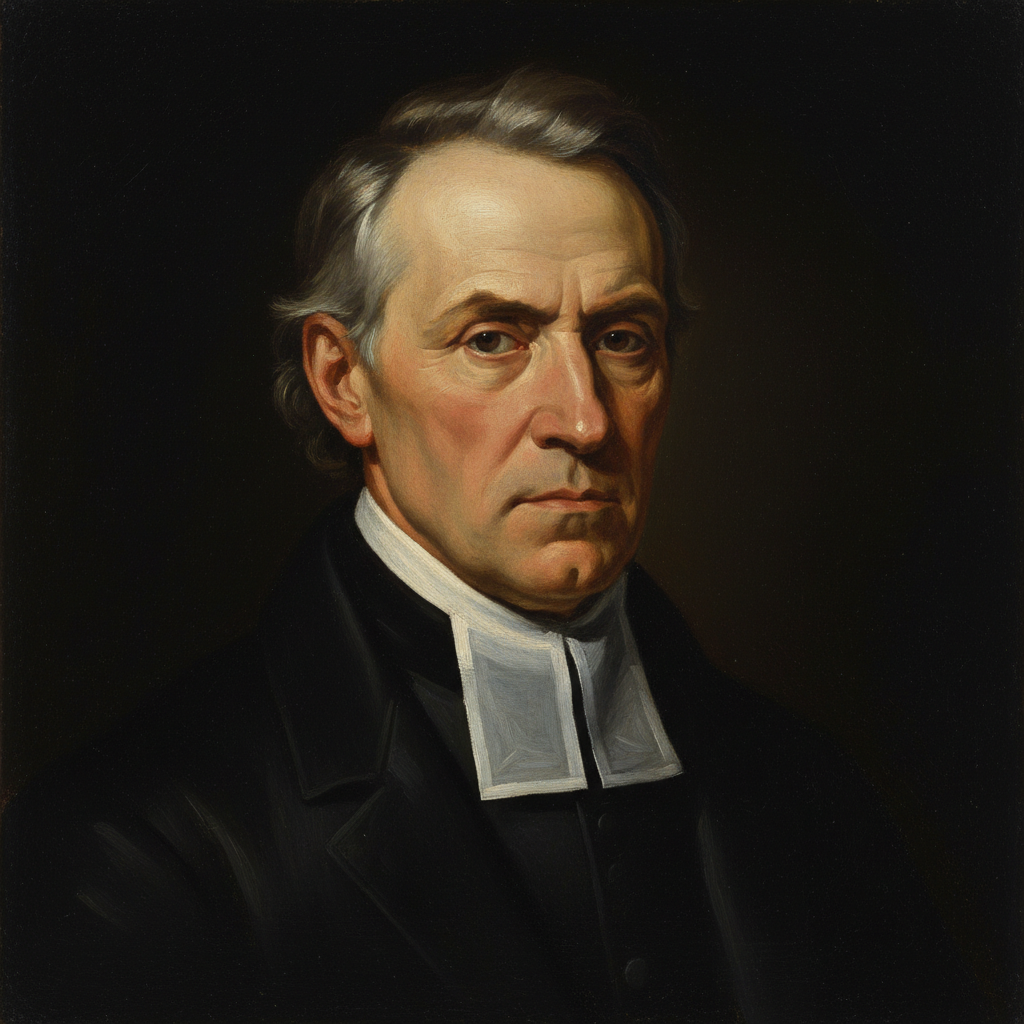
John Wesley — "I have often thought, that if I were to choose a companion for life, it should b…"
I have often thought, that if I were to choose a companion for life, it should be one who had as little money as myself.
I have often thought, that if I were to choose a companion for life, it should be one who had as little money as myself.
Click any product to generate a realistic preview. Up to 3 at a time.
* Initial load can take up to 90 seconds — revising the preview in another color is nearly instant.
"I continue to dream and pray about a revival of holiness in our day that moves forth in power and reaches to the ends of the earth."
"I have often thought, that if I were to choose a servant, it should be one that needed no wages."
"Though I am an old man, I am but a little child; for I am just beginning to learn the alphabet of salvation."
"I conceive slavery to be such a thing as is odious to the God of love."
"Satan has no objection to our being religious, provided we are not too religious."
English Anglican cleric and founder of Methodism, whose open-air preaching and class-meeting structure created the largest 18th-century evangelical revival. Closely associated with Charles Wesley (his hymn-writing brother) and George Whitefield (early co-revivalist, later doctrinal opponent). For an intellectual contrast, see George Whitefield, Calvinist evangelical revivalist — Whitefield's predestinarian Calvinism vs Wesley's free-grace Arminian theology split the early Methodist movement permanently in the 1739-41 break. The founding evangelical Calvinist-Arminian schism — the two parallel evangelical traditions American Christianity descends from.
Found in 1 providers: grok
1 source checked
When choosing a life partner, shared financial circumstances matter more than wealth. Someone at your economic level understands your struggles, shares your values around money, and builds with you rather than above or below you. Marrying into a vastly different financial situation creates power imbalances and mismatched priorities that quietly erode genuine partnership over time.
Wesley practiced voluntary poverty throughout his life, giving away most of his income despite earning substantial sums from his writings. He viewed wealth accumulation as spiritually dangerous and lived simply by conviction. This quote reflects his deep suspicion of money's corrupting influence and his belief that genuine Christian partnership required shared simplicity rather than economic advantage.
In 18th-century England, marriage was fundamentally an economic transaction for the propertied classes. Dowries, inheritances, and social advancement drove match-making. Wesley's Methodist movement explicitly challenged this transactional view, emphasizing spiritual equality and communal sharing over wealth consolidation. His working-class converts understood money as obstacle rather than goal, making this sentiment radical against aristocratic marriage norms.
AI-generated insights based on extensive research and information for context. Factual errors? Email [email protected].
Your cart is empty