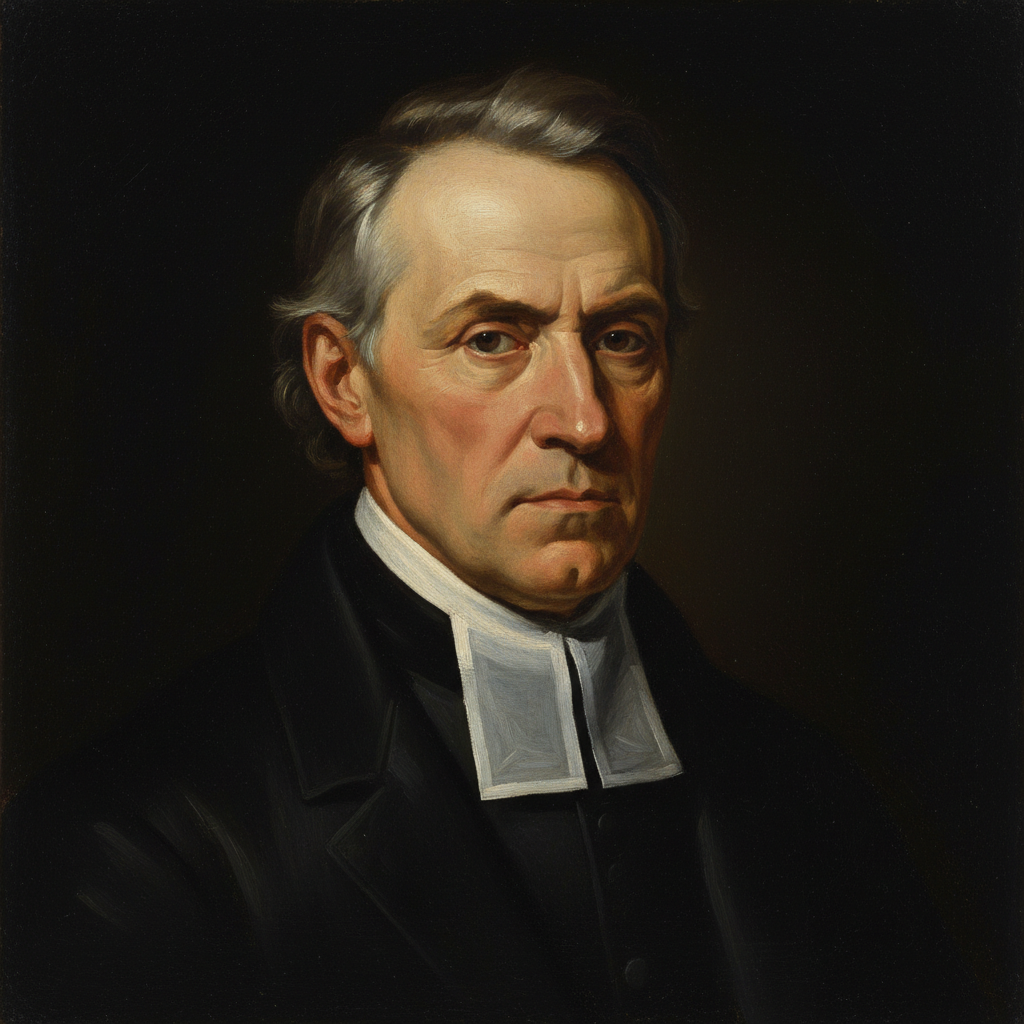
John Wesley — "I am not an enemy to pleasure; but I am an enemy to sin."
I am not an enemy to pleasure; but I am an enemy to sin.
I am not an enemy to pleasure; but I am an enemy to sin.
Click any product to generate a realistic preview. Up to 3 at a time.
* Initial load can take up to 90 seconds — revising the preview in another color is nearly instant.
"I have been reading a book of travels. I do not know when I have been so much amused. It is a pity that so few of our travellers write like rational creatures."
"Though I am always in haste, I am never in a hurry."
"It is not the being in a place, but the being in a state, that makes us happy."
"I have not time to be busy."
"God grant that we may all make a good end!"
English Anglican cleric and founder of Methodism, whose open-air preaching and class-meeting structure created the largest 18th-century evangelical revival. Closely associated with Charles Wesley (his hymn-writing brother) and George Whitefield (early co-revivalist, later doctrinal opponent). For an intellectual contrast, see George Whitefield, Calvinist evangelical revivalist — Whitefield's predestinarian Calvinism vs Wesley's free-grace Arminian theology split the early Methodist movement permanently in the 1739-41 break. The founding evangelical Calvinist-Arminian schism — the two parallel evangelical traditions American Christianity descends from.
Found in 1 providers: grok
1 source checked
This quote distinguishes between enjoying life legitimately and engaging in morally harmful behavior. Wesley is no ascetic killjoy condemning all fun — pleasure itself is acceptable, even good. The real adversary is sin: actions that violate God's moral law, damage the soul, and harm others. It's a balanced stance rejecting both reckless indulgence and joyless religious repression, arguing that principled enjoyment and moral seriousness can and should coexist.
Wesley (1703–1791) was frequently caricatured as a dour moralist who stripped life of all enjoyment. This quote directly refutes that. His Methodism emphasized 'practical holiness' — not withdrawal from the world, but joyful engagement within it. Wesley rode 250,000 miles preaching, founded schools and lending societies, and served the poor enthusiastically. His theology held that grace liberated believers to enjoy God's creation fully, making sanctification a positive pursuit rather than a catalog of prohibitions.
Eighteenth-century England was morally polarized. Georgian aristocracy embraced gambling, drunkenness, and sexual license, while some Calvinist strains preached humanity's total depravity, leaving little theological room for joy. The Enlightenment meanwhile elevated reason over revelation, eroding traditional religious authority. Wesley's Methodism arose partly to correct both the Church of England's cold formalism and the era's libertine excess. His middle path — disciplined joy rather than grim abstinence — resonated powerfully with working-class Britons hungry for hope and dignity.
AI-generated insights based on extensive research and information for context. Factual errors? Email [email protected].
Your cart is empty