John Wesley — "Though I am always in haste, I am never in a hurry."
Though I am always in haste, I am never in a hurry.
Though I am always in haste, I am never in a hurry.
Click any product to generate a realistic preview. Up to 3 at a time.
* Initial load can take up to 90 seconds — revising the preview in another color is nearly instant.
"What is the secret of your strength? I answer, the power of prayer."
"The best of all is, God is with us."
"I have often thought that the greatest comfort in life, is to have a friend."
"I am not afraid of any man, but I am afraid of God."
"I have no time to be in a hurry."
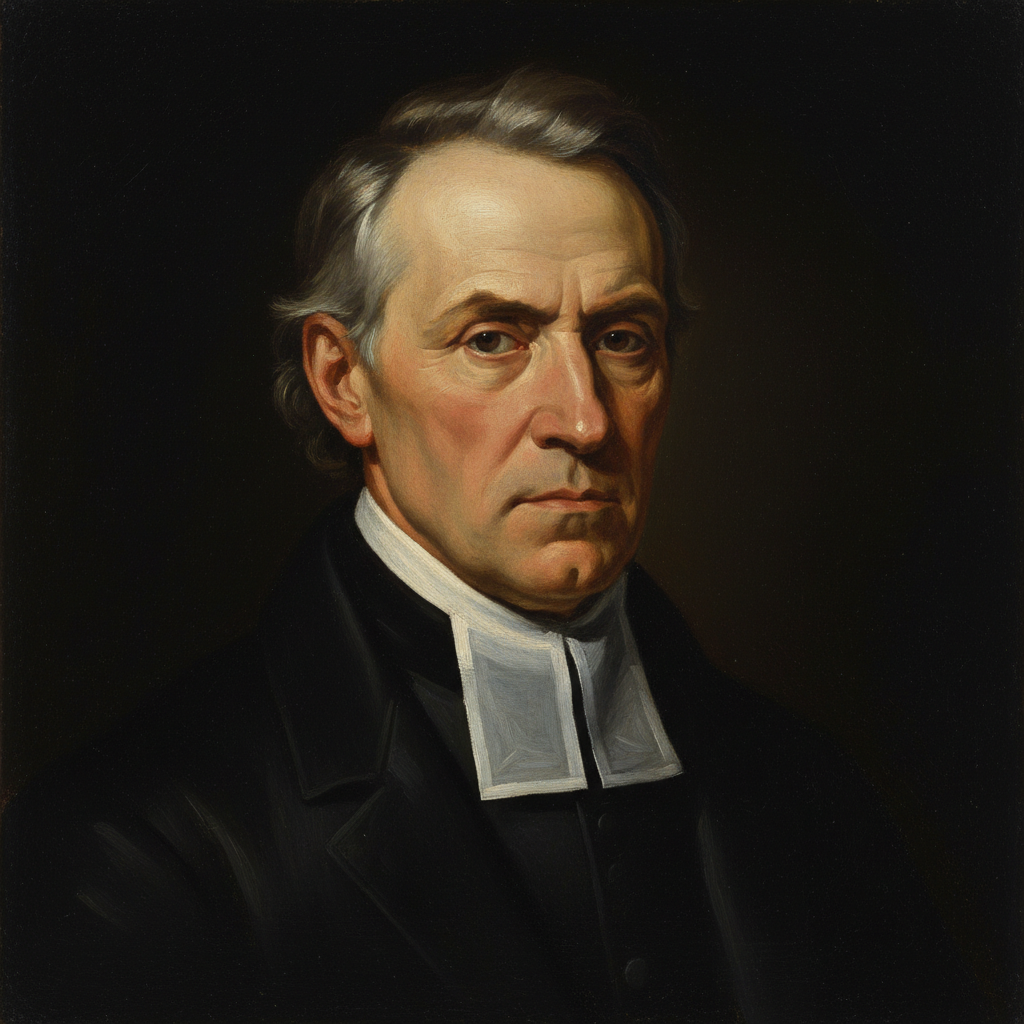
English Anglican cleric and founder of Methodism, whose open-air preaching and class-meeting structure created the largest 18th-century evangelical revival. Closely associated with Charles Wesley (his hymn-writing brother) and George Whitefield (early co-revivalist, later doctrinal opponent). For an intellectual contrast, see George Whitefield, Calvinist evangelical revivalist — Whitefield's predestinarian Calvinism vs Wesley's free-grace Arminian theology split the early Methodist movement permanently in the 1739-41 break. The founding evangelical Calvinist-Arminian schism — the two parallel evangelical traditions American Christianity descends from.
Found in 1 providers: grok
1 source checked
Being 'in haste' means carrying a full purpose—moving deliberately because much matters. Being 'in a hurry' means reactive, anxious rushing that clouds judgment and frays composure. The quote separates urgency from panic. You can move fast and stay productive without losing calm, attention to the person in front of you, or the capacity to think clearly. Speed of action and peace of mind are not opposites.
Wesley rode over 250,000 miles on horseback, preached more than 40,000 sermons, and wrote hundreds of books and pamphlets across an 88-year life. He woke at 4 AM daily and scheduled every hour. Yet his journals show remarkable composure—patient with hecklers, methodical with organization, never erratic. 'Do not hurry' was literally among his personal rules of conduct. His life was the proof of concept behind this quote.
Eighteenth-century Britain was convulsing with industrialization's early shocks, urban poverty, and a Church of England widely seen as spiritually inert. Wesley's Methodist revival responded with genuine urgency—millions of working-class souls unreached. Yet the era's prevailing philosophy prized rational composure over emotional frenzy. His distinction honored both the Protestant work ethic's relentless industry and Enlightenment-era self-discipline. In a world of intense social pressure, calm purposefulness was both a spiritual virtue and a practical edge.
AI-generated insights based on extensive research and information for context. Factual errors? Email [email protected].
Your cart is empty