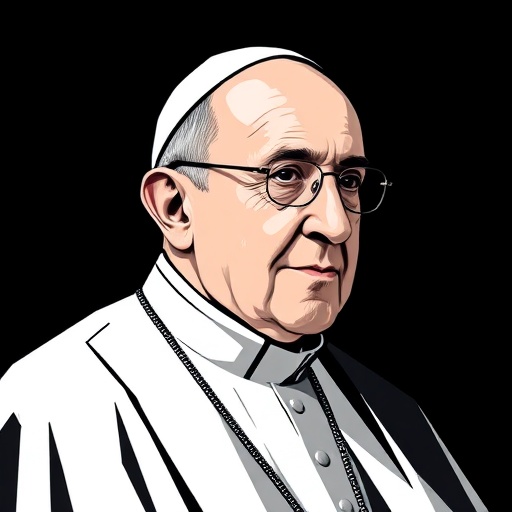
Pope Francis — "The devil enters through the pockets."
The devil enters through the pockets.
The devil enters through the pockets.
Click any product to generate a realistic preview. Up to 3 at a time.
* Initial load can take up to 90 seconds — revising the preview in another color is nearly instant.
"Slander is worse than murder. Slander kills the reputation of a person. It is worse than murder because even if you kill, you can repent and go to heaven. But slander kills the soul of the person."
"The greatest danger is not sin, but rather spiritual comfort, the temptation to live a comfortable life, a tranquil life, a life where everything is in order."
"A person once asked me, in a provocative manner, if I approved of homosexuality. I replied with another question: 'Tell me: when God looks at a gay person, does he endorse the existence of this person…"
"Corruption is a cancer that destroys society."
"The true power is service."
First Latin American and Jesuit pope (2013-), who has steered the Catholic Church toward pastoral inclusion on LGBTQ pastoral care, divorced Catholics, and climate. Closely associated with Pope John XXIII (the Vatican II reformer pope) and Cardinal Walter Kasper (his theological ally on pastoral reform). For an intellectual contrast, see Cardinal Raymond Burke, American traditionalist cardinal, former head of the Vatican Apostolic Signatura — Burke is the public face of Catholic traditionalism that views Francis's pastoral approach as doctrinally dangerous — he has formally challenged Amoris Laetitia and other Francis reforms.
Found in 2 providers: grok,deepseek
2 sources checked
Greed and the love of money open the door to moral corruption. When people prioritize financial gain above all else, they become vulnerable to ethical compromise, exploitation of others, and spiritual degradation. The devil here is a metaphor for sin and corruption — pockets represents wealth and material obsession. Money becomes the entry point through which people abandon integrity, harm others, and lose their moral compass.
Pope Francis, born Jorge Mario Bergoglio in Buenos Aires, built his papacy around economic justice and simplicity. He rode the bus as Archbishop, refused the papal apartments, and his 2013 exhortation Evangelii Gaudium directly attacked trickle-down economics. He called financial greed within the Church a cancer and pushed major Vatican Bank reforms. For Francis, wealth without conscience is the root of institutional rot and human suffering.
Francis became pope in 2013 as the world still reeled from the 2008 financial crisis — inequality surged, austerity punished the poor, and the Vatican Bank faced money-laundering scandals. The 2016 Panama Papers exposed elite tax evasion at global scale. Wealth concentration reached Gilded Age levels, with corporations shielding trillions offshore. Against this backdrop, a pope naming money as moral corruption's entry point carried urgent, systemic weight.
AI-generated insights based on extensive research and information for context. Factual errors? Email [email protected].
Your cart is empty