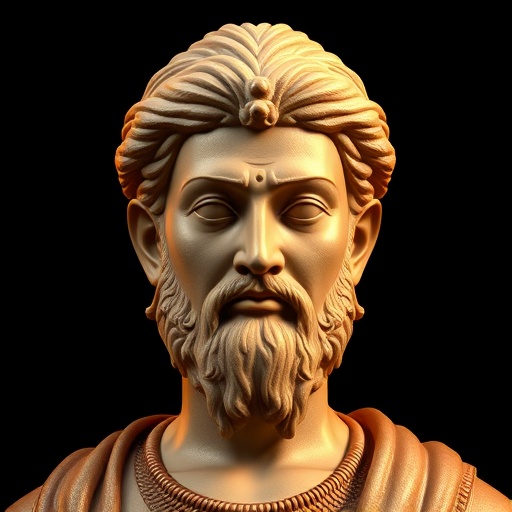
Mahavira — "Do not injure, abuse, oppress, enslave, insult, torment, torture, or kill any cr…"
Do not injure, abuse, oppress, enslave, insult, torment, torture, or kill any creature or living being.
Do not injure, abuse, oppress, enslave, insult, torment, torture, or kill any creature or living being.
Click any product to generate a realistic preview. Up to 3 at a time.
* Initial load can take up to 90 seconds — revising the preview in another color is nearly instant.
"By sincerity, a man gains knowledge, by knowledge, liberation."
"Man's true nature is divine."
"The path of liberation is straight and simple."
"The greatest mistake of a soul is non-recognition of its real self and can only be corrected by recognizing the real self."
"The self is the friend of the self, and the self is the enemy of the self."
24th and last Tirthankara of Jainism, whose teachings of strict ahimsa (non-violence), aparigraha (non-attachment), and karma reshaped ancient Indian religion. Closely associated with The Buddha (near-contemporary moral revolutionary, also reacting against Vedic ritualism). For an intellectual contrast, see Vedic Brahmanical ritual sacrifice, the animal-sacrifice-centered Vedic religion of his era — Mahavira's ahimsa demanded total non-violence, including not eating root vegetables that kill the plant — a maximum-distance ethical move from the Vedic priestly tradition that ritually sacrificed cattle and horses. The two cleanest poles of ancient Indian religious ethics.
Found in 1 providers: grok
1 source checked
Every living being—human, animal, insect, or microscopic organism—deserves complete protection from harm. Non-violence here isn't limited to avoiding killing; it extends to emotional abuse, social oppression, enslavement, and torment. The exhaustive list of prohibited acts signals that causing suffering in any form violates a fundamental moral law. True ethical living means refusing to harm others in thought, action, or intent—regardless of a being's size, species, or perceived importance.
Mahavira renounced his royal life at 30 to practice extreme asceticism, living without clothing, filtering water to protect microorganisms, and stepping carefully to avoid crushing insects. Ahimsa was not an ideal but an absolute governing thought, word, and deed. As the 24th Tirthankara, he built Jainism's entire framework around this principle, teaching that every soul—regardless of body or caste—possesses equal spiritual worth and deserves complete freedom from suffering and exploitation.
Mahavira lived in 6th–5th century BCE India, when Vedic Brahmanism dominated through elaborate animal sacrifice rituals meant to appease gods and maintain cosmic order. Caste hierarchy rigidly stratified human worth, and moral concern rarely extended beyond one's social group. His absolute command against harming any creature—including insects and untouchables—directly challenged both the sacrificial religion and the caste system, making it one of ancient history's most radical ethical statements.
AI-generated insights based on extensive research and information for context. Factual errors? Email [email protected].
Your cart is empty