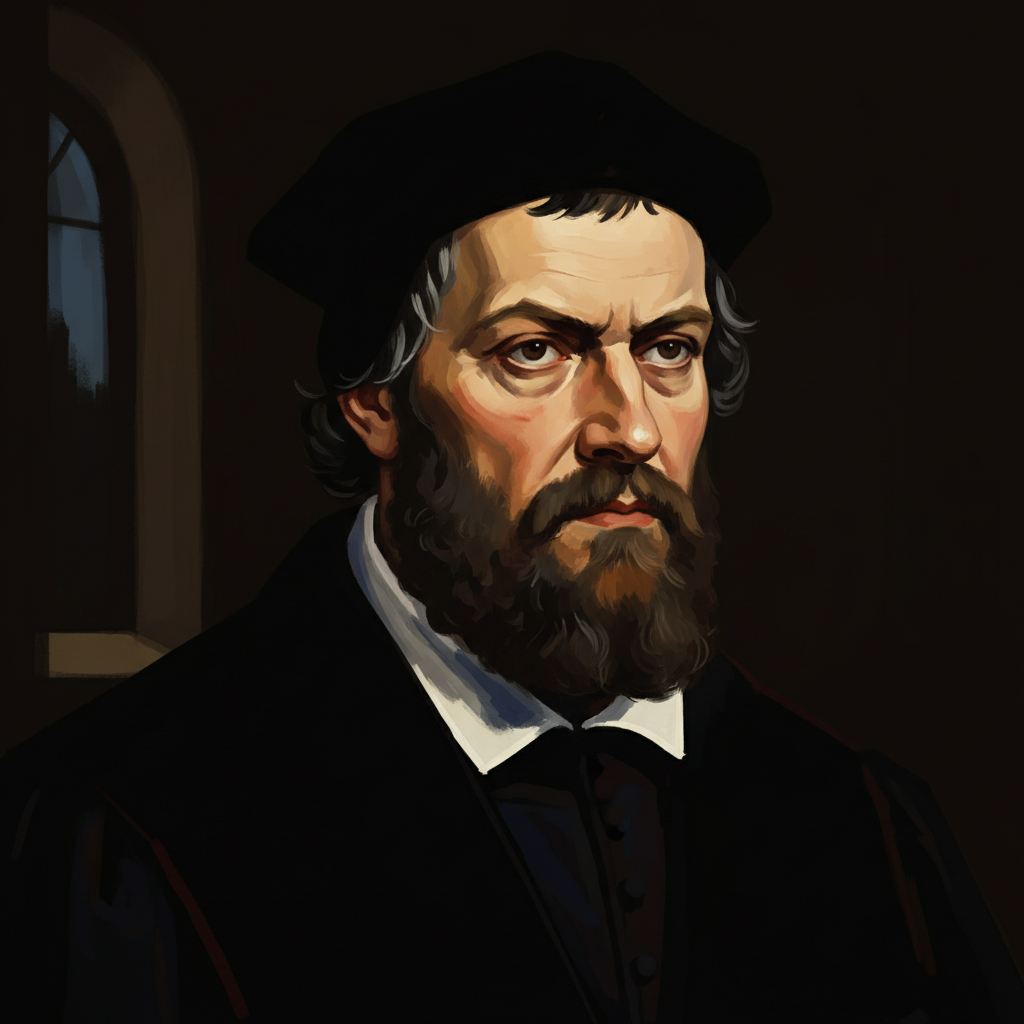
Martin Luther — "Devil, if you want to eat me, start from behind."
Devil, if you want to eat me, start from behind.
Devil, if you want to eat me, start from behind.
Click any product to generate a realistic preview. Up to 3 at a time.
* Initial load can take up to 90 seconds — revising the preview in another color is nearly instant.
"The assembly of his greased and religious crew in praying was altogether like the croaking of frogs, which edified nothing at all."
"Those who despise these, or treat them with contempt, are worthy of purchasing, adoring, and praising the pope's excrement as balsam."
"The greater the sinner, the greater the grace."
"Your home, once the holiest of all, has become the most licentious den of thieves, the most shameless of all brothels, the kingdom of sin, death, and hell. It is so bad that even Antichrist himself, i…"
"The greatest gift of God is a pious, cheerful, God-fearing, home-loving wife, to whom you can entrust your property, and your children, and your all."
German theologian whose 95 Theses (1517) launched the Protestant Reformation and broke the Catholic Church's monopoly on Western Christianity. Closely associated with Philipp Melanchthon (Lutheran systematizer) and John Calvin (later Reformer who built on Luther's break). For an intellectual contrast, see Pope Leo X, Renaissance pope (1513-1521) — Leo X's indulgence sales triggered Luther's break and Leo excommunicated him in 1521 — Luther's entire Reformation is structured as a direct answer to the indulgence-funded Vatican Leo represented.
Found in 1 providers: gemini
1 source checked
This is a crude, defiant taunt aimed at evil itself. The speaker refuses to cower or plead; instead he dares the devil to attack, and insultingly offers his backside as the starting point. It mixes vulgar humor with fierce courage, turning fear into mockery. The message: spiritual enemies lose their power when you stop treating them with solemn dread and instead meet them with contempt, laughter, and an unshakable refusal to be intimidated.
Luther was famously earthy, blunt, and scatological, using barnyard language against the devil and the pope alike. He believed Satan was a real, personal adversary who could be routed by faith, music, beer, and mockery rather than monkish fasting. His Table Talk is full of such vulgar jabs. As an ex-Augustinian monk who defied excommunication and imperial ban, this quip fits his combative temperament and his conviction that contempt, not fear, disarms evil.
In the early sixteenth century, Europeans believed the devil was a literal, meddling presence causing illness, storms, and temptation; exorcisms and witch trials were rising. Luther launched the Reformation in 1517, surviving the 1521 Diet of Worms under threat of execution. Plague, peasant revolts, and Ottoman invasions fueled apocalyptic dread. Against that terrified backdrop, Luther's vulgar defiance was theological: salvation came by faith alone, so believers could laugh at demonic threats rather than buy indulgences to escape them.
AI-generated insights based on extensive research and information for context. Factual errors? Email [email protected].
Your cart is empty