Mahavira — "The soul is the only thing that is eternal; everything else is temporary."
The soul is the only thing that is eternal; everything else is temporary.
The soul is the only thing that is eternal; everything else is temporary.
Click any product to generate a realistic preview. Up to 3 at a time.
* Initial load can take up to 90 seconds — revising the preview in another color is nearly instant.
"Look at the birds, how they live in the present, with no thought for the morrow."
"What is the use of a lamp when the sun has risen?"
"Killing any living being is killing oneself."
"One should not steal."
"The path to liberation is difficult, but it is the only path to true happiness."
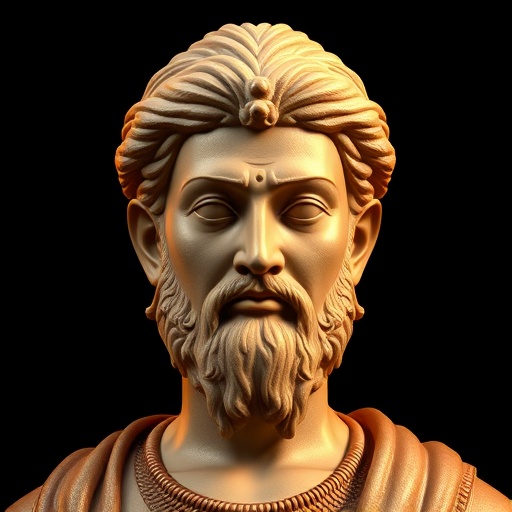
24th and last Tirthankara of Jainism, whose teachings of strict ahimsa (non-violence), aparigraha (non-attachment), and karma reshaped ancient Indian religion. Closely associated with The Buddha (near-contemporary moral revolutionary, also reacting against Vedic ritualism). For an intellectual contrast, see Vedic Brahmanical ritual sacrifice, the animal-sacrifice-centered Vedic religion of his era — Mahavira's ahimsa demanded total non-violence, including not eating root vegetables that kill the plant — a maximum-distance ethical move from the Vedic priestly tradition that ritually sacrificed cattle and horses. The two cleanest poles of ancient Indian religious ethics.
Found in 1 providers: deepseek
1 source checked
Everything physical — your body, possessions, relationships, status — will eventually cease to exist. Only the soul, the conscious self, persists beyond death and across lifetimes. In modern terms: stop investing your identity in things that will not last. Your career, wealth, and reputation are all temporary. What you actually are — your consciousness, your moral character, your inner life — is the only part of you that endures and truly matters.
Mahavira abandoned his royal life at thirty, renouncing wealth, clothes, and family to pursue liberation through twelve years of ascetic wandering. Jainism's central metaphysical distinction between jiva (eternal soul) and ajiva (impermanent matter) forms the backbone of this quote. His doctrine of aparigraha — non-attachment to possessions — flows directly from this belief. He taught that souls accumulate karma through attachment to temporary things and achieve moksha only by releasing those attachments entirely.
Mahavira lived in sixth-century BCE northeastern India during the Axial Age, a period of radical philosophical upheaval. Brahminic religion emphasized ritual sacrifice, caste hierarchy, and priestly authority as paths to cosmic order. The Shramana movement — which also produced the Buddha, Mahavira's near-contemporary — rejected ritual in favor of individual ascetic effort. Declaring only the soul eternal directly challenged the Brahminic obsession with correct ritual performance and hereditary status, asserting that liberation was personal, internal, and available to anyone.
AI-generated insights based on extensive research and information for context. Factual errors? Email [email protected].
Your cart is empty