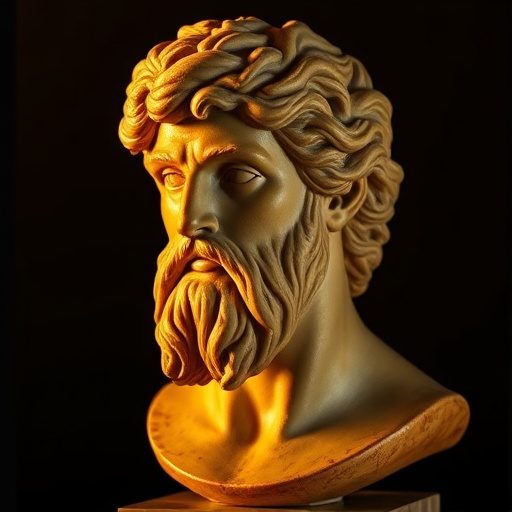
Pythagoras — "Eat not the matrix of animals."
Eat not the matrix of animals.
Eat not the matrix of animals.
Click any product to generate a realistic preview. Up to 3 at a time.
* Initial load can take up to 90 seconds — revising the preview in another color is nearly instant.
"Do nothing evil, neither in the presence of others, nor privately; But above all things respect yourself."
"There is geometry in the humming of the strings."
"If there be light, then there is darkness; if cold, heat; if height, depth; if solid, fluid; if hard, soft; if rough, smooth; if calm, tempest; if prosperity, adversity; if life, death."
"It is not possible to conceal a base mind by a fair face."
"Do not give sleep to your eyes nor slumber to your eyelids until you have balanced the account of your soul with what is right."
Greek philosopher and mathematician whose school in Croton combined geometry (the Pythagorean theorem), number-mysticism, and a religious-vegetarian way of life. Closely associated with Thales of Miletus (earlier pre-Socratic and the first philosopher). For an intellectual contrast, see Heraclitus, pre-Socratic Greek philosopher of flux — Heraclitus called Pythagoras 'the chief of swindlers' — among the founding insults of the philosophical-rivalry tradition. Their 'all is flux' vs 'all is number' poles still organize the philosophy of mathematics today (Platonist vs anti-realist).
A Pythagorean dietary rule, interpreted as not indulging in sex solely for physical gratification.
Date: c. 570-495 BCE (interpreted later)
Nature & WorldFound in 1 providers: gemini
1 source checked
Do not eat the womb or uterus of animals. The word 'matrix' derives from the Latin for womb, so this is a specific dietary prohibition against consuming an animal's reproductive organ. In practical terms, it forbids eating that particular body part, reflecting a deeper reverence for the life-generating capacity of living creatures and drawing a moral boundary around what counts as acceptable food.
Pythagoras founded a religious brotherhood with strict dietary codes rooted in his doctrine of metempsychosis — the transmigration of souls into animal bodies after death. Eating a womb, the very organ that generates new life and potentially houses reincarnating souls, would be particularly sacrilegious under his worldview. His vegetarianism and organ prohibitions were inseparable from his metaphysical belief that harming animals could mean harming formerly human souls.
In 6th-century BCE Greece, animal sacrifice dominated religious life, and consuming sacrificial animals — including organs — was standard ritual practice. Pythagoras's prohibition directly challenged this norm. His community at Croton rejected mainstream Greek religious diet entirely. The womb carried symbolic power as the origin of life, making its consumption especially transgressive to a thinker who saw reproduction and soul-migration as cosmically linked processes governing all living things.
AI-generated insights based on extensive research and information for context. Factual errors? Email [email protected].
Your cart is empty