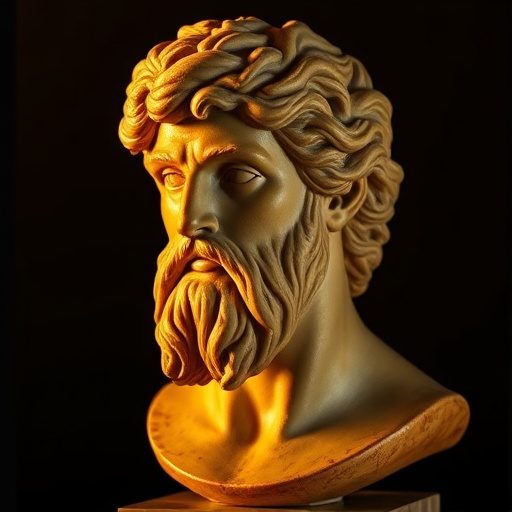
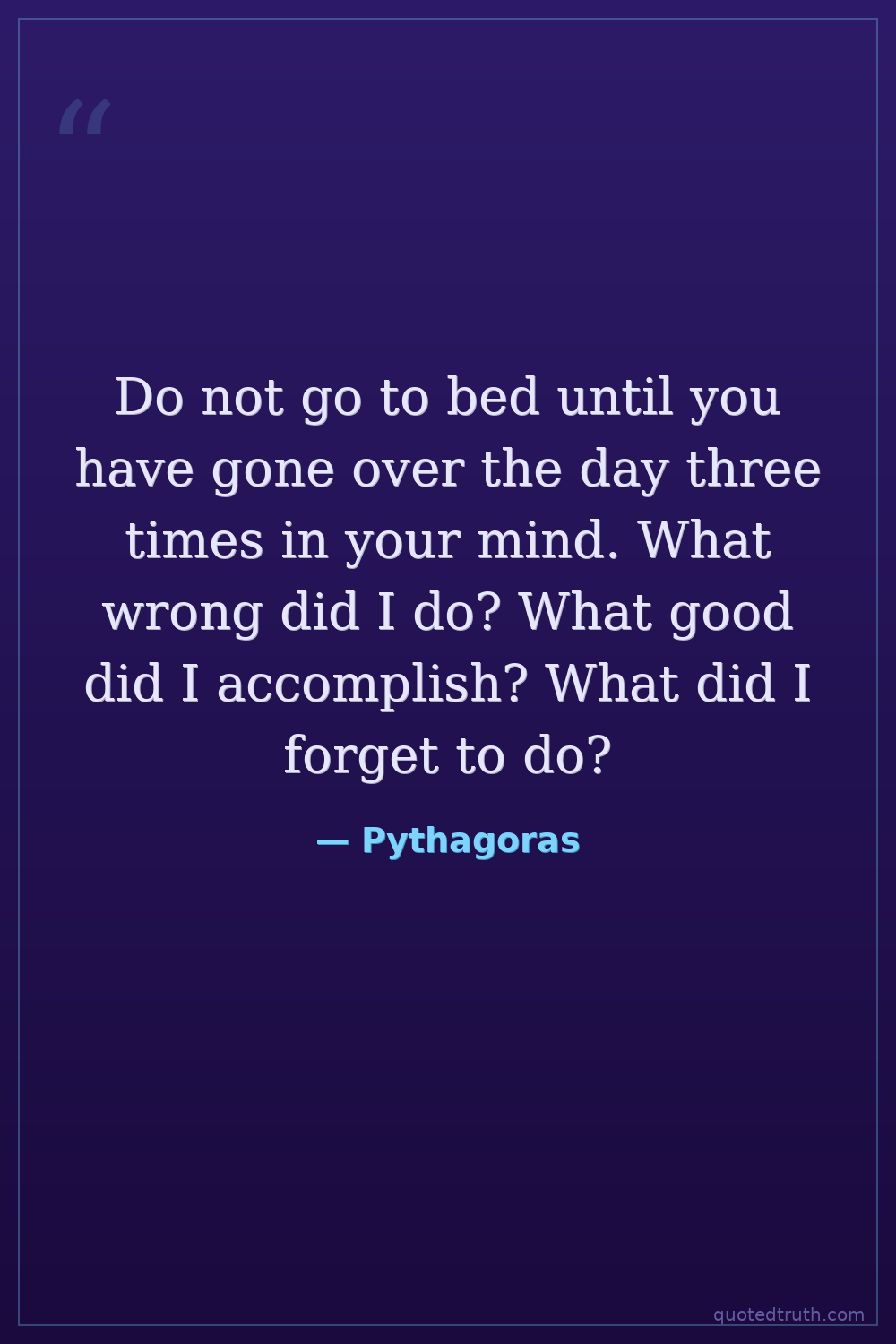
Pythagoras — "Do not go to bed until you have gone over the day three times in your mind. What…"
Do not go to bed until you have gone over the day three times in your mind. What wrong did I do? What good did I accomplish? What did I forget to do?
Do not go to bed until you have gone over the day three times in your mind. What wrong did I do? What good did I accomplish? What did I forget to do?
Click any product to generate a realistic preview. Up to 3 at a time.
* Initial load can take up to 90 seconds — revising the preview in another color is nearly instant.
"Do not stir the fire with a sword."
"Spit upon the parings of your nails, and the clippings of your hair."
"Anger begins with folly and ends with repentance."
"The monad, is god and the good, which is the origin of the One, and is itself intelligence; but the undefined dyad is a deity and the evil, surrounding which is the mass of matter."
"Friends are as companions on a journey, who ought to aid each other to persevere in the road to a happier life."
Greek philosopher and mathematician whose school in Croton combined geometry (the Pythagorean theorem), number-mysticism, and a religious-vegetarian way of life. Closely associated with Thales of Miletus (earlier pre-Socratic and the first philosopher). For an intellectual contrast, see Heraclitus, pre-Socratic Greek philosopher of flux — Heraclitus called Pythagoras 'the chief of swindlers' — among the founding insults of the philosophical-rivalry tradition. Their 'all is flux' vs 'all is number' poles still organize the philosophy of mathematics today (Platonist vs anti-realist).
An ethical self-examination practice, found in the 'Golden Verses'.
Date: c. 570-495 BCE
WisdomFound in 1 providers: gemini
1 source checked
This describes a nightly self-examination ritual built around three honest questions: where you failed morally, where you succeeded, and what you neglected. Rather than passive winding down, it demands active personal accountability before sleep. In modern terms, it is a structured evening audit of your own character and conduct, forcing you to confront your actions daily rather than letting errors and missed obligations accumulate unexamined over time.
Pythagoras founded a religious-philosophical brotherhood in Croton around 530 BCE with strict daily rituals and ethical codes. Members were trained to mentally replay their day in sequence as a memory discipline. His belief in the soul's purification through mathematics and ethical living made structured self-review central to his teaching. The three-question framework mirrors his mathematical mind — systematic, ordered, and methodical — applied not to geometry but to character.
In 6th-century BCE Greece, written moral codes were scarce and philosophical ethics was just emerging. Oral memory and daily practice were how knowledge survived. The Greek ideal of arete — excellence through repeated virtuous action — was central but lacked formal personal accountability structures. Pythagorean communities were among the first to institutionalize ethical self-discipline as a daily practice, predating Stoic journaling and Christian examination of conscience by centuries.
AI-generated insights based on extensive research and information for context. Factual errors? Email [email protected].
Your cart is empty