What it means
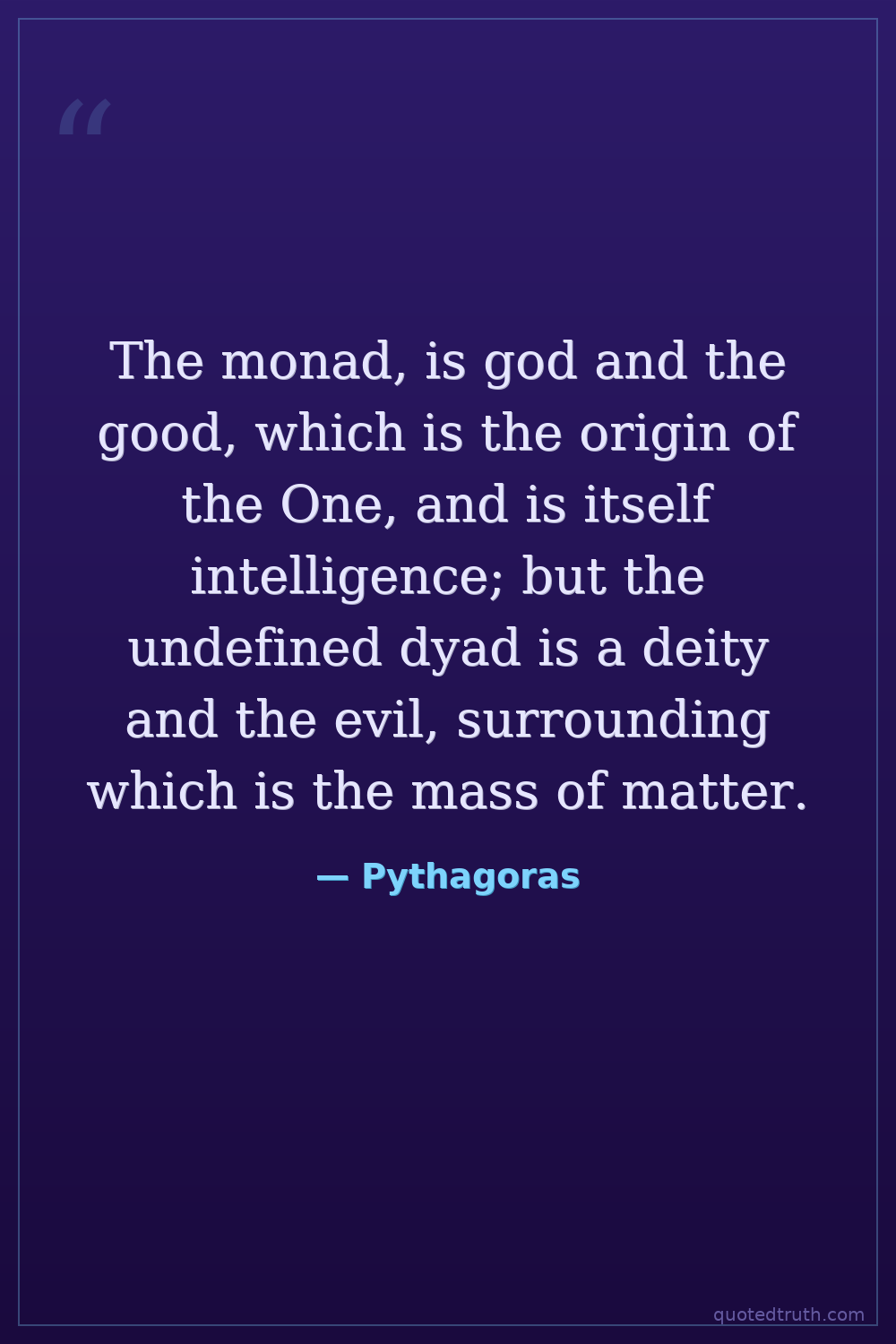
The Monad — the singular, unified source — is God itself, pure goodness, and pure intelligence from which all existence originates. Its opposite, the Dyad, is an undefined dual force linked to evil and disorder, surrounded by the physical world of matter. In plain terms: unity and pure mind are sacred and divine; division and materiality drag existence toward evil. Reality has two opposing cosmic principles, one leading upward, one pulling downward.
Relevance to Pythagoras
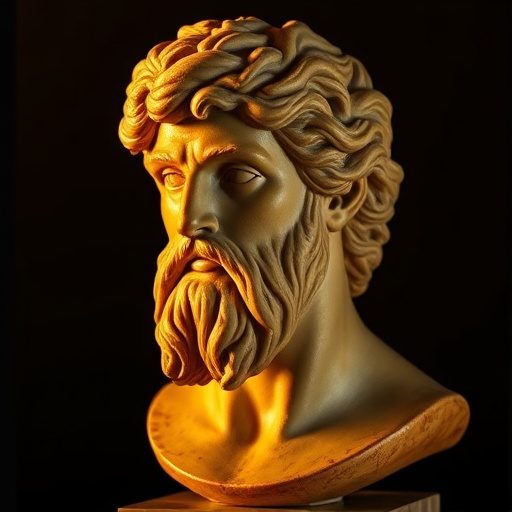
Pythagoras founded a religious-philosophical brotherhood treating numbers as sacred cosmic forces, believing 'all is number.' The Monad as divine intelligence mirrors his lifelong obsession with mathematical unity as the deepest truth. His community practiced ethical purification — liberating the soul from bodily entanglement (the Dyad's realm of matter) toward pure intellect (the Monad). This quote unites his twin identities: rigorous mathematician and religious mystic leading a quasi-monastic order devoted to numerical salvation.
The era
Pythagoras worked in 6th-century BCE Greece as pre-Socratic thinkers replaced myth with rational principle — yet Greek religious life remained pervasive. Zoroastrian cosmic dualism (good versus evil forces) was spreading westward, and Orphic mystery cults promised souls escape from material cycles. Pythagoreans synthesized these currents: mathematics became theology, arithmetic became a path to divine unity. Framing matter itself as evil gave philosophical weight to ascetic lifestyle practices the Brotherhood already demanded.
AI-generated insights based on extensive research and information for context. Factual errors? Email [email protected].