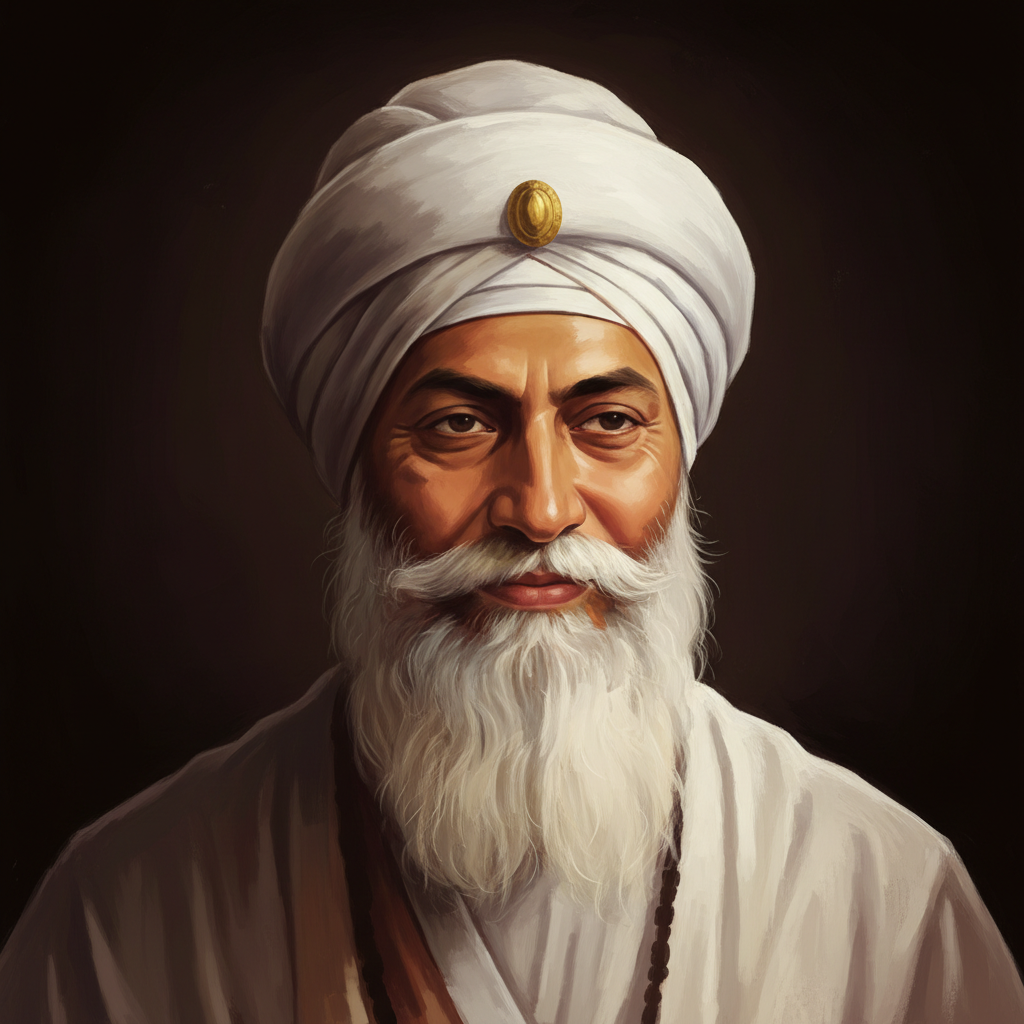
Guru Nanak — "By the grace of God, I am what I am. And what I am is really craving some pakora…"
By the grace of God, I am what I am. And what I am is really craving some pakoras right now.
By the grace of God, I am what I am. And what I am is really craving some pakoras right now.
Click any product to generate a realistic preview. Up to 3 at a time.
* Initial load can take up to 90 seconds — revising the preview in another color is nearly instant.
"Why call her inferior, who gives birth to kings?"
"The Dhoop (burnt incense), lamps and the Naivaed (an offering of eatables presented to deity or idol. All of them become false) by smell. (Then, O Rabb!) If Your Poojaa can be done only with these thi…"
"Do not fear, for God is with you. Also, maybe bring a jacket, it's getting chilly."
"The mind is a mad elephant, intoxicated by ego. Only the Guru's teachings can tame it."
"Hindus are getting Spiritually ruined by worshiping their idols all life and the Muslims by bowing their heads towards Mecca (believing that God exists only in Mecca); but both do not understand/reali…"
Founder of Sikhism and the first of the Ten Sikh Gurus, whose teachings of one universal God and rejection of caste shaped Punjab. Closely associated with Kabir (mystical poet whose verses appear in the Sikh Guru Granth Sahib). For an intellectual contrast, see Brahmanical orthodoxy, the Hindu caste-and-ritual establishment of his era — Sikhism was founded as a deliberate alternative to both Hindu ritual hierarchy and Islamic exclusivism — Nanak's universalism was a structural rejection of caste and priestly mediation.
A humorous, anachronistic and relatable quote, not from Guru Nanak.
Date: Modern
Self-DeprecatingFound in 1 providers: grok
1 source checked
The quote plays on the theological concept of divine grace shaping identity, then punctures it with a bluntly human desire. It suggests that what God made us — appetite, longing, and all — is authentic and worth accepting. Rather than pretending spiritual life transcends the body, it embraces the ordinary as part of the sacred self. Hunger is not shameful; it is simply what we are in this moment.
Guru Nanak's core teaching centered on Nadar — divine grace as the only force that elevates the soul. He rejected ritual performance in favor of honest, humble surrender to God's will. He also founded the langar, a free communal kitchen where everyone ate together as equals. Food was literally sacred to him — sharing it was an act of worship. A craving for pakoras, in that light, is not trivial.
In 15th–16th century Punjab, the region was a crossroads of Mughal expansion, Hindu caste hierarchy, and Islamic orthodoxy. Guru Nanak challenged all three by insisting on direct, unglamorous devotion. Food culture — particularly shared fried foods at communal gatherings — symbolized radical equality. Pakoras, common festival fare, crossed caste and religious lines. Acknowledging bodily hunger alongside divine grace was itself a quietly subversive, humanizing statement.
AI-generated insights based on extensive research and information for context. Factual errors? Email [email protected].
Your cart is empty