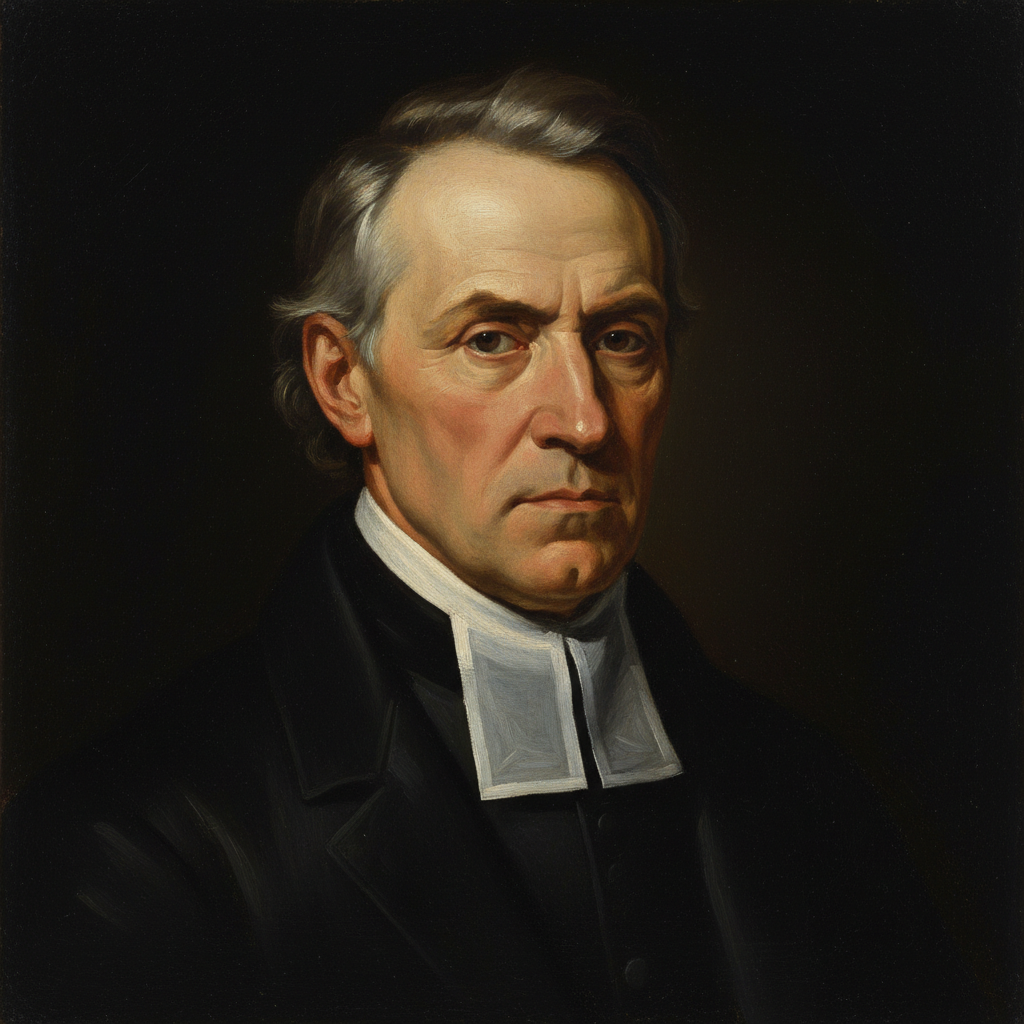
John Wesley — "I offered Christ to the Negroes in Antigua. I offered him to the slaves. I offer…"
I offered Christ to the Negroes in Antigua. I offered him to the slaves. I offered him to the very dregs of the people.
I offered Christ to the Negroes in Antigua. I offered him to the slaves. I offered him to the very dregs of the people.
Click any product to generate a realistic preview. Up to 3 at a time.
* Initial load can take up to 90 seconds — revising the preview in another color is nearly instant.
"I am as much a High-Churchman as ever I was."
"I am not afraid of dying. I have no fear of death."
"I believe that all true Christians are brothers and sisters, whatever their denomination."
"It is not enough to be zealous; we must be zealous for God."
"I am a creature of a day, passing through life as an arrow through the air."
English Anglican cleric and founder of Methodism, whose open-air preaching and class-meeting structure created the largest 18th-century evangelical revival. Closely associated with Charles Wesley (his hymn-writing brother) and George Whitefield (early co-revivalist, later doctrinal opponent). For an intellectual contrast, see George Whitefield, Calvinist evangelical revivalist — Whitefield's predestinarian Calvinism vs Wesley's free-grace Arminian theology split the early Methodist movement permanently in the 1739-41 break. The founding evangelical Calvinist-Arminian schism — the two parallel evangelical traditions American Christianity descends from.
Found in 1 providers: grok
1 source checked
This quote expresses that the speaker brought the offer of religious salvation to people society completely discarded — enslaved Africans in the Caribbean, people held in legal bondage, and those at the absolute bottom of the social order. The core claim is radical universalism: spiritual redemption belongs to every human being regardless of race, legal status, or social standing, not only to the respectable and the privileged.
Wesley famously preached in open fields to miners, laborers, and the poor when Anglican churches excluded them. He later became a fierce abolitionist, publishing Thoughts Upon Slavery in 1774, and his final letter urged William Wilberforce to fight slavery to his last breath. His central theological conviction — that Christ's atonement was universal, not reserved for a predestined elect — drove him to minister precisely where other clergy refused to go.
The 18th-century Atlantic slave trade was at its peak, with British colonies like Antigua relying entirely on enslaved African labor. The established Church of England largely served the propertied class and rarely engaged with enslaved populations. Wesley's Methodist revival challenged this directly, insisting salvation was available to all — a claim that threatened both the colonial social order and the theological frameworks colonizers used to justify bondage.
AI-generated insights based on extensive research and information for context. Factual errors? Email [email protected].
Your cart is empty