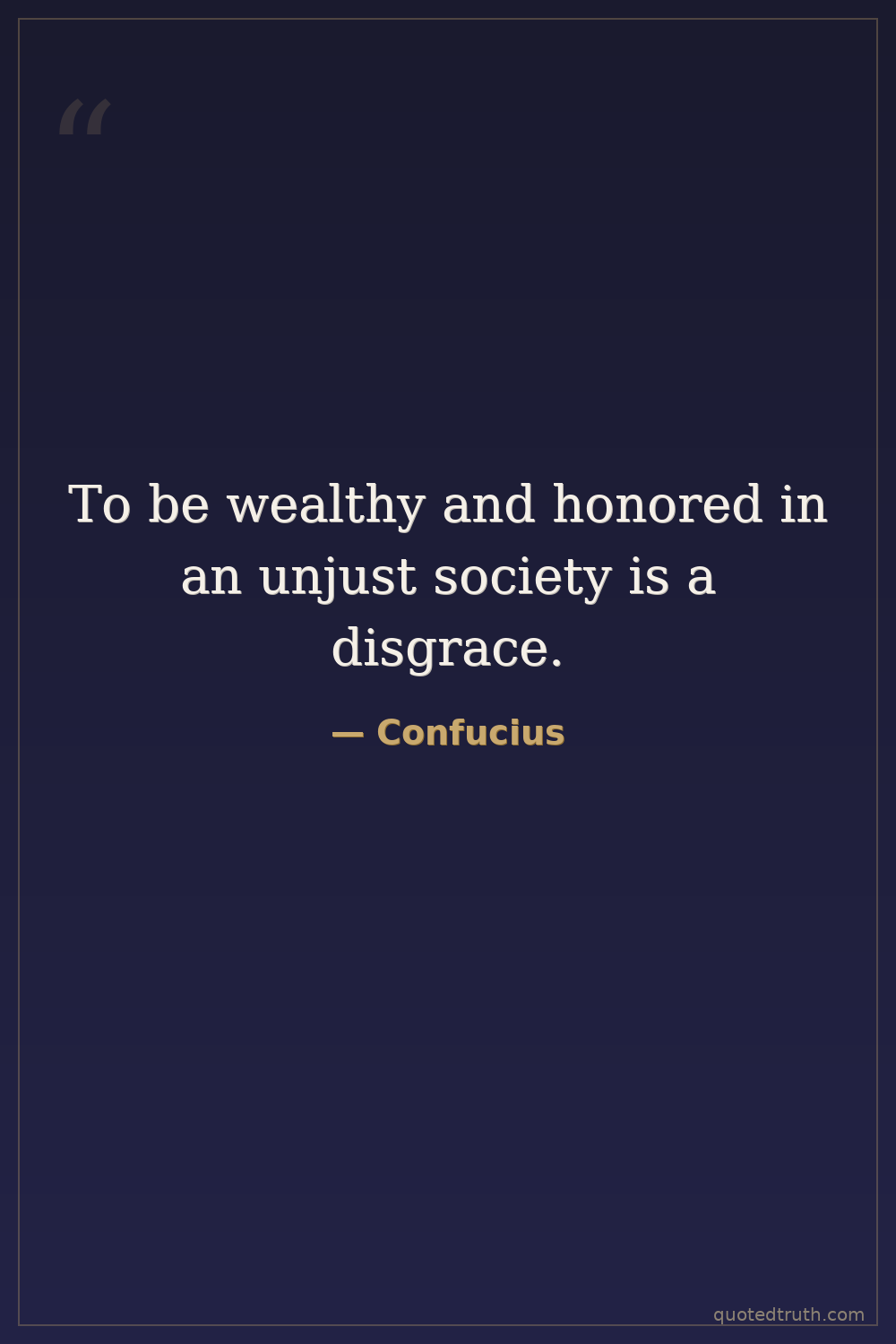
Confucius — "To be wealthy and honored in an unjust society is a disgrace."
To be wealthy and honored in an unjust society is a disgrace.
To be wealthy and honored in an unjust society is a disgrace.
Click any product to generate a realistic preview. Up to 3 at a time.
* Initial load can take up to 90 seconds — revising the preview in another color is nearly instant.
"When you have faults, do not fear to abandon them."
"When you see a good man, try to emulate his example, and when you see a bad man, search yourself for his faults."
"The Master said, 'The superior man is universally benevolent, and not partisan. The mean man is partisan, and not universally benevolent.'"
"The Master said, 'Riches and honors are what men desire. If they cannot be obtained in the proper way, they should not be held. Poverty and meanness are what men dislike. If they cannot be avoided in …"
"Reviewing the old as a means of understanding the new — such a person can be a teacher."
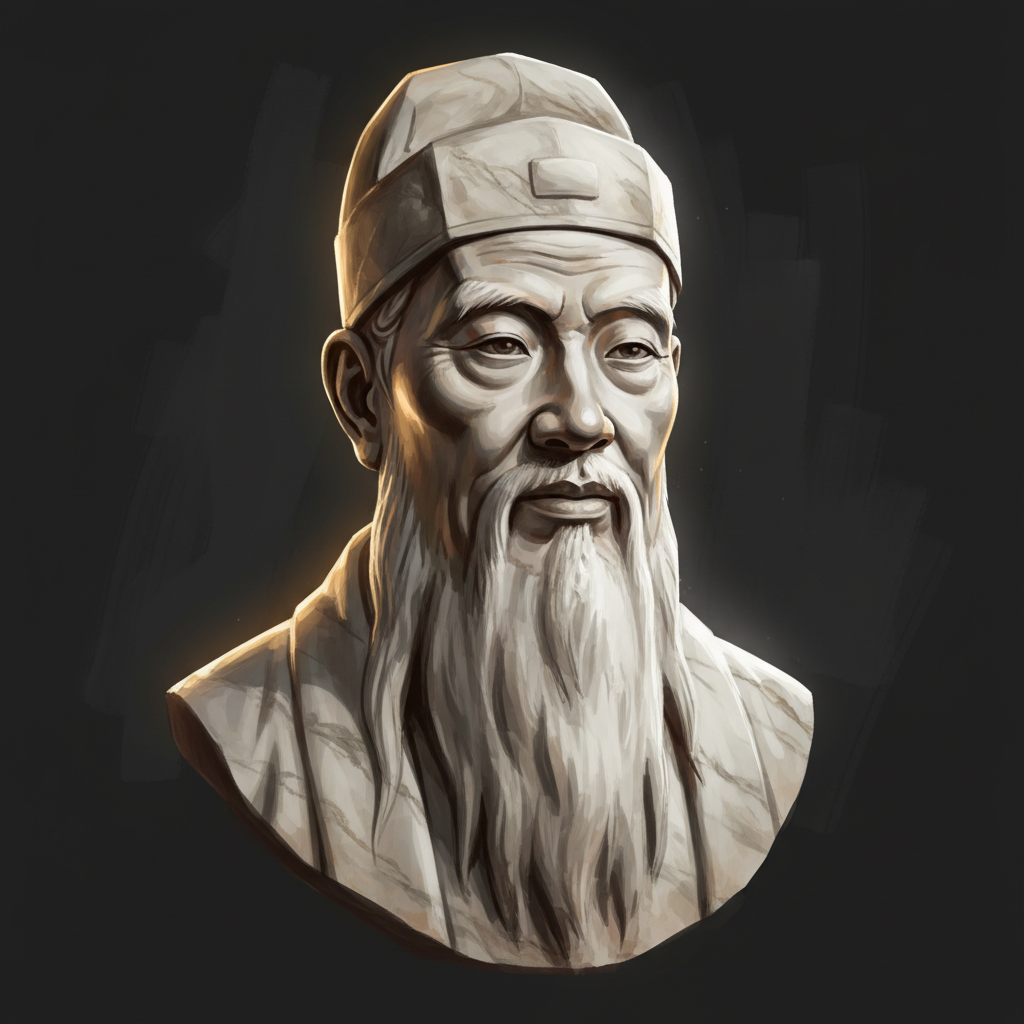
Chinese philosopher and teacher whose teachings (compiled by his students in the Analects) became the foundational ethical framework of East Asian civilization for 2,500 years. Closely associated with Mencius (his most-influential follower a century later). For an intellectual contrast, see Laozi, near-contemporary Chinese sage and Tao Te Ching author — Confucius systematized social order through ritual and family hierarchy; Laozi's Taoist effortless-action philosophy argued such systems were the disease, not the cure. The two founding poles of Chinese moral philosophy — every East Asian moral tradition since has positioned itself between them.
The standard scholarly entry points to Confucius's work: Philip J. Ivanhoe (Georgetown, Chinese philosophy) — Confucian Moral Self Cultivation (2000); Edward Slingerland (UBC, Asian Studies) — Effortless Action: Wu-wei as Conceptual Metaphor (2003); Tu Weiming (Harvard, Confucian scholar) — Confucian Thought: Selfhood as Creative Transformation (1985). These are the works graduate seminars cite when teaching Confucius.
Found in 1 providers: gemini
1 source checked
Gaining riches and status in a corrupt or unfair system is not a mark of success but of shame. Prosperity built on injustice compromises the person who benefits from it, because they profit from the same system that harms others. True honor depends on the moral condition of the society producing it. If the rules are rigged, climbing them well only proves you played along with wrongdoing.
Confucius spent his life trying to reform corrupt rulers and walked away from official posts when leaders ignored virtue. He believed a junzi, or moral person, measured success by righteousness, not salary or rank. He famously said coarse rice and a bent arm for a pillow brought him joy, while ill-gotten wealth felt like a passing cloud. This saying captures his refusal to treat worldly rewards as proof of worth.
Confucius lived during the Spring and Autumn period, roughly 551 to 479 BCE, when the Zhou dynasty was fracturing and regional lords fought constantly for power. Officials bought positions, taxed peasants brutally, and rewarded flattery over merit. Many ambitious men chased titles from warlords regardless of their cruelty. Against this backdrop, insisting that honorable status required a just state was a direct rebuke of the career path most educated men were taking.
AI-generated insights based on extensive research and information for context. Factual errors? Email [email protected].
Your cart is empty