What it means
God's commandments aren't meant to be checklists you can actually complete. Their real purpose is to show you that you can't keep them. When an arrogant person tries to obey perfectly, they discover their own moral weakness. The law functions like a mirror, exposing failure rather than enabling success, and that crushing realization is supposed to push you toward seeking grace instead of trusting your own effort.
Relevance to Martin Luther
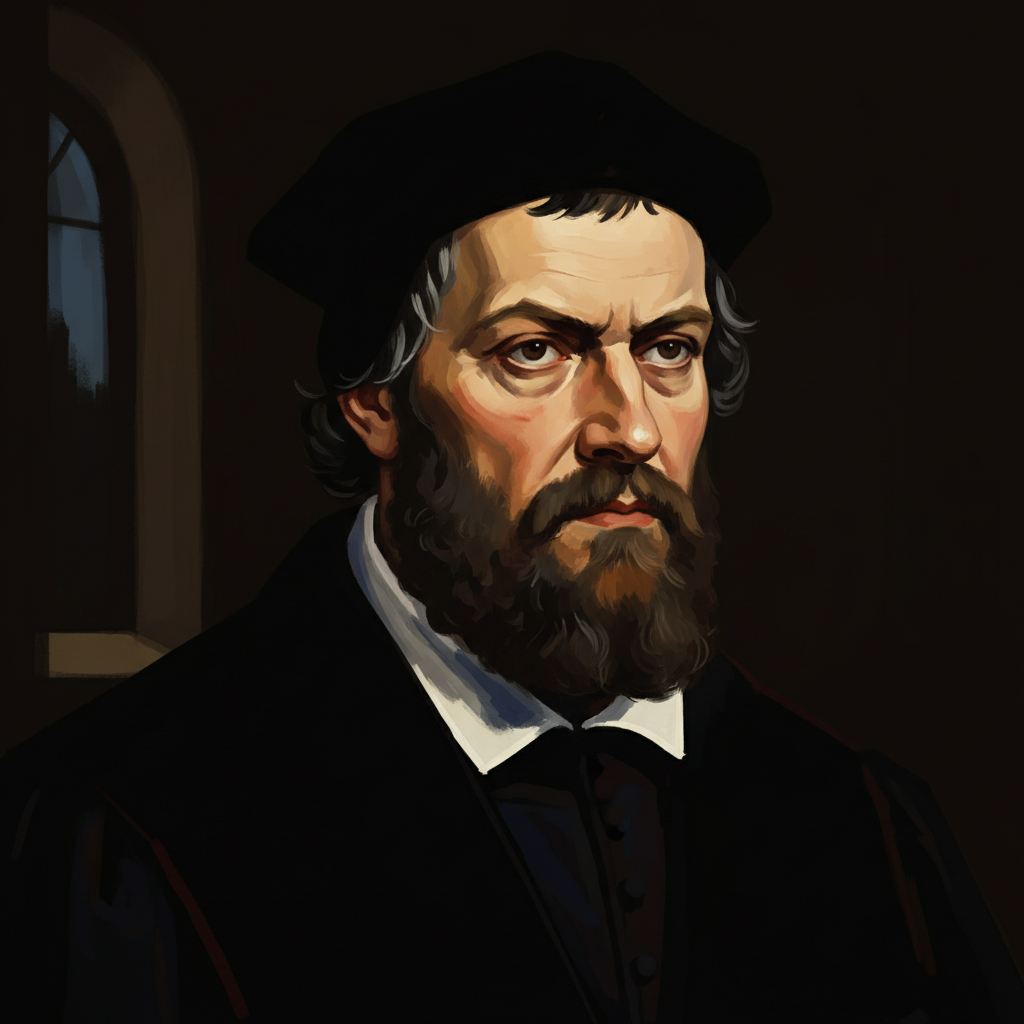
This captures the core of Luther's theology. A former Augustinian monk who tortured himself trying to earn salvation through rigorous obedience, Luther concluded from Romans that the law exposes sin rather than cures it. His 1517 Ninety-Five Theses and doctrine of sola fide rejected works-righteousness, insisting humans are saved by faith alone because they're incapable of fulfilling divine demands on their own strength.
The era
In early-sixteenth-century Europe, the Catholic Church sold indulgences promising reduced purgatory time for payment, and salvation was tied to sacraments, pilgrimages, and good works. Luther's 1517 break ignited the Protestant Reformation, fracturing Western Christendom. Printing presses spread his pamphlets across German-speaking lands, peasants revolted, and princes chose sides. Declaring that commandments expose impotence rather than enable merit was revolutionary and politically explosive in a world where religious authority underwrote civic order.
AI-generated insights based on extensive research and information for context. Factual errors? Email [email protected].