What it means
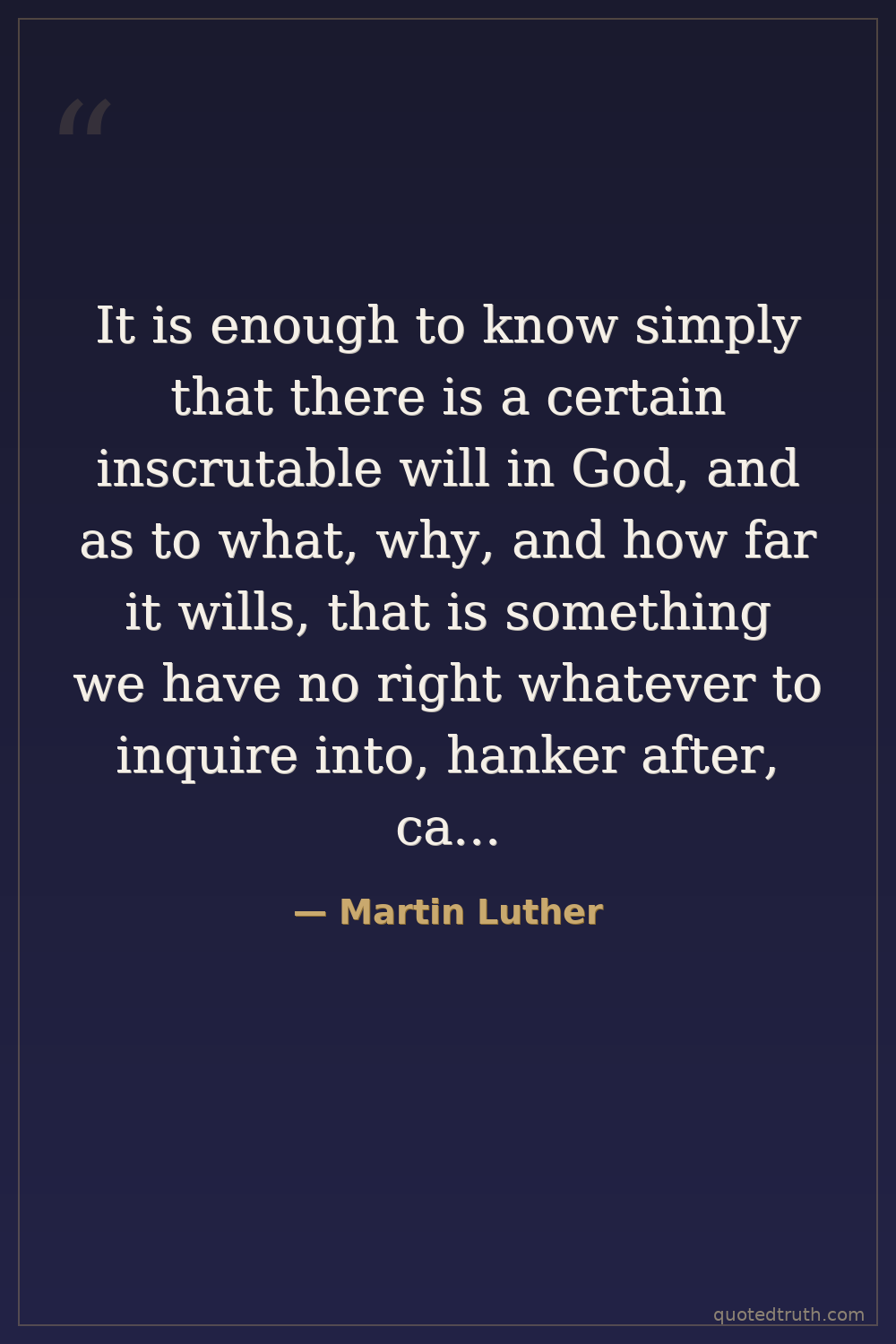
Some things about God's purposes are simply beyond human understanding, and trying to figure out why God does what he does is a waste of time and a kind of overreach. Instead of demanding explanations, picking apart divine motives, or worrying about the reasons behind events, people should accept the limits of what they can know and respond with humility, reverence, and awe rather than curiosity or argument.
Relevance to Martin Luther
Luther built his theology on the hidden God whose will cannot be predicted or earned, a direct reaction against scholastic attempts to map divine logic. As an Augustinian monk who wrestled with scrupulosity before nailing his Ninety-Five Theses in 1517, he insisted salvation comes through faith alone, not human reasoning. His Bondage of the Will against Erasmus argued exactly this: God's choices are sovereign, inscrutable, and not subject to human cross-examination.
The era
Early sixteenth-century Europe was watching scholastic theology, indulgence sales, and papal authority collapse under Renaissance scrutiny and the printing press. Reformers debated whether humans cooperated with grace or were wholly dependent on God. Luther's stance pushed back against humanists like Erasmus who emphasized free will and rational inquiry into divine matters. Amid peasant revolts, religious wars brewing, and the splintering of Western Christendom, telling believers to fear and adore rather than question reinforced order and pure dependence on God.
AI-generated insights based on extensive research and information for context. Factual errors? Email [email protected].