Laozi — "He who knows glory, yet keeps to ignominy, is the valley of the world."
He who knows glory, yet keeps to ignominy, is the valley of the world.
He who knows glory, yet keeps to ignominy, is the valley of the world.
Click any product to generate a realistic preview. Up to 3 at a time.
* Initial load can take up to 90 seconds — revising the preview in another color is nearly instant.
"He who knows others is wise; he who knows himself is enlightened. He who conquers others is strong; he who conquers himself is mighty. He who is content is rich. He who acts with vigor has a will. He …"
"The sage is not attached to anything, and so he loses nothing."
"The sage wears coarse clothes and carries jewels in his bosom."
"The sage, because he does not contend, is therefore without reproach."
"The wise man does not lay up his own treasures. The more he gives to others, the more he has for his own."
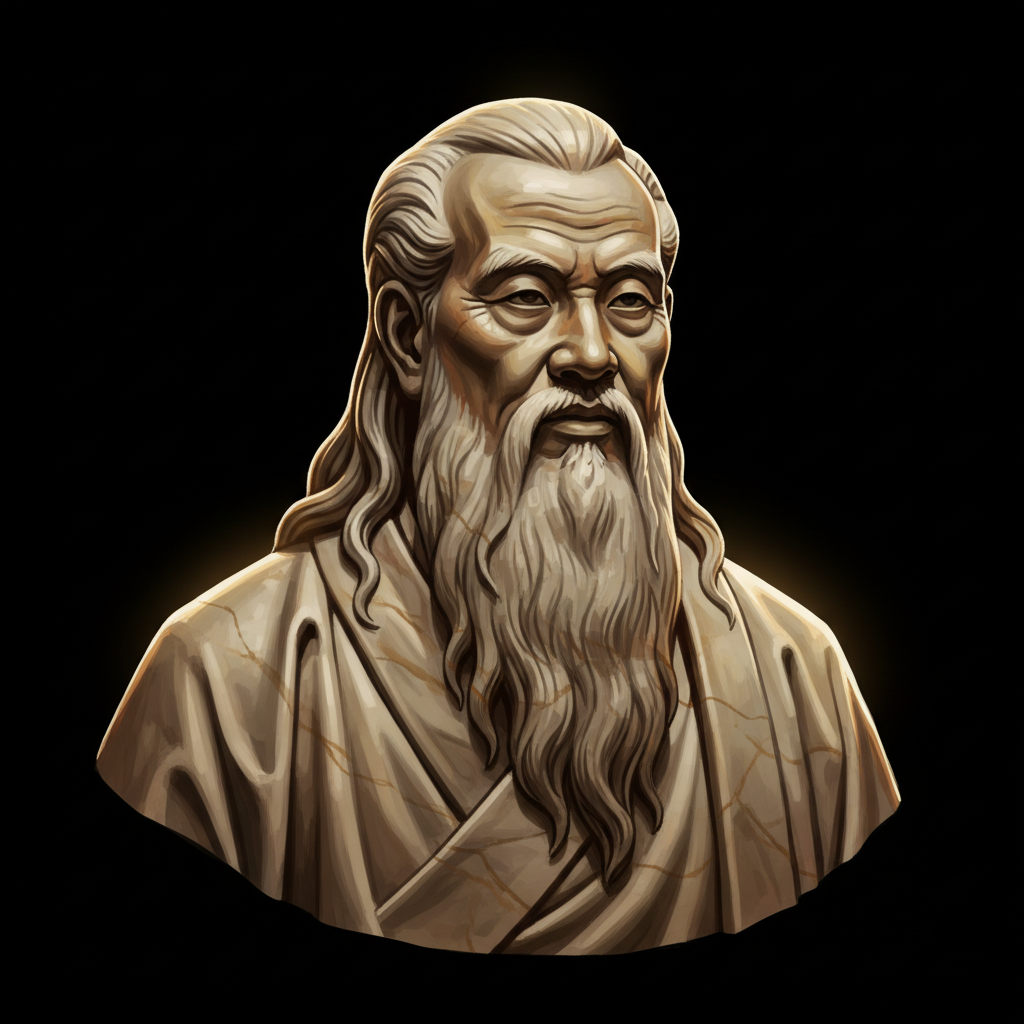
Reputed founder of Taoism and author of the Tao Te Ching, whose wu wei (effortless action) shaped East Asian philosophy. Closely associated with Zhuangzi (later Taoist who extended Laozi's framework). For an intellectual contrast, see Confucius, near-contemporary Chinese sage of social ritual and duty — Confucius systematized social order through ritual and hierarchy; Laozi argued that all such systems were the disease, not the cure — the two founding poles of Chinese moral philosophy.
Found in 1 providers: gemini
1 source checked
Someone who understands what makes a person honored or admired, yet chooses to remain in a humble, overlooked position, becomes like a low valley that naturally collects water from everywhere. By not chasing status, they attract the strength, loyalty, and resources that status-seekers exhaust themselves pursuing. True influence comes from being the receptive low ground, not the exposed high peak that everyone competes to occupy or tear down.
Laozi reportedly worked as an archivist in the Zhou court, surrounded by records of rulers who rose and fell chasing prestige. Legend says he grew disillusioned with courtly ambition and rode west into obscurity, embodying the very retreat from glory he praises here. His Taoism centers on wu wei, yielding, and the power of the lowly, feminine, and soft, making valley imagery a signature metaphor throughout the Tao Te Ching.
Laozi lived during the late Zhou dynasty, around the 6th century BCE, as feudal lords jockeyed for dominance in the run-up to the Warring States period. Scholars and ministers competed fiercely for court appointments and reputation, while Confucian teachings elevated ritual honor and social standing. Against that status-obsessed backdrop, advocating deliberate obscurity and humility was a radical counter-philosophy, appealing to officials exhausted by political intrigue and endless warfare.
AI-generated insights based on extensive research and information for context. Factual errors? Email [email protected].
Your cart is empty