Laozi — "The sage is not attached to anything, and so he loses nothing."
The sage is not attached to anything, and so he loses nothing.
The sage is not attached to anything, and so he loses nothing.
Click any product to generate a realistic preview. Up to 3 at a time.
* Initial load can take up to 90 seconds — revising the preview in another color is nearly instant.
"Those who know do not talk. Those who talk do not know."
"To attain knowledge, add things everyday. To attain wisdom, remove things every day."
"If you want to awaken all of humanity, then awaken all of yourself. If you want to eliminate the suffering in the world, then eliminate all that is dark and negative in yourself. Truly, the greatest g…"
"The higher the sun rises, the less shadow it casts."
"The wise man's food is that which nourishes, not that which pleases the eye."
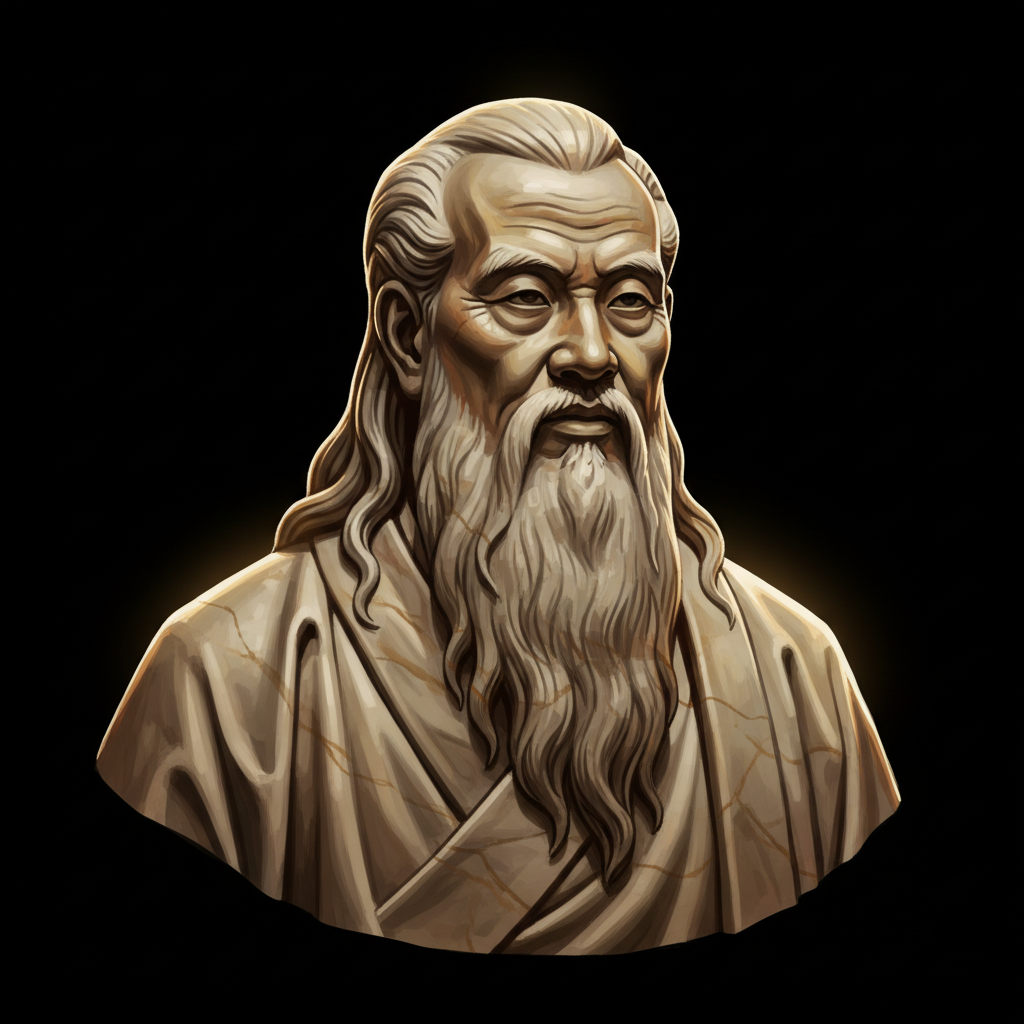
Reputed founder of Taoism and author of the Tao Te Ching, whose wu wei (effortless action) shaped East Asian philosophy. Closely associated with Zhuangzi (later Taoist who extended Laozi's framework). For an intellectual contrast, see Confucius, near-contemporary Chinese sage of social ritual and duty — Confucius systematized social order through ritual and hierarchy; Laozi argued that all such systems were the disease, not the cure — the two founding poles of Chinese moral philosophy.
Found in 1 providers: grok
1 source checked
Holding tightly to possessions, positions, relationships, or outcomes sets you up for loss, because everything eventually changes or disappears. The wise person enjoys what comes without gripping it, so when circumstances shift there is nothing to be torn away. You cannot lose what you never claimed as yours. Non-attachment is not coldness or withdrawal; it is a flexible stance toward life that prevents suffering when things inevitably move on.
Laozi taught wu wei, effortless action, and saw clinging as the root of frustration. Legend says he served as an archivist in the Zhou court, then walked away from position and status when he saw the dynasty declining, writing the Tao Te Ching at a border pass before vanishing west. That act embodied his own lesson: by holding nothing, including his career and fame, he left freely and lost nothing he valued.
Laozi lived during the late Zhou period, around the 6th century BCE, as centralized authority crumbled and warring states jockeyed for territory, wealth, and noble rank. Officials clung to posts that vanished overnight; families lost estates to conquest. Against this churn, rival schools like early Confucianism preached duty and proper roles, while Laozi's circle argued the opposite: grasping at rank and possessions in such an unstable age guaranteed grief, so release was survival.
AI-generated insights based on extensive research and information for context. Factual errors? Email [email protected].
Your cart is empty