What it means
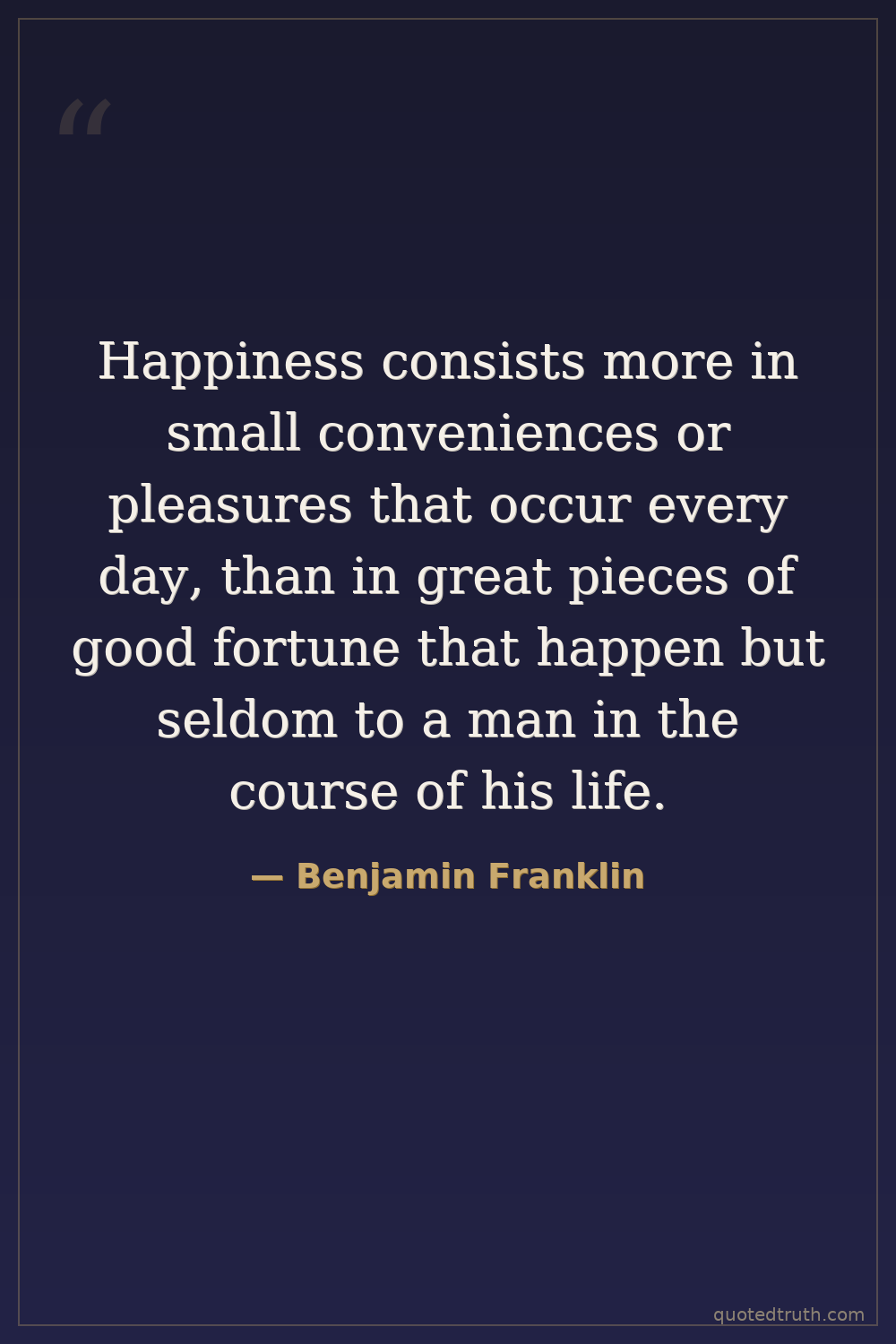
True happiness is built from small, everyday pleasures and conveniences rather than rare strokes of great fortune. Life's big lucky breaks—windfalls, dramatic triumphs—happen too seldom to sustain a happy life. What actually drives contentment is the daily texture of living: routine comforts, small satisfactions, ordinary pleasures. The accumulated weight of everyday goods outweighs the occasional extraordinary event in determining how genuinely happy a person feels.
Relevance to Benjamin Franklin
Franklin embodied this through his career as printer, inventor, and public servant. He created the Franklin stove, bifocals, and lightning rod—practical devices improving daily comfort, not grand monuments. His Poor Richard's Almanack preached frugality, diligence, and savoring modest pleasures. A self-made man born into poverty, Franklin rose through steady daily effort rather than inherited fortune, making him intimately familiar with how small conveniences—warm rooms, good eyesight, reliable tools—sustain real wellbeing.
The era
Franklin wrote during the 18th-century Enlightenment, when philosophers actively debated the nature of human happiness. In colonial America, life was physically demanding—harsh winters, uncertain harvests, limited medicine. Great fortunes were largely reserved for landed gentry and aristocracy. For ordinary colonists, small improvements—a warmer hearth, better tools, reliable trade—made genuine daily differences. The era's philosophical shift away from religious salvation toward earthly wellbeing made Franklin's pragmatic happiness calculus both timely and culturally significant.
AI-generated insights based on extensive research and information for context. Factual errors? Email [email protected].