Carl Linnaeus — "Natural bodies are divided into three kingdoms of nature: viz. the mineral, vege…"

Natural bodies are divided into three kingdoms of nature: viz. the mineral, vegetable, and animal kingdoms. Minerals grow, Plants grow and live, Animals grow, live, and have feeling.
Carl Linnaeus — Carl Linnaeus Early Modern · Biological taxonomy

Get This Quote & Author's Image Illustrated On:

Click any product to generate a realistic preview. Up to 3 at a time.
* Initial load can take up to 90 seconds — revising the preview in another color is nearly instant.

Kitchen

Apparel

Other

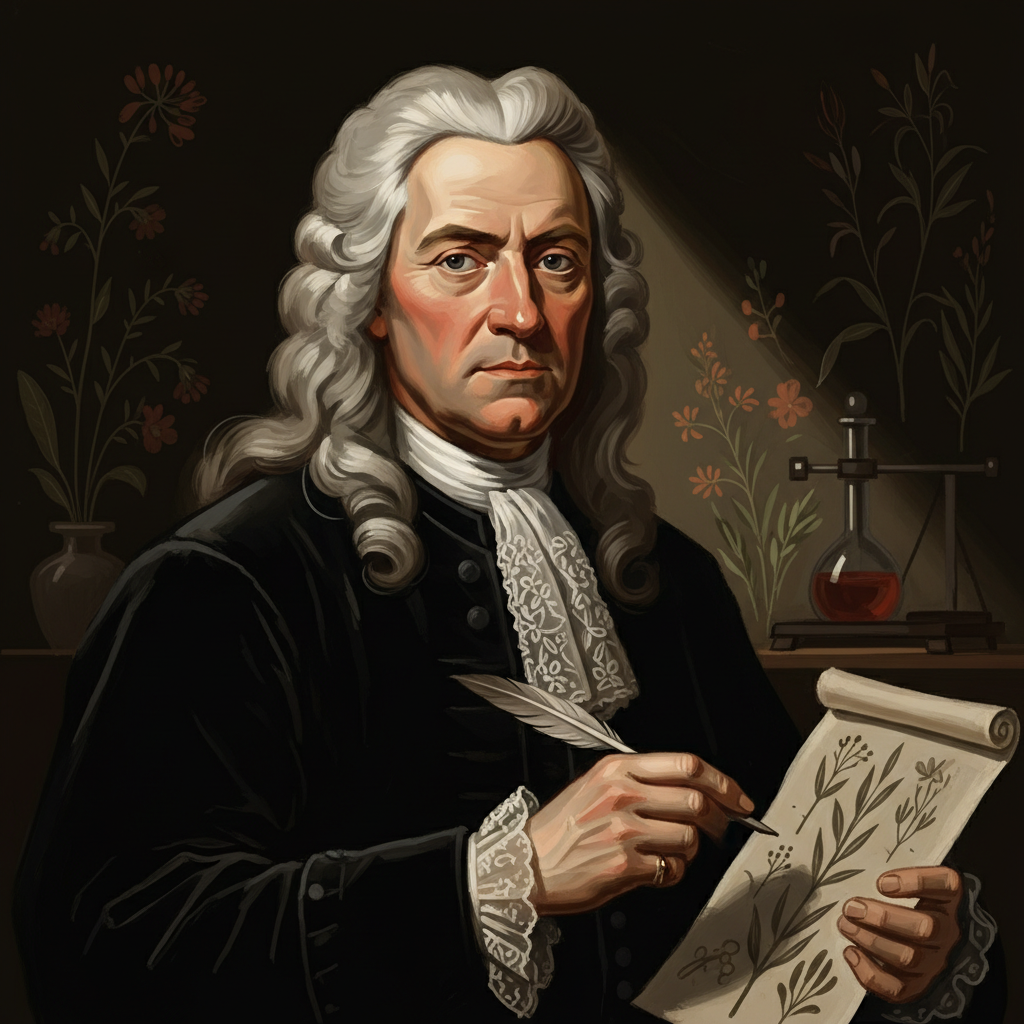
About Carl Linnaeus (1707-1778)

Swedish botanist and the father of modern taxonomy whose Systema Naturae (1735) introduced binomial nomenclature for naming all species. Closely associated with Joseph Banks (British naturalist who carried Linnaean classification on Cook's voyages). For an intellectual contrast, see Comte de Buffon, French naturalist and Histoire Naturelle author (1749-1788) — Buffon explicitly attacked Linnaean fixed-categories taxonomy as artificial and rejected the binomial system; his gradualist, environment-shaped natural history was the explicit alternative. Anticipates the fixed-species-vs-evolution debate Darwin would later resolve.

Details

From 'Systema Naturae' (1735), outlining his fundamental classification of the natural world, with philosophical distinctions between life forms.

Date: 1735

Philosophical

Verification

Unverifiable

Found in 1 providers: gemini

1 source checked

Understanding this quote

What it means

The natural world divides into three distinct kingdoms based on increasing complexity: minerals merely accumulate and grow through addition, plants grow and sustain life through biological processes, and animals do both while additionally possessing sensation and awareness. This hierarchical framework ranks nature by ascending capacities, creating a clear organizational ladder from inert matter through living organisms to sentient creatures.

Relevance to Carl Linnaeus

Linnaeus built his career on systematic classification, devising binomial nomenclature still used today. This three-kingdom framework reflects his lifelong drive to impose logical order on nature's diversity. As a botanist who catalogued thousands of species, he understood plants deeply, and his hierarchical thinking — distinguishing minerals, plants, animals by capability — mirrors the same categorical rigor that defined his taxonomic revolution.

The era

In the 18th-century Enlightenment, natural philosophers sought rational frameworks to replace superstition and myth. Linnaeus worked when Europeans were encountering thousands of new species through global exploration, creating urgent need for systematic classification. His three-kingdom hierarchy offered educated Europeans a coherent map of creation, aligning with Enlightenment ideals of reason, order, and humanity's capacity to comprehend and catalogue the natural world.

AI-generated insights based on extensive research and information for context. Factual errors? Email [email protected].
Your Cart

Your cart is empty