What it means
Excessive rules and control backfire. When a government piles on restrictions, people end up impoverished because they can't freely trade, work, or adapt. Arming a populace heavily breeds instability. Clever tricks and over-engineered skills produce strange, dysfunctional outcomes. And the more statutes you write, the more criminals you create, because every new law invents a new category of lawbreaker and pushes ordinary people into outlaw status.
Relevance to Laozi
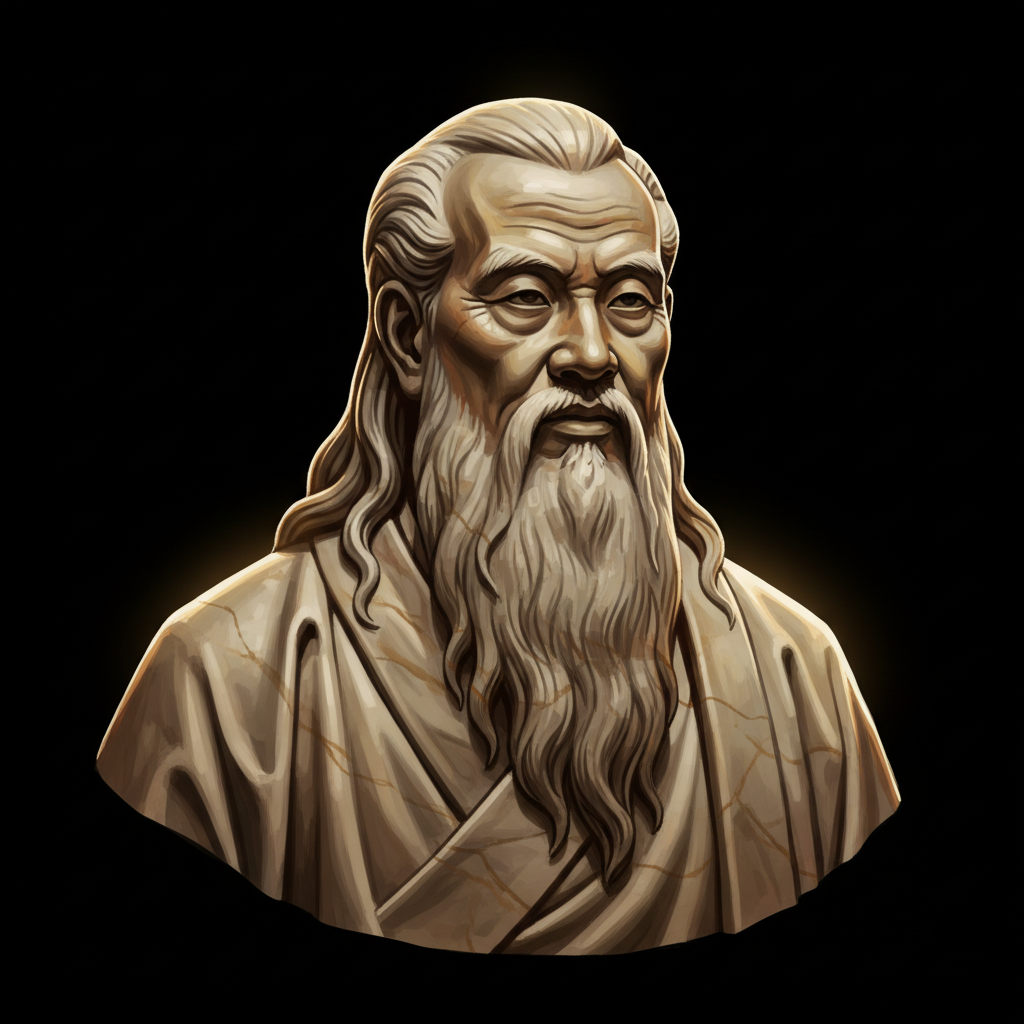
Laozi reportedly served as a royal archivist in the Zhou court, giving him a close view of bureaucratic overreach and legal machinery. Disillusioned with civilization's complexity, he is said to have ridden west on a water buffalo, leaving the Tao Te Ching at a border pass. His core teaching, wu wei (effortless non-action), argues that the wisest ruler governs least, letting people return to natural simplicity rather than imposing order.
The era
Laozi lived during the late Zhou dynasty, likely the Spring and Autumn period (around the 6th century BCE), a time of crumbling feudal authority, constant warfare between rival states, and competing philosophical schools trying to fix the chaos. Confucians pushed elaborate rituals and legal codes; Legalists would soon demand harsh punishments. Laozi's warning landed in a society drowning in proclamations and conscription, where ordinary farmers watched rulers multiply decrees while banditry and poverty only worsened.
AI-generated insights based on extensive research and information for context. Factual errors? Email [email protected].