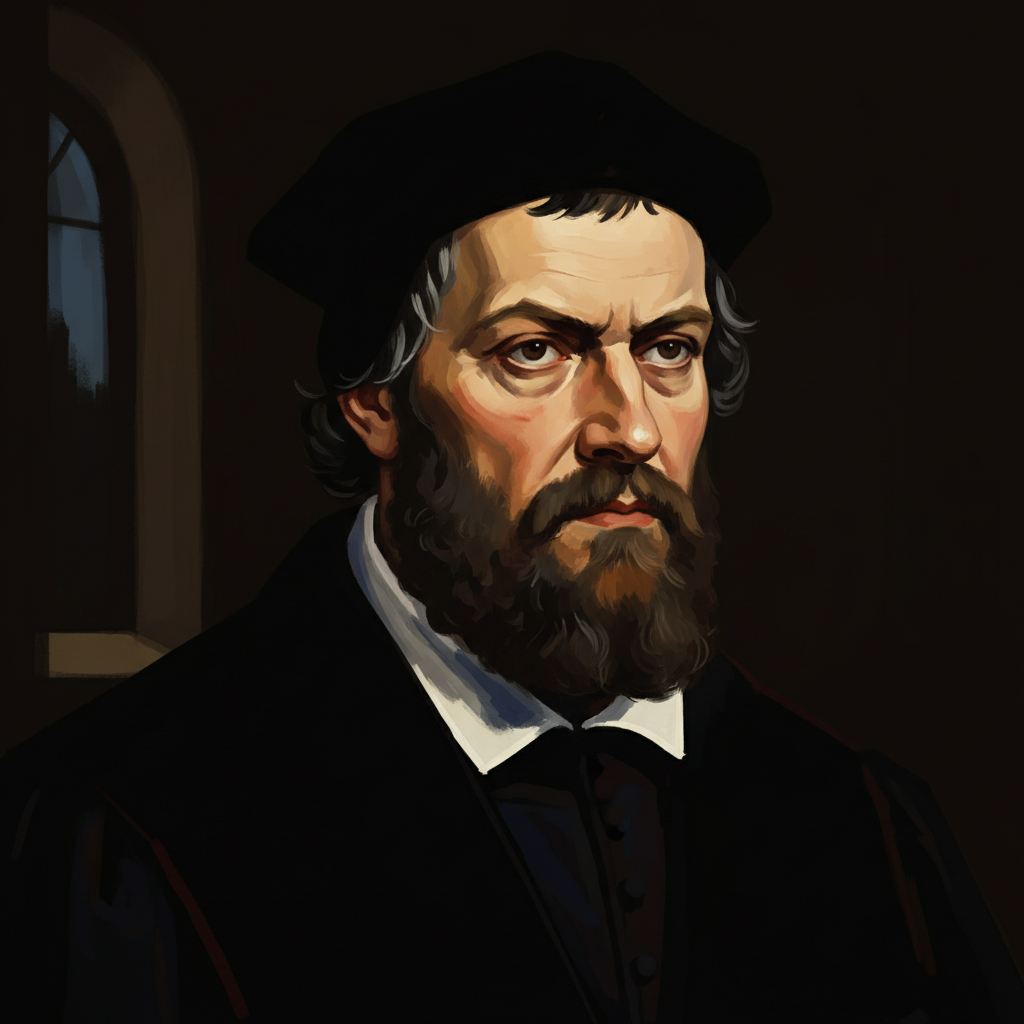
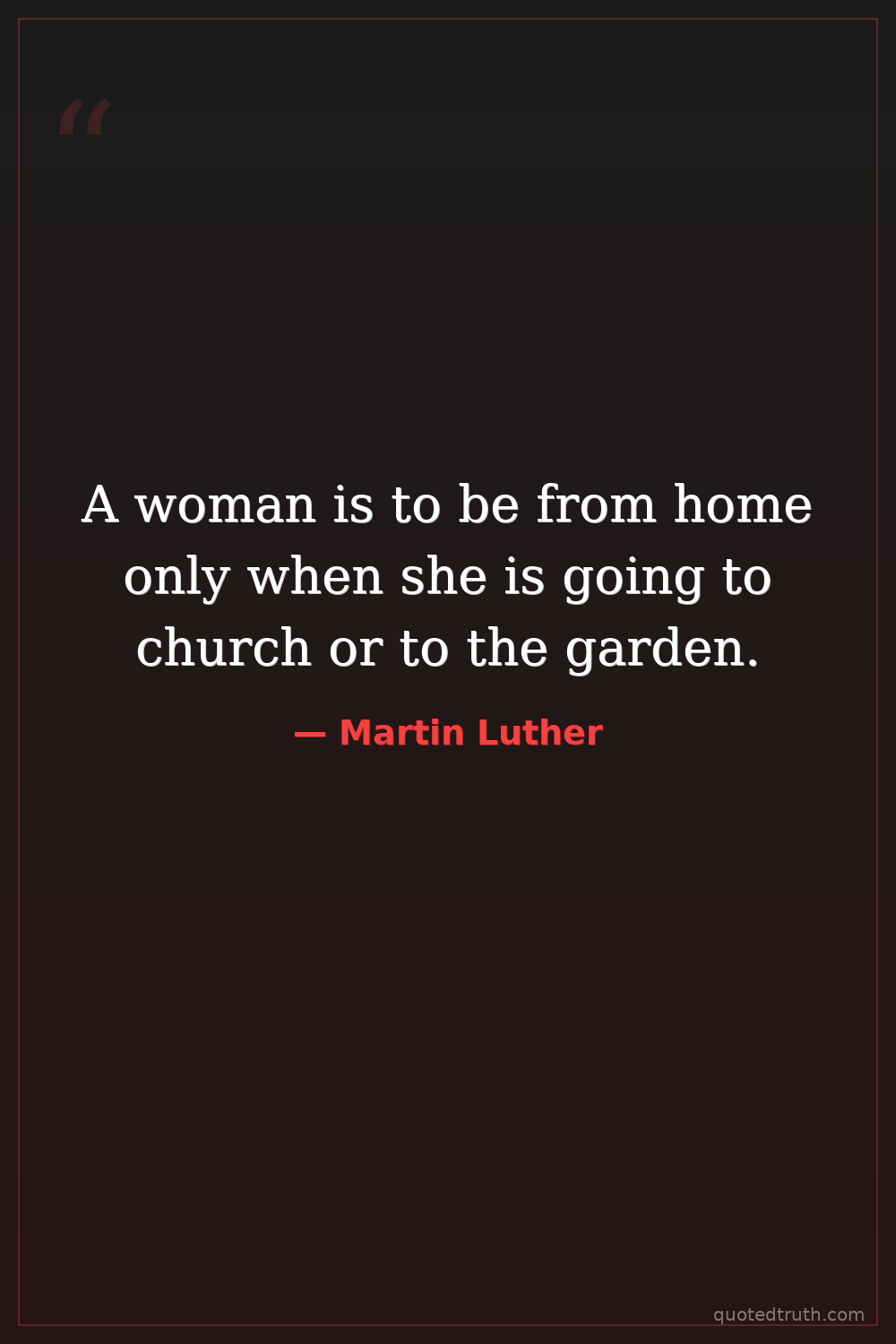
Martin Luther — "A woman is to be from home only when she is going to church or to the garden."
A woman is to be from home only when she is going to church or to the garden.
A woman is to be from home only when she is going to church or to the garden.
Click any product to generate a realistic preview. Up to 3 at a time.
* Initial load can take up to 90 seconds — revising the preview in another color is nearly instant.
"The inner man cannot be forced to do out of his own free will, what he should do, except the grace of God change the heart and make it willing."
"The fewer the words, the better the prayer."
"Fourthly, their rabbis must be forbidden under threat of death to teach any more."
"A theologian is born by living, nay dying and being damned, not by thinking, reading, or speculating."
"I would have been a saint if I had remained in the monastery, but I was forced to become a devil."
German theologian whose 95 Theses (1517) launched the Protestant Reformation and broke the Catholic Church's monopoly on Western Christianity. Closely associated with Philipp Melanchthon (Lutheran systematizer) and John Calvin (later Reformer who built on Luther's break). For an intellectual contrast, see Pope Leo X, Renaissance pope (1513-1521) — Leo X's indulgence sales triggered Luther's break and Leo excommunicated him in 1521 — Luther's entire Reformation is structured as a direct answer to the indulgence-funded Vatican Leo represented.
Found in 1 providers: deepseek
1 source checked
This saying argues that a woman's proper place is inside the household, and she should only step outside for two approved reasons: religious worship or tending a garden. Any other public activity, travel, or social involvement is treated as improper. In modern terms, it prescribes a highly restricted domestic role, limiting women's movement and participation in public life to narrow, supervised, morally sanctioned errands tied to faith or family sustenance.
Luther, a former Augustinian monk who married ex-nun Katharina von Bora in 1525, repeatedly wrote on marriage, household order, and gender roles. He rejected clerical celibacy and elevated marriage as a divine calling, yet framed wives as subordinate household managers. Katharina ran the Wittenberg household, brewery, and farm, fitting the 'home and garden' ideal. Statements like this reflect his patriarchal theology of separate spheres, drawn from his readings of Genesis and Paul.
In early-modern Europe, the 1520s Reformation was dismantling convents, pushing former nuns into marriage and redefining the Christian household as the new spiritual center. Legal codes, guild rules, and city ordinances restricted women from trades, politics, and unchaperoned travel. Church attendance and kitchen gardens were among the few socially sanctioned public movements for respectable wives. Luther's Germany was also gripped by the Peasants' War and plague fears, intensifying anxieties about social order, female modesty, and household discipline.
AI-generated insights based on extensive research and information for context. Factual errors? Email [email protected].
Your cart is empty