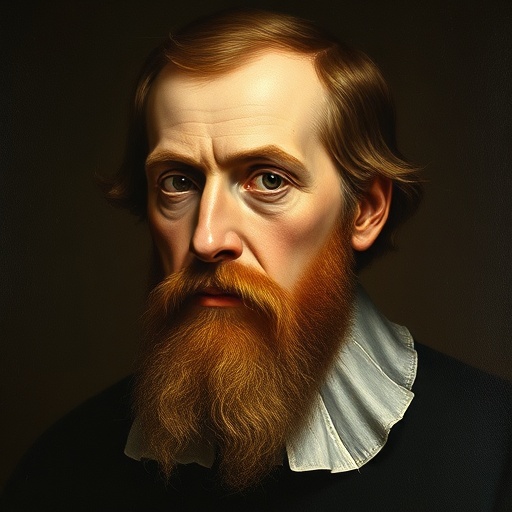
John Calvin — "God's purpose is immutable, and cannot be changed."
God's purpose is immutable, and cannot be changed.
God's purpose is immutable, and cannot be changed.
Click any product to generate a realistic preview. Up to 3 at a time.
* Initial load can take up to 90 seconds — revising the preview in another color is nearly instant.
"Without knowledge of God, there is no true knowledge of self."
"The wicked are justly condemned, because they are not only alien from God, but are also full of all impurity."
"All who are truly godly desire to live a holy life."
"We are not our own; we belong to God."
"The reprobate are blinded that they may not see, and hardened that they may not feel."
French theologian whose Institutes of the Christian Religion (1536) systematized Protestant Reformed doctrine, including predestination. Closely associated with Martin Luther (Reformation founder, Calvin's predecessor). For an intellectual contrast, see Jacobus Arminius, Dutch Reformed theologian (1560-1609) — Arminius's rejection of strict double-predestination founded Arminianism — the theological tradition modern Methodism, most evangelicalism, and Pentecostalism descend from. The Calvinist-Arminian debate has divided Protestantism for 400 years.
Found in 1 providers: grok
1 source checked
God's will is fixed and permanent — it cannot be redirected, modified, or reversed by human actions, prayers, or circumstances. Whatever God has determined will happen exactly as intended. This connects directly to predestination: God's decisions about who receives salvation were made before creation and cannot be altered by human effort, religious ritual, or free choice. The divine plan stands regardless of what people do or fail to do.
Calvin built his entire theological system — most fully expressed in the Institutes of the Christian Religion — around God's absolute sovereignty. His doctrine of double predestination held that God eternally elects some for salvation and others for damnation, fixed before birth. In Geneva, he shaped civil governance around this unchangeable divine order and refused to soften church doctrine under political pressure. His conviction that God's plan was not negotiable defined every institutional and theological decision he made.
During the Reformation, the Catholic Church taught that salvation depended partly on human cooperation through sacraments, confession, and indulgences purchased from Rome. Calvin's insistence on God's immutable purpose directly countered this: if God's plan cannot be changed, no papal decree, purchased indulgence, or priestly ritual can alter one's eternal standing. Amid religious wars in France and Germany and the Catholic counter-response at the Council of Trent, questions about divine authority versus human agency carried genuine life-or-death stakes.
AI-generated insights based on extensive research and information for context. Factual errors? Email [email protected].
Your cart is empty