What it means
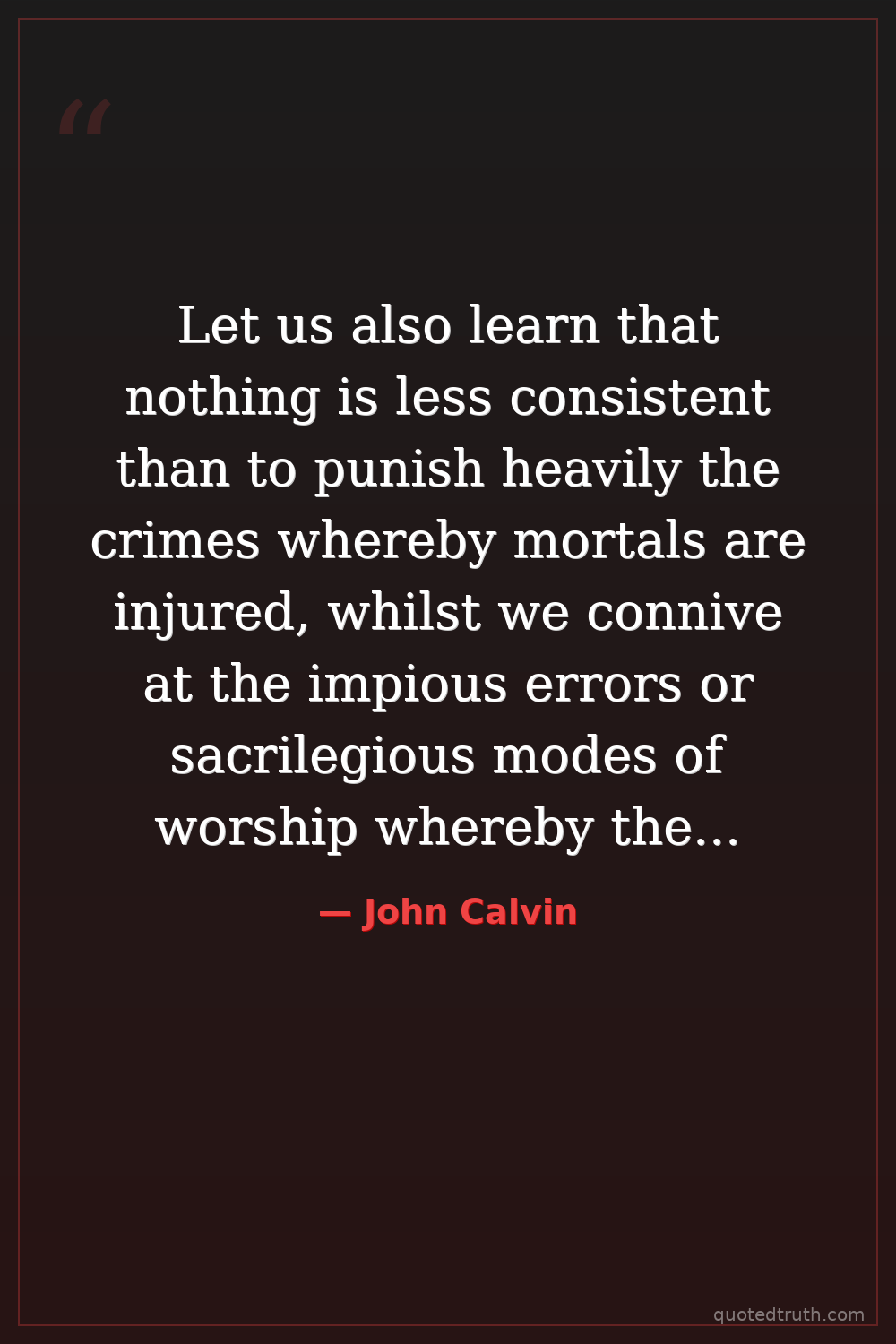
It is deeply inconsistent to harshly punish crimes that harm other people while overlooking religious errors and false worship that dishonor God. If society enforces justice for human victims, it must equally — or more urgently — enforce reverence toward God. Tolerating impiety while prosecuting theft or violence reveals a broken moral hierarchy: human dignity is protected but divine majesty is left undefended.
Relevance to John Calvin
Calvin built Geneva into a theocratic city-state where civil law and church discipline reinforced each other. He approved Michael Servetus's 1553 execution for denying the Trinity, embodying this exact logic: heresy against God warranted death as surely as murder did. His Institutes argued magistrates bore God-given duty to uphold true worship, not merely civil order. Calvin saw lax enforcement of doctrine as a direct betrayal of God's sovereignty.
The era
The 16th-century Reformation shattered Western Christianity's unity, making enforcement of correct doctrine a political emergency. Every major power — Catholic and Protestant — used heresy trials, executions, and religious wars to impose orthodoxy. Calvin's Geneva competed against Catholic Inquisitions and rival Protestant factions. Blasphemy laws were standard governance. The era's central question was whether civil magistrates must enforce true religion — Calvin answered unequivocally yes, making this statement a governing principle, not merely theology.
AI-generated insights based on extensive research and information for context. Factual errors? Email [email protected].