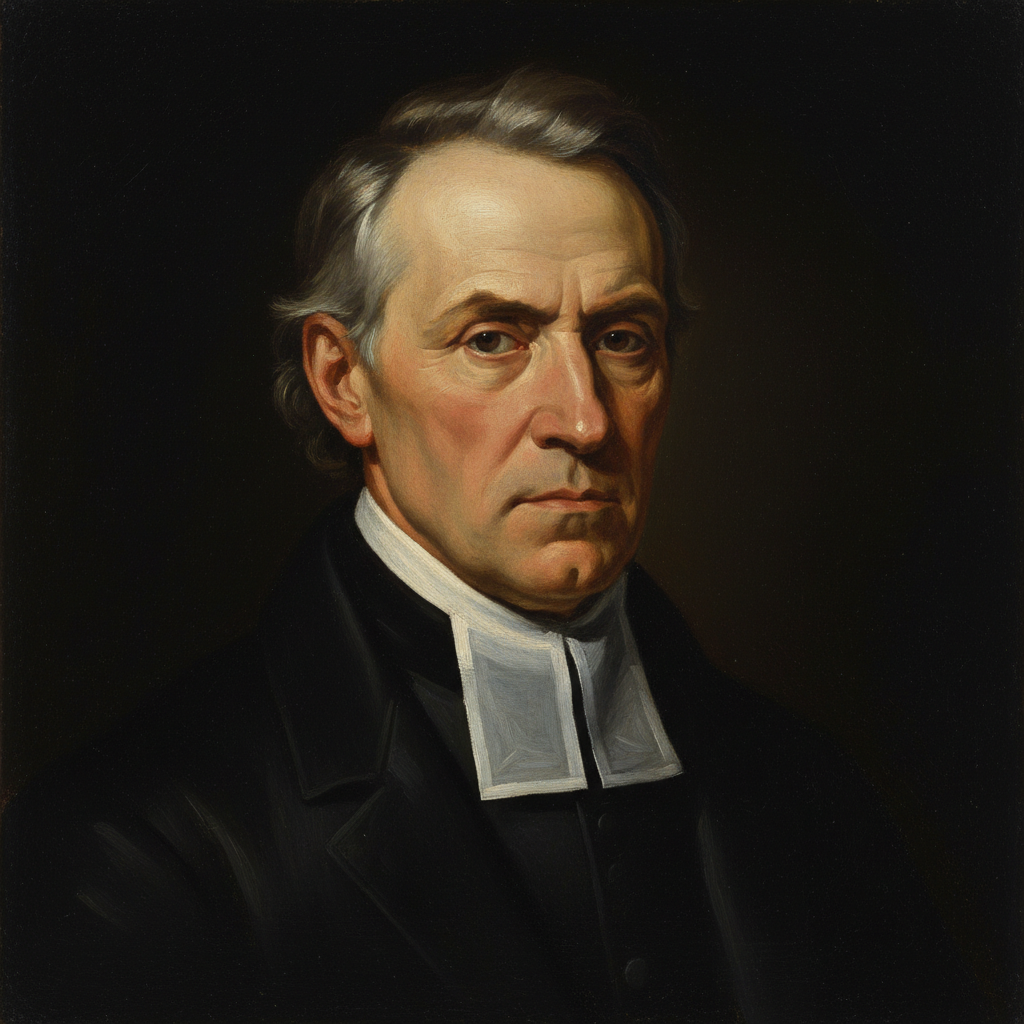
John Wesley — "Beware you be not swallowed up in books! An ounce of love is worth a pound of kn…"
Beware you be not swallowed up in books! An ounce of love is worth a pound of knowledge.
Beware you be not swallowed up in books! An ounce of love is worth a pound of knowledge.
Click any product to generate a realistic preview. Up to 3 at a time.
* Initial load can take up to 90 seconds — revising the preview in another color is nearly instant.
"It is not possible for any one to be a true Christian believer, and not be a lover of mankind."
"I set myself on fire, and people come to watch me burn."
"The more I see of the working of the present government, the more I am convinced that they are ripe for destruction."
"Holiness of heart and life is the one great end of all our preaching."
"And are we not to use our reason? Unquestionably. But no more than we are to use our hands or feet. We are to use it as a servant, not as a master."
English Anglican cleric and founder of Methodism, whose open-air preaching and class-meeting structure created the largest 18th-century evangelical revival. Closely associated with Charles Wesley (his hymn-writing brother) and George Whitefield (early co-revivalist, later doctrinal opponent). For an intellectual contrast, see George Whitefield, Calvinist evangelical revivalist — Whitefield's predestinarian Calvinism vs Wesley's free-grace Arminian theology split the early Methodist movement permanently in the 1739-41 break. The founding evangelical Calvinist-Arminian schism — the two parallel evangelical traditions American Christianity descends from.
Found in 1 providers: deepseek
1 source checked
Don't let intellectual pursuits consume you entirely. Genuine love and compassion for others carries far more real-world value than accumulated learning or scholarship. Knowing things matters far less than actually caring for people and acting on that care in practical, meaningful ways.
Wesley rode 250,000 miles on horseback preaching to coal miners, prisoners, and the poor—people scholars ignored. He founded Methodist societies focused on active charity: feeding the hungry, visiting prisons, educating children. His entire movement prioritized practical holiness over theological debate, embodying exactly this tension between head and heart.
The 18th-century Enlightenment elevated reason, scholarship, and rational inquiry above all else. Universities were elite institutions disconnected from common suffering. Wesley's warning pushed back against intellectual pride dominating both Anglican clergy and educated society, insisting Christianity's true measure was compassionate action amid poverty, disease, and industrial displacement transforming England.
AI-generated insights based on extensive research and information for context. Factual errors? Email [email protected].
Your cart is empty