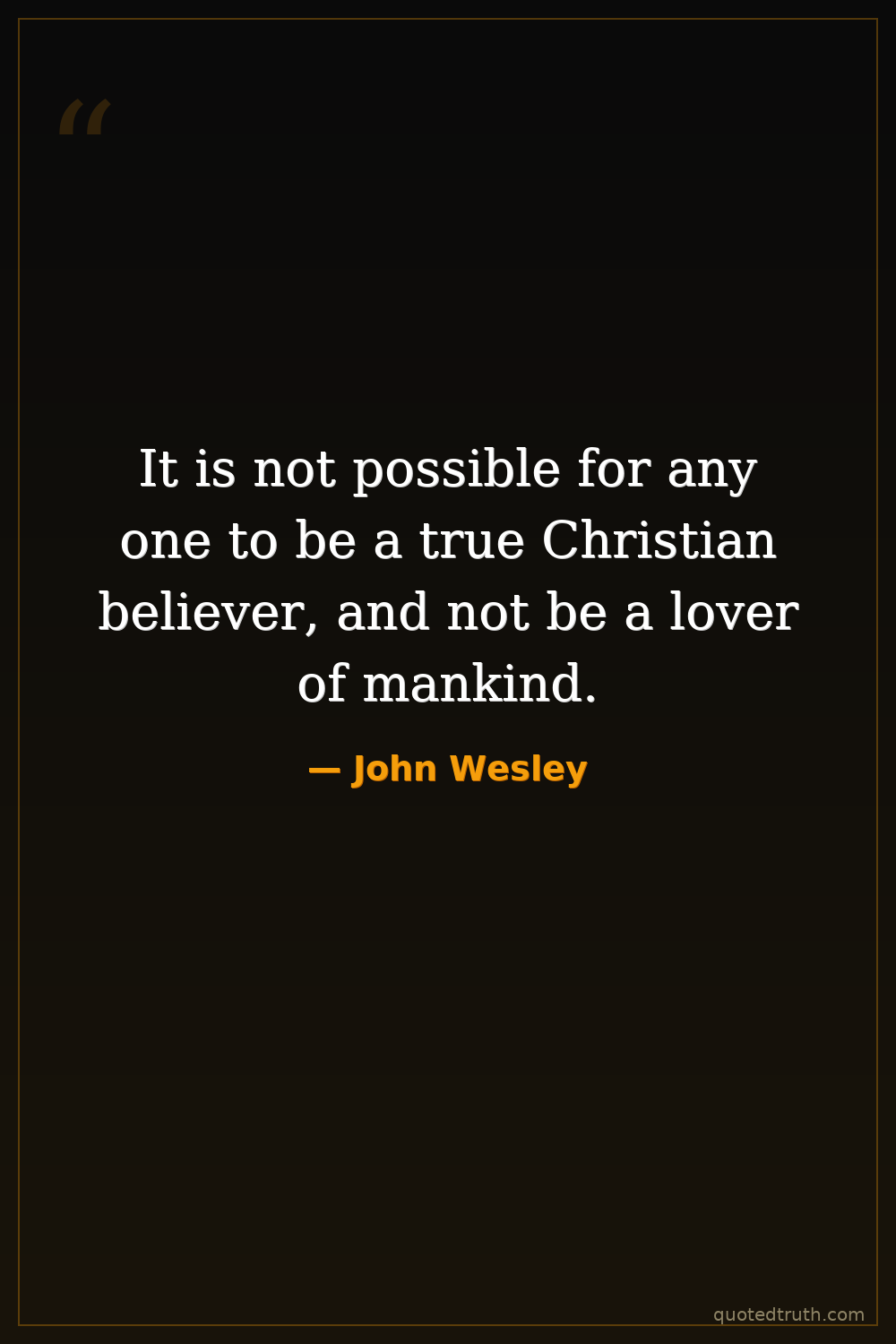
John Wesley — "It is not possible for any one to be a true Christian believer, and not be a lov…"
It is not possible for any one to be a true Christian believer, and not be a lover of mankind.
It is not possible for any one to be a true Christian believer, and not be a lover of mankind.
Click any product to generate a realistic preview. Up to 3 at a time.
* Initial load can take up to 90 seconds — revising the preview in another color is nearly instant.
"The more I see of the working of the present government, the more I am convinced that they are ripe for destruction."
"By Methodists, I mean such as profess to pursue a Christian life by Scriptural rules and methods."
"I have often thought that the reason why so few are saved, is, because so few are willing to be saved."
"I am not afraid of giving too much trouble to God. He is able to bear it."
"I am not afraid of any man, but I am afraid of God."
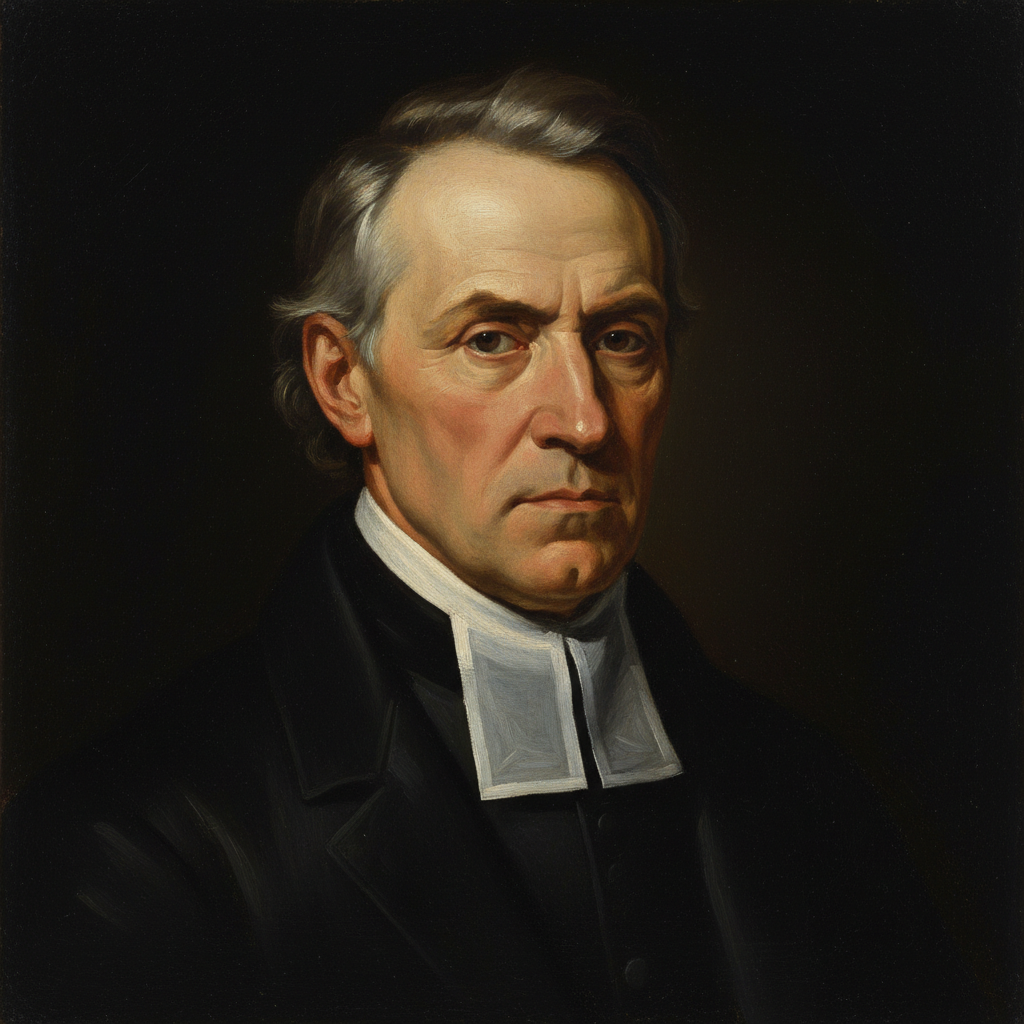
English Anglican cleric and founder of Methodism, whose open-air preaching and class-meeting structure created the largest 18th-century evangelical revival. Closely associated with Charles Wesley (his hymn-writing brother) and George Whitefield (early co-revivalist, later doctrinal opponent). For an intellectual contrast, see George Whitefield, Calvinist evangelical revivalist — Whitefield's predestinarian Calvinism vs Wesley's free-grace Arminian theology split the early Methodist movement permanently in the 1739-41 break. The founding evangelical Calvinist-Arminian schism — the two parallel evangelical traditions American Christianity descends from.
Found in 1 providers: grok
1 source checked
Genuine Christian faith cannot be separated from love for all people. If you truly believe, you cannot remain indifferent to humanity—compassion flows naturally from authentic conviction. Faith that produces no care for others is hollow or counterfeit. Wesley states a logical necessity: real belief transforms the believer into someone who actively loves and serves people. Love of mankind is not an add-on to Christianity; it is its essential expression.
Wesley (1703–1791) embodied this claim throughout his life. He preached to coal miners, prisoners, and the urban poor whom the established Church largely ignored. He founded Methodist societies running free clinics, schools, and lending funds for the destitute. His theology of practical holiness required social action as evidence of genuine faith. This conviction drove him to travel 250,000 miles and deliver 40,000 sermons, insisting Christianity must be lived outward rather than practiced as private piety.
Wesley worked during 18th-century Britain, when early industrialization created mass urban poverty, brutal prison conditions, and child labor while the Anglican establishment remained largely passive toward social suffering. The Enlightenment simultaneously championed human dignity and reason. His Methodist movement responded to both pressures, demanding Christians confront suffering directly. His statement challenged comfortable, privatized religion at a moment when rapid social upheaval made compassionate action urgent and the institutional Church's silence increasingly indefensible.
AI-generated insights based on extensive research and information for context. Factual errors? Email [email protected].
Your cart is empty