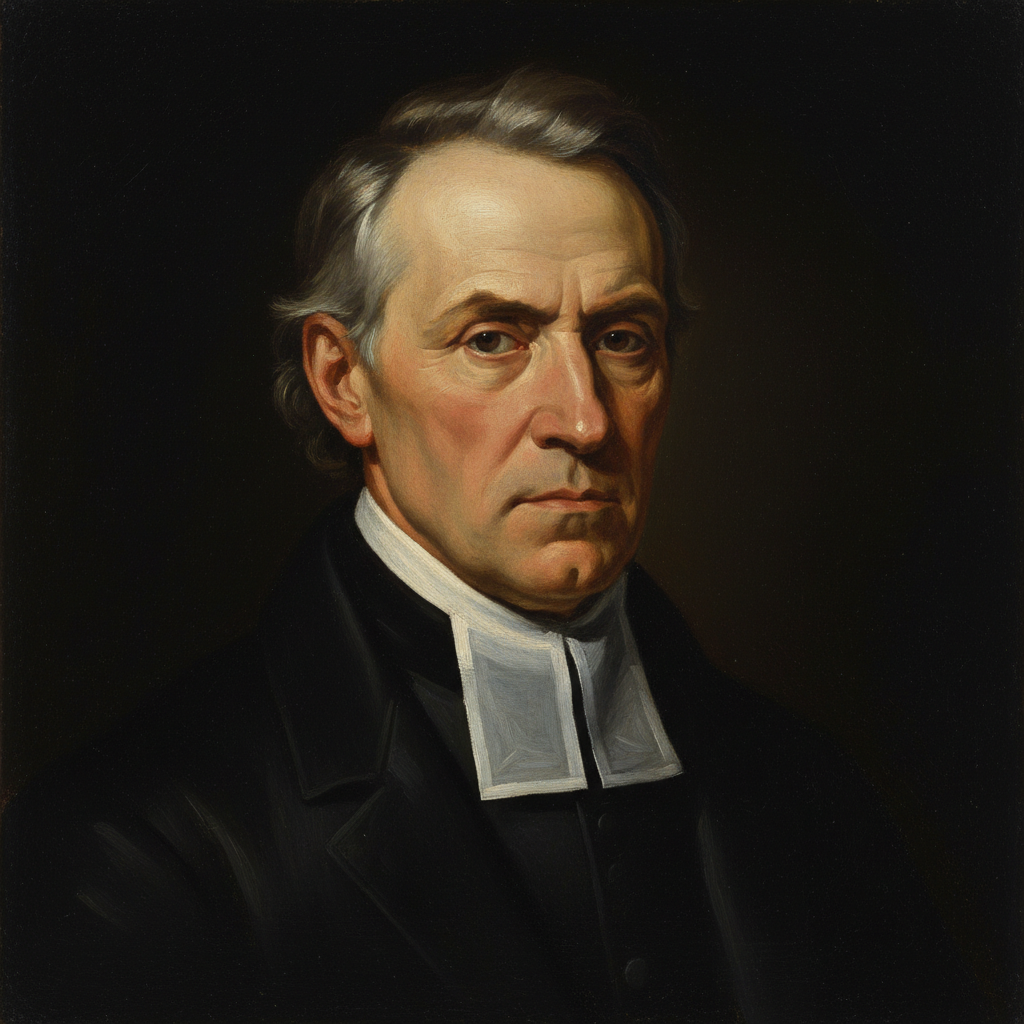
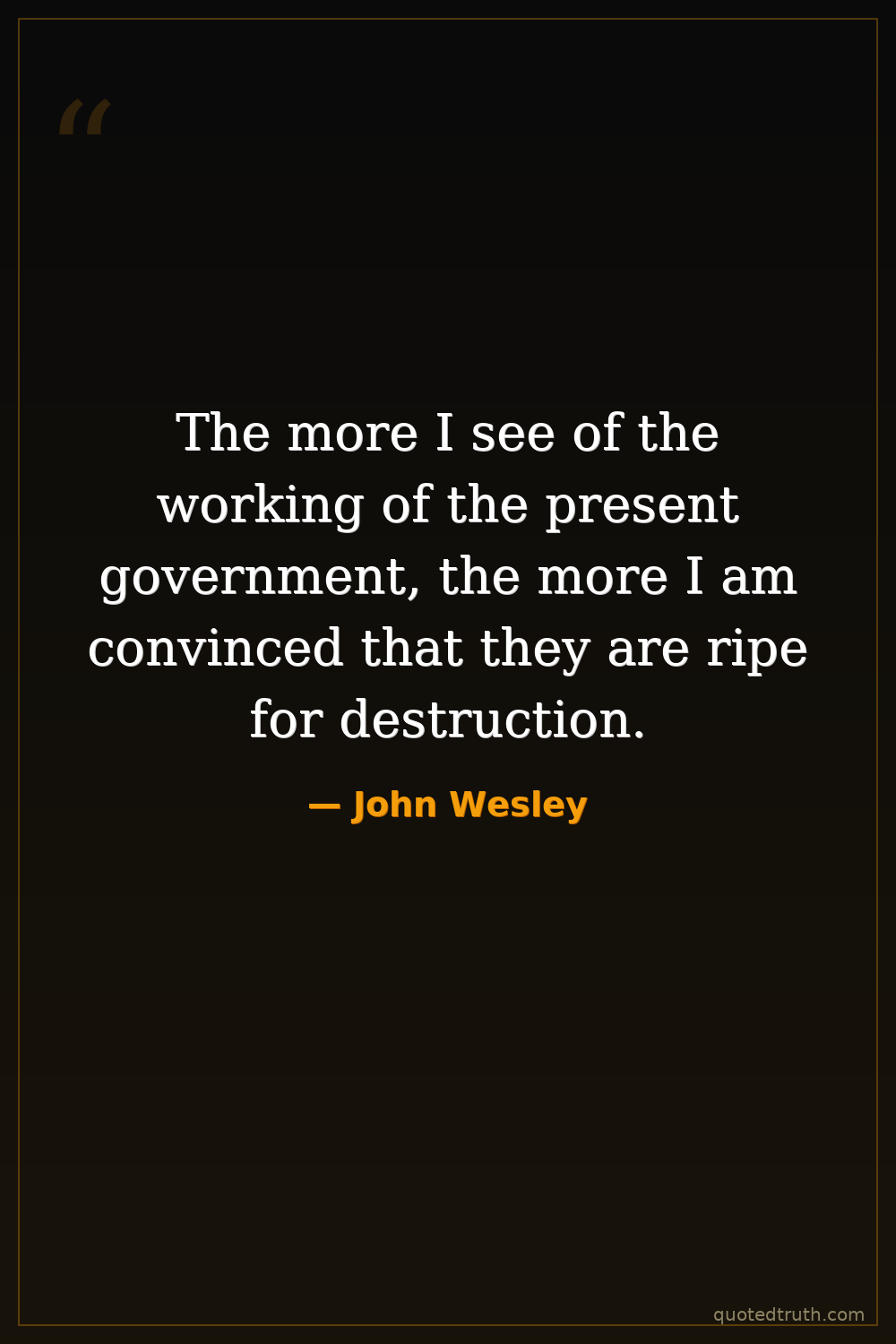
John Wesley — "The more I see of the working of the present government, the more I am convinced…"
The more I see of the working of the present government, the more I am convinced that they are ripe for destruction.
The more I see of the working of the present government, the more I am convinced that they are ripe for destruction.
Click any product to generate a realistic preview. Up to 3 at a time.
* Initial load can take up to 90 seconds — revising the preview in another color is nearly instant.
"I have learned to suffer in silence, and not to make my complaints known to any but God."
"I am not careful about my life or my death. I know that I am in the hands of God."
"I have been as much as possible upon the stretch for 70 years, and I bless God, I am not tired yet."
"The greatest enemy to human happiness is the love of money."
"I have often thought, that if I were to choose a profession, it should be that of a physician."
English Anglican cleric and founder of Methodism, whose open-air preaching and class-meeting structure created the largest 18th-century evangelical revival. Closely associated with Charles Wesley (his hymn-writing brother) and George Whitefield (early co-revivalist, later doctrinal opponent). For an intellectual contrast, see George Whitefield, Calvinist evangelical revivalist — Whitefield's predestinarian Calvinism vs Wesley's free-grace Arminian theology split the early Methodist movement permanently in the 1739-41 break. The founding evangelical Calvinist-Arminian schism — the two parallel evangelical traditions American Christianity descends from.
Found in 1 providers: grok
1 source checked
Wesley believes the government he observes is so corrupt, incompetent, or morally bankrupt that its collapse is inevitable and perhaps deserved. He's not predicting destruction neutrally but diagnosing a terminal condition — the rulers have exhausted whatever legitimacy or virtue once sustained them, and ruin is the natural consequence of their continued failures.
Wesley spent decades traveling Britain witnessing poverty, gin epidemics, press gangs, and parliamentary corruption firsthand. As a preacher to the working poor, he saw government indifference to suffering as moral failure. His Methodist theology held that sin carried consequences; a government ignoring justice was, to him, courting divine judgment as surely as any individual sinner.
18th-century British government was riddled with rotten boroughs, patronage networks, and aristocratic self-dealing. The American colonies were in open revolt partly over these same corruptions. Industrial displacement was creating urban misery while Parliament debated privilege. Wesley witnessed Walpole-era cynicism institutionalized — bribery normalized, the poor unrepresented, and reform movements systematically crushed by entrenched interests.
AI-generated insights based on extensive research and information for context. Factual errors? Email [email protected].
Your cart is empty