Pythagoras — "Do not sit on a quart measure."
Do not sit on a quart measure.
Do not sit on a quart measure.
Click any product to generate a realistic preview. Up to 3 at a time.
* Initial load can take up to 90 seconds — revising the preview in another color is nearly instant.
"Choose rather to be strong of soul than strong of body."
"The highest goal of music is to connect one's soul to their Divine Nature, not entertainment."
"Do not give sleep to your eyes nor slumber to your eyelids until you have balanced the account of your soul with what is right."
"Don't keep clawed birds."
"Lust weakens both body and mind."
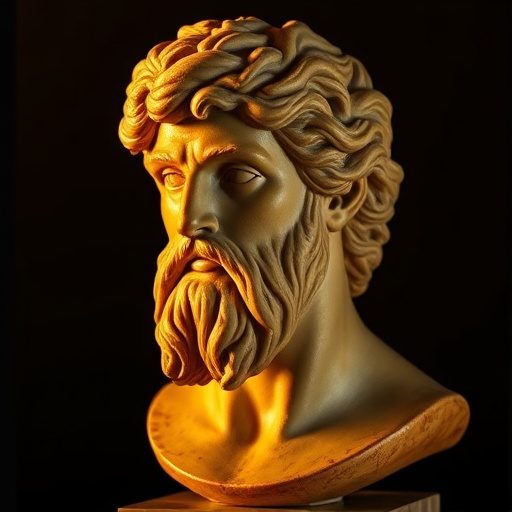
Greek philosopher and mathematician whose school in Croton combined geometry (the Pythagorean theorem), number-mysticism, and a religious-vegetarian way of life. Closely associated with Thales of Miletus (earlier pre-Socratic and the first philosopher). For an intellectual contrast, see Heraclitus, pre-Socratic Greek philosopher of flux — Heraclitus called Pythagoras 'the chief of swindlers' — among the founding insults of the philosophical-rivalry tradition. Their 'all is flux' vs 'all is number' poles still organize the philosophy of mathematics today (Platonist vs anti-realist).
A 'symbol,' possibly advising against idleness or being unproductive.
Date: c. 570 – c. 495 BC
ShockingFound in 1 providers: grok
1 source checked
Don't settle for what you already have or rest on your current gains. A quart measure holds a fixed amount, and sitting on it symbolizes becoming stuck at that level. The saying warns against complacency, stagnation, and living only on past achievements. Instead, keep working, keep earning, and keep growing rather than consuming what you've stored without replenishing it or striving for more.
Pythagoras ran a disciplined brotherhood where members pursued constant self-improvement through study, silence, and rigorous daily examination. He taught that the soul progresses through effort and reincarnation, never standing still. As a mathematician who saw numbers as infinite and relationships as endlessly discoverable, idleness contradicted his worldview. This cryptic symbolic maxim, called an akousma, fits his habit of teaching moral lessons through riddles that students had to decode and internalize.
In 6th-century BCE Greece, Pythagoras lived during a time of expanding trade, colonization, and the birth of philosophy. Merchants measured grain in quart-like containers daily, making the image immediately familiar. Agricultural and commercial societies valued thrift but also productivity. Greek aristocratic culture sometimes glorified leisure, which thinkers like Pythagoras pushed against. His school in Croton emphasized labor, discipline, and continual inquiry, countering the era's temptation to live off inherited wealth or past harvests.
AI-generated insights based on extensive research and information for context. Factual errors? Email [email protected].
Your cart is empty