What it means
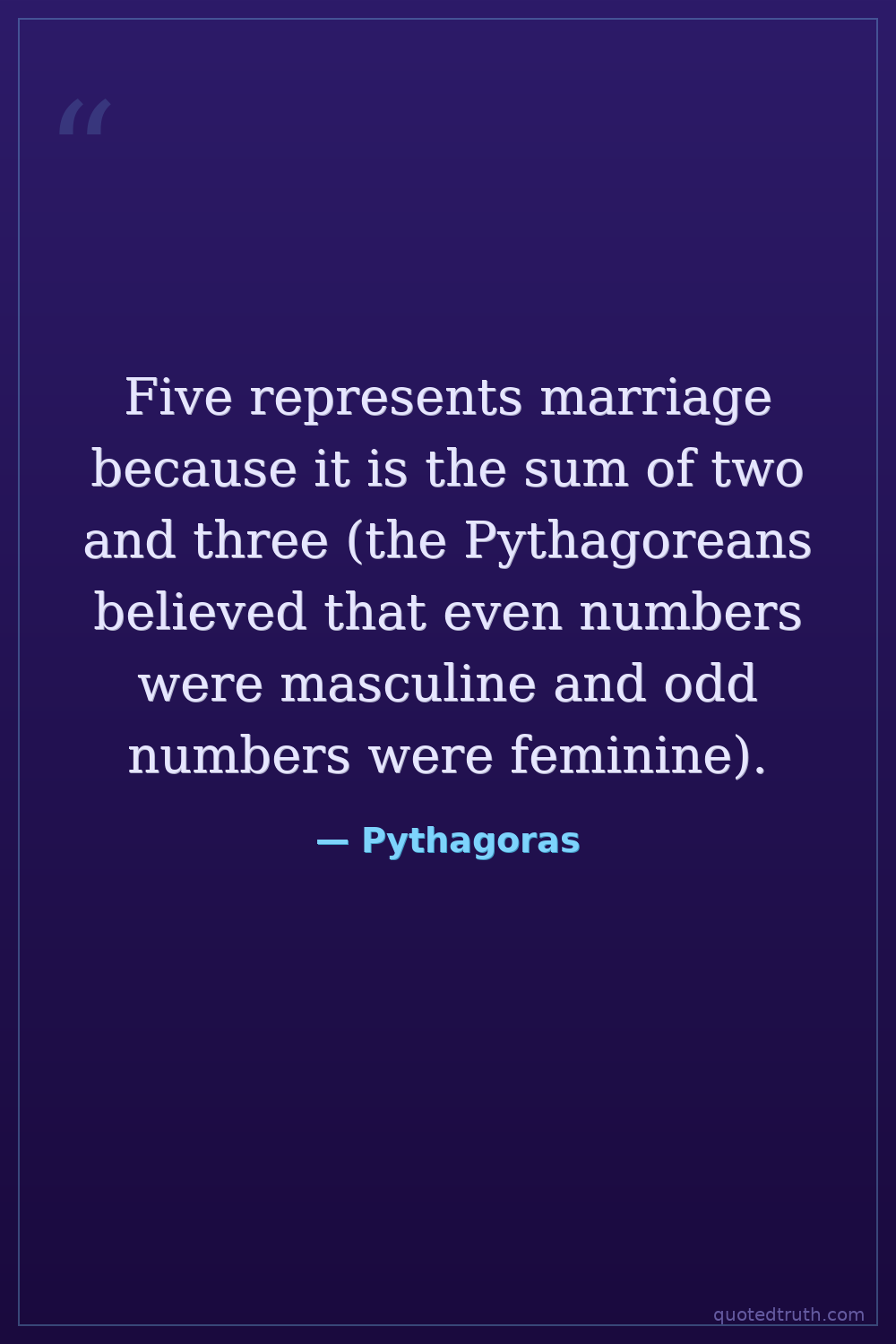
The number five symbolizes marriage in Pythagorean numerology because it unites two (deemed masculine) and three (deemed feminine) — the first even and odd numbers after one. Marriage, as the union of male and female principles, finds its numerical expression in five. This reflects a worldview where mathematics isn't abstract but encodes the fundamental dualities and relationships that structure reality and human life.
Relevance to Pythagoras
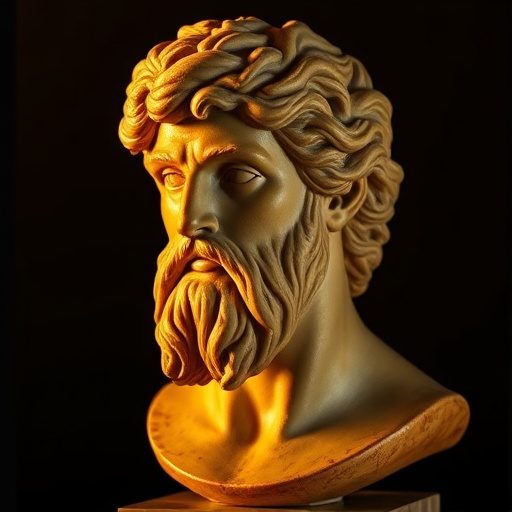
Pythagoras built an entire philosophical system on the premise that numbers govern reality — not just shapes and measurements, but ethics, cosmology, and human relationships. His brotherhood followed strict numerological rules, viewing mathematics as sacred truth. Assigning gender and social meaning to numbers was central to his school's teaching, making this quote emblematic of his fusion of mathematics with metaphysical and moral philosophy.
The era
In 6th-century BCE Greece, abstract concepts like marriage, gender, and cosmic order were increasingly explored through rational frameworks rather than pure mythology. Pre-Socratic philosophers sought universal principles underlying existence. Gender dualism was fundamental to Greek religious thought — the sacred marriage of heaven and earth was a powerful archetype — making numerical symbolism for union culturally resonant and philosophically serious to contemporary audiences.
AI-generated insights based on extensive research and information for context. Factual errors? Email [email protected].