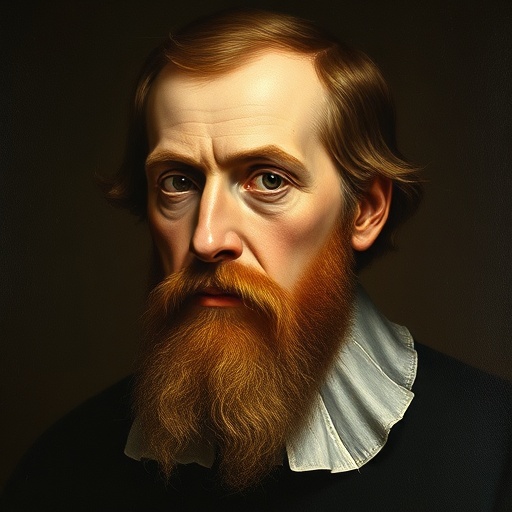
John Calvin — "God has his reasons for electing some and reprobating others, though these reaso…"
God has his reasons for electing some and reprobating others, though these reasons are hidden from us.
God has his reasons for electing some and reprobating others, though these reasons are hidden from us.
Click any product to generate a realistic preview. Up to 3 at a time.
* Initial load can take up to 90 seconds — revising the preview in another color is nearly instant.
"Whoever shall now contend that it is unjust to put heretics and blasphemers to death will knowingly and willingly incur their very guilt."
"God has a secret counsel, by which he chooses whom he will, and rejects whom he will."
"It would be indeed better to grant license to thieves and sorcerers and adulterers, than to suffer the blasphemies which the ungodly utter against God, to prevail without any punishment and without an…"
"We frankly confess that God has ordained to death those whom he has not deemed worthy of life."
"The seed of the Word of God takes root and grows fruitful only in those whom the Lord, by his eternal election, has predestined to be his children and heirs of the heavenly kingdom. To all others who,…"
French theologian whose Institutes of the Christian Religion (1536) systematized Protestant Reformed doctrine, including predestination. Closely associated with Martin Luther (Reformation founder, Calvin's predecessor). For an intellectual contrast, see Jacobus Arminius, Dutch Reformed theologian (1560-1609) — Arminius's rejection of strict double-predestination founded Arminianism — the theological tradition modern Methodism, most evangelicalism, and Pentecostalism descend from. The Calvinist-Arminian debate has divided Protestantism for 400 years.
Found in 1 providers: grok
1 source checked
God chooses certain people for salvation and others for damnation, and while this decision feels arbitrary or unjust to human minds, the reasoning behind it belongs entirely to God. We cannot access or judge divine logic with our limited understanding. Acceptance of this mystery is itself an act of faith, not a failure of theology.
Calvin built his entire theological system on the doctrine of double predestination, elaborated in his Institutes of the Christian Religion. As Geneva's dominant religious leader, he faced constant challenges defending why an all-loving God would damn souls before birth. This quote captures his core response: divine sovereignty supersedes human moral intuition, and questioning God's election is presumption.
The Reformation tore apart Western Christendom's assumption that human works and church sacraments could secure salvation. Calvin's Geneva, founded in the 1540s-1560s, became a laboratory for Reformed theology amid Catholic-Protestant warfare. Predestination distinguished Reformed Christianity sharply from both Rome and Luther, provoking intense debate about justice, free will, and human dignity during a century of religious revolution.
AI-generated insights based on extensive research and information for context. Factual errors? Email [email protected].
Your cart is empty