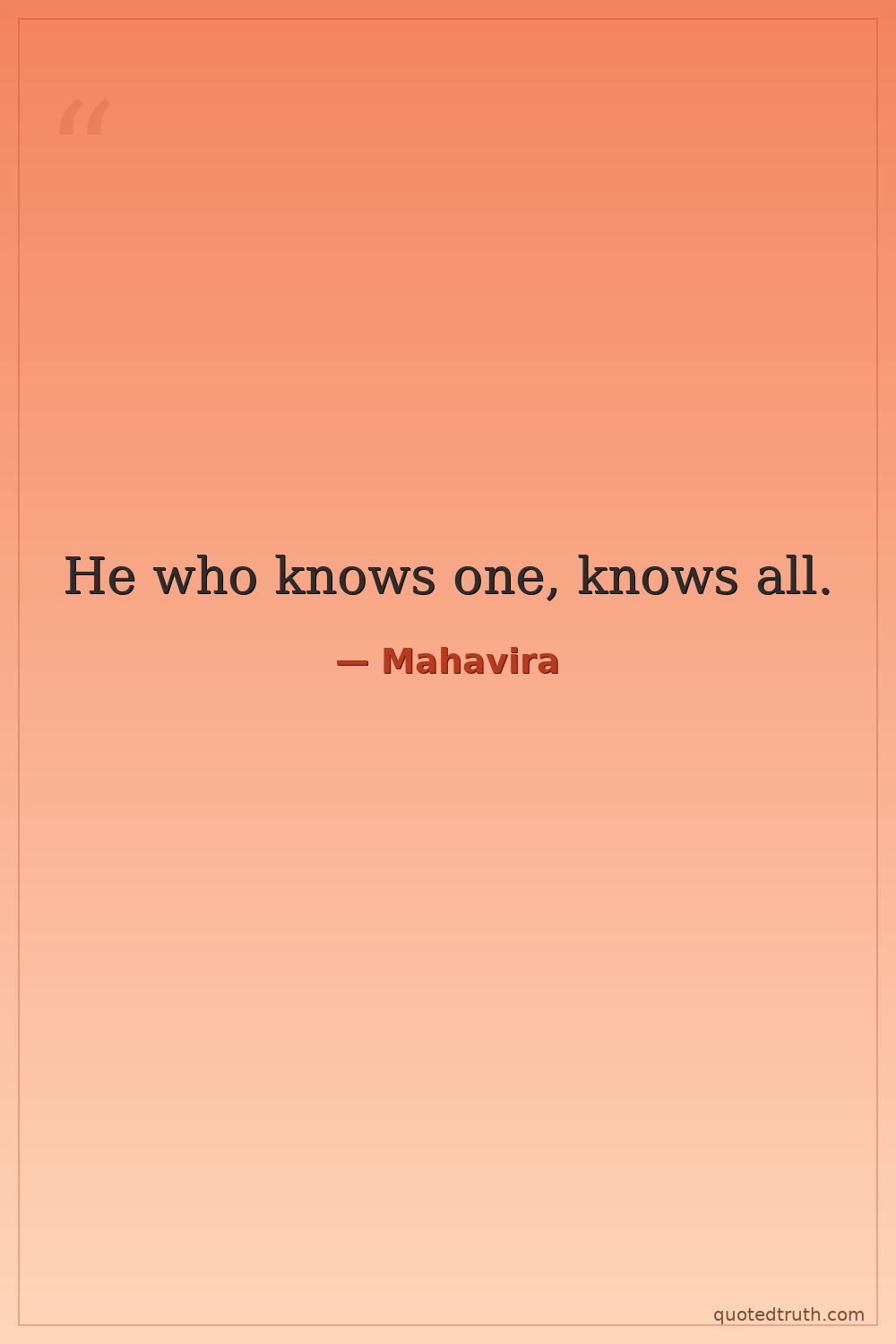
Mahavira — "He who knows one, knows all."
He who knows one, knows all.
He who knows one, knows all.
Click any product to generate a realistic preview. Up to 3 at a time.
* Initial load can take up to 90 seconds — revising the preview in another color is nearly instant.
"All men who are ignorant are miserable; all who are wise are happy."
"A man who is averse from harming even the wind knows the sorrow of all things living."
"The greatest wisdom is to know oneself."
"He who neglects the present moment, loses both future and past."
"The virtuous person is never afraid of death."
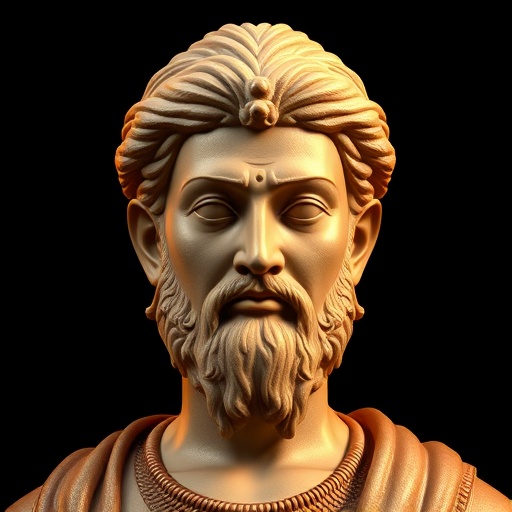
24th and last Tirthankara of Jainism, whose teachings of strict ahimsa (non-violence), aparigraha (non-attachment), and karma reshaped ancient Indian religion. Closely associated with The Buddha (near-contemporary moral revolutionary, also reacting against Vedic ritualism). For an intellectual contrast, see Vedic Brahmanical ritual sacrifice, the animal-sacrifice-centered Vedic religion of his era — Mahavira's ahimsa demanded total non-violence, including not eating root vegetables that kill the plant — a maximum-distance ethical move from the Vedic priestly tradition that ritually sacrificed cattle and horses. The two cleanest poles of ancient Indian religious ethics.
Found in 1 providers: grok
1 source checked
Understanding one thing deeply—one soul, one life, one truth—reveals the nature of everything. True knowledge isn't about accumulating facts but penetrating the essence of existence itself. Once you grasp the fundamental nature of reality or consciousness, universal understanding follows. Breadth of wisdom flows from depth, not scattered learning. Knowing yourself fully means knowing all selves, because the core of every being is the same.
Mahavira spent 12 years in silent ascetic meditation before attaining omniscience (kevala jnana). Jain philosophy centers on the jiva—the individual soul. Knowing one soul completely means knowing the nature of all souls, since every living being shares the same spiritual essence. His entire path of radical renunciation was built on this inward turn: master the self through direct inner knowledge, and you understand all of existence.
6th century BCE India saw the rise of the Shramana movement—wandering ascetics challenging Brahminical orthodoxy and Vedic priestly authority. This period, concurrent with the Buddha's ministry, involved fierce debate about the nature of the self and liberation. Brahmin priests monopolized sacred knowledge through ritual and scripture. Mahavira's declaration cut against that hierarchy: universal truth requires no caste, no ritual, no intermediary—only deep, disciplined self-inquiry.
AI-generated insights based on extensive research and information for context. Factual errors? Email [email protected].
Your cart is empty