Carl Linnaeus — "Homo sapiens, nosce te ipsum. (Man, know thyself.)"
Homo sapiens, nosce te ipsum. (Man, know thyself.)
Homo sapiens, nosce te ipsum. (Man, know thyself.)
Click any product to generate a realistic preview. Up to 3 at a time.
* Initial load can take up to 90 seconds — revising the preview in another color is nearly instant.
"The American is obstinate, contented, free. He paints himself with red lines and is regulated by custom."
"God created, Linnaeus arranged. It is astonishing how many new species are discovered every day."
"God created, Linnaeus organized."
"I have classified all plants and animals."
"When the spiritual light is concentrated in the brain, everything else must be sinking in the dark."
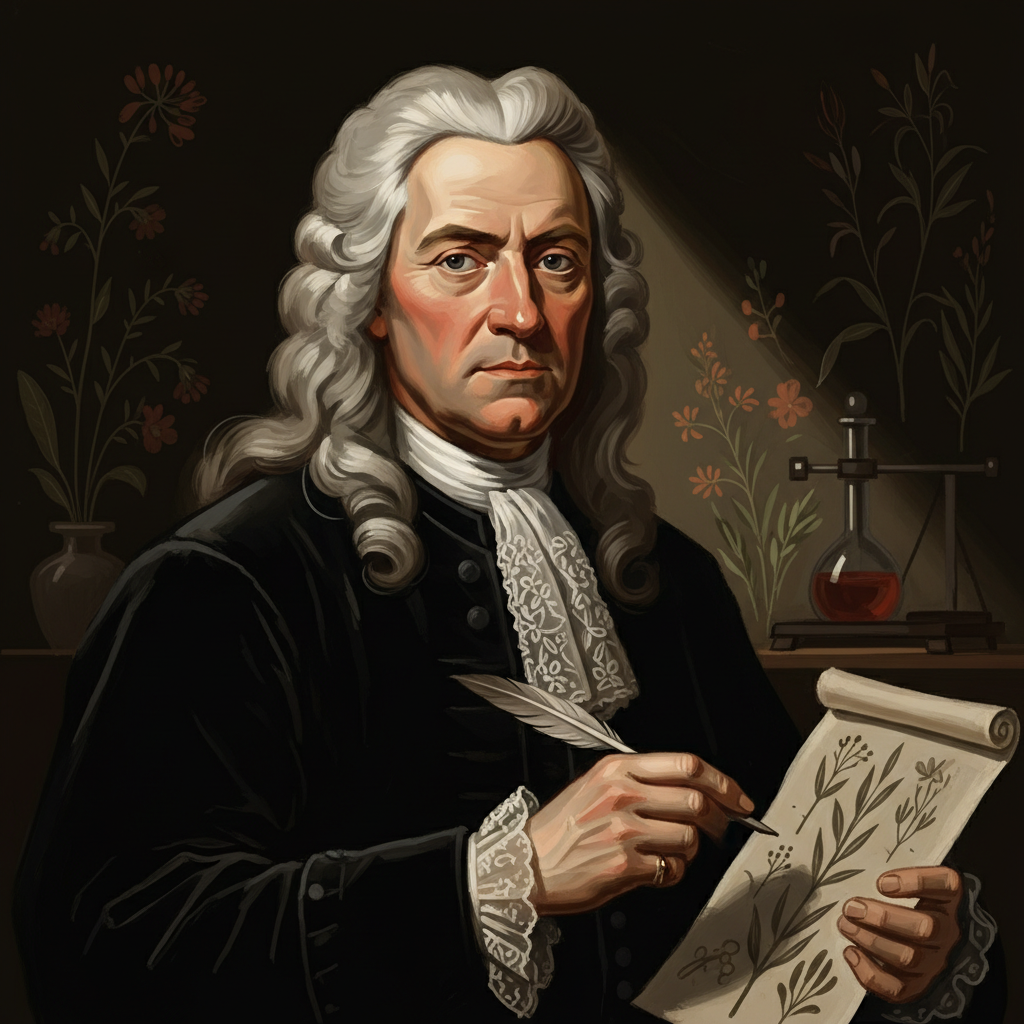
Swedish botanist and the father of modern taxonomy whose Systema Naturae (1735) introduced binomial nomenclature for naming all species. Closely associated with Joseph Banks (British naturalist who carried Linnaean classification on Cook's voyages). For an intellectual contrast, see Comte de Buffon, French naturalist and Histoire Naturelle author (1749-1788) — Buffon explicitly attacked Linnaean fixed-categories taxonomy as artificial and rejected the binomial system; his gradualist, environment-shaped natural history was the explicit alternative. Anticipates the fixed-species-vs-evolution debate Darwin would later resolve.
His classification of humans in 'Systema Naturae', placing them within the animal kingdom, was groundbreaking and controversial for its time.
Date: 1758
ShockingFound in 1 providers: grok
1 source checked
Knowledge of oneself—one's nature, limitations, and place in the world—is the foundation of true wisdom. By pairing his taxonomic name for humanity, Homo sapiens, with the ancient command know thyself, Linnaeus argues that intelligence alone isn't enough. Being human means having both the capacity and the obligation to examine ourselves honestly—to understand what kind of creature we are, where we fit in nature, and what limits that imposes on us.
Linnaeus spent decades cataloging every known organism, placing humans—controversially—within the animal kingdom and naming our species Homo sapiens, meaning wise man. That naming was deliberate and philosophical, not purely taxonomic. He was asserting that self-awareness defines humanity. After classifying all of nature, he turned the same analytical rigor inward. For Linnaeus, science and self-knowledge were inseparable: truly knowing what humans are, biologically, demanded honesty about our animal nature.
In 18th-century Europe, the Enlightenment elevated human reason while the Church still insisted humanity stood apart from and above the natural world. Linnaeus's placement of humans among the primates was scientifically radical and theologically provocative. Know thyself gained new urgency: if humans were just another species, self-knowledge required confronting our animal origins. The era's collision between empirical observation and religious authority made the question of human nature genuinely dangerous to answer honestly.
AI-generated insights based on extensive research and information for context. Factual errors? Email [email protected].
Your cart is empty