John Wesley — "I am a creature of a day, passing through life as an arrow through the air."
I am a creature of a day, passing through life as an arrow through the air.
I am a creature of a day, passing through life as an arrow through the air.
Click any product to generate a realistic preview. Up to 3 at a time.
* Initial load can take up to 90 seconds — revising the preview in another color is nearly instant.
"I have not lost a day since I was born."
"I have been as much as possible upon the stretch for 70 years, and I bless God, I am not tired yet."
"Women's preaching is flatly contrary to the Bible."
"God grant that we may all make a good end!"
"The greatest enemy to human happiness is the love of money."
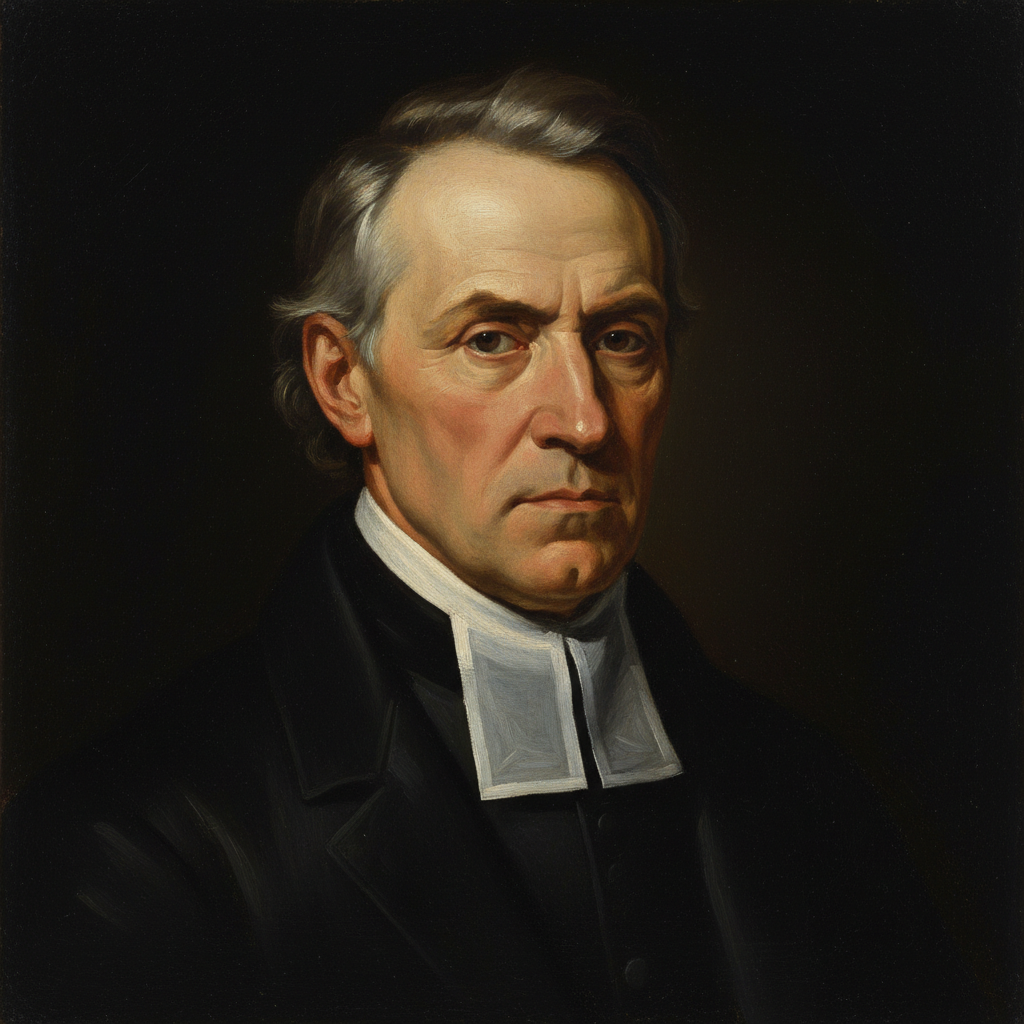
English Anglican cleric and founder of Methodism, whose open-air preaching and class-meeting structure created the largest 18th-century evangelical revival. Closely associated with Charles Wesley (his hymn-writing brother) and George Whitefield (early co-revivalist, later doctrinal opponent). For an intellectual contrast, see George Whitefield, Calvinist evangelical revivalist — Whitefield's predestinarian Calvinism vs Wesley's free-grace Arminian theology split the early Methodist movement permanently in the 1739-41 break. The founding evangelical Calvinist-Arminian schism — the two parallel evangelical traditions American Christianity descends from.
Found in 2 providers: deepseek,grok
2 sources checked
Life is fleeting and brief — we are temporary beings moving through existence with speed and purpose, here only for a moment before we are gone. The metaphor captures how little control we have over time's passage, urging us to use our short span intentionally rather than drifting aimlessly through the days we are given.
Wesley lived this conviction relentlessly — he rode 250,000 miles on horseback, preached 40,000 sermons, and woke at 4am daily until his death at 87. His entire Methodist movement was built on urgency: salvation matters now, holiness matters now. This quote reflects his driving belief that wasted time was a spiritual failure.
18th-century England offered no guaranteed lifespan — disease, poverty, and war cut lives short constantly. Wesley preached to miners and mill workers who knew brutal brevity firsthand. The Enlightenment was questioning religious certainty, yet Wesley's response was action and discipline, not despair, making this meditation on transience a call to purposeful living rather than existential resignation.
AI-generated insights based on extensive research and information for context. Factual errors? Email [email protected].
Your cart is empty