What it means
An honest confession of competitive ambition mixed with gracious acceptance. The speaker admits privately expecting to be the one who cracked a monumental scientific puzzle, and while genuinely impressed by the winning discovery, a quiet part of him still wished the credit had landed with him. It captures the very human gap between publicly applauding a rival's breakthrough and privately mourning the glory that slipped away.
Relevance to Linus Pauling
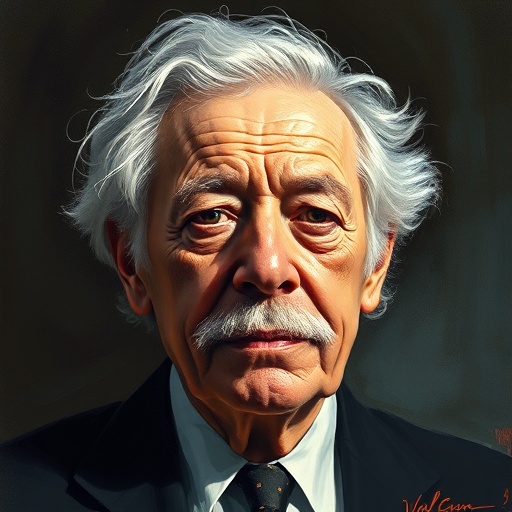
Pauling came agonizingly close to solving DNA's structure. In early 1953 he published a triple-helix model that proved wrong — a rare catastrophic error for a man whose chemical bond theory had already made him a Nobel laureate. His expertise in protein structure made him the consensus favorite to crack DNA. This admission reveals the depth of his self-awareness: the same relentless competitive drive that made him great also made the near-miss a source of lasting private regret.
The era
The early 1950s were the height of the molecular biology race, turbocharged by Cold War scientific nationalism and the promise that whoever decoded life's blueprint would reshape medicine forever. Watson, Crick, Franklin, and Wilkins were all converging on the answer simultaneously. Pauling — America's most decorated chemist — was the presumed frontrunner. When Watson and Crick published the double helix in April 1953, it instantly rewrote scientific history, transforming Pauling's near-miss into one of the most analyzed almosts in modern science.
AI-generated insights based on extensive research and information for context. Factual errors? Email [email protected].