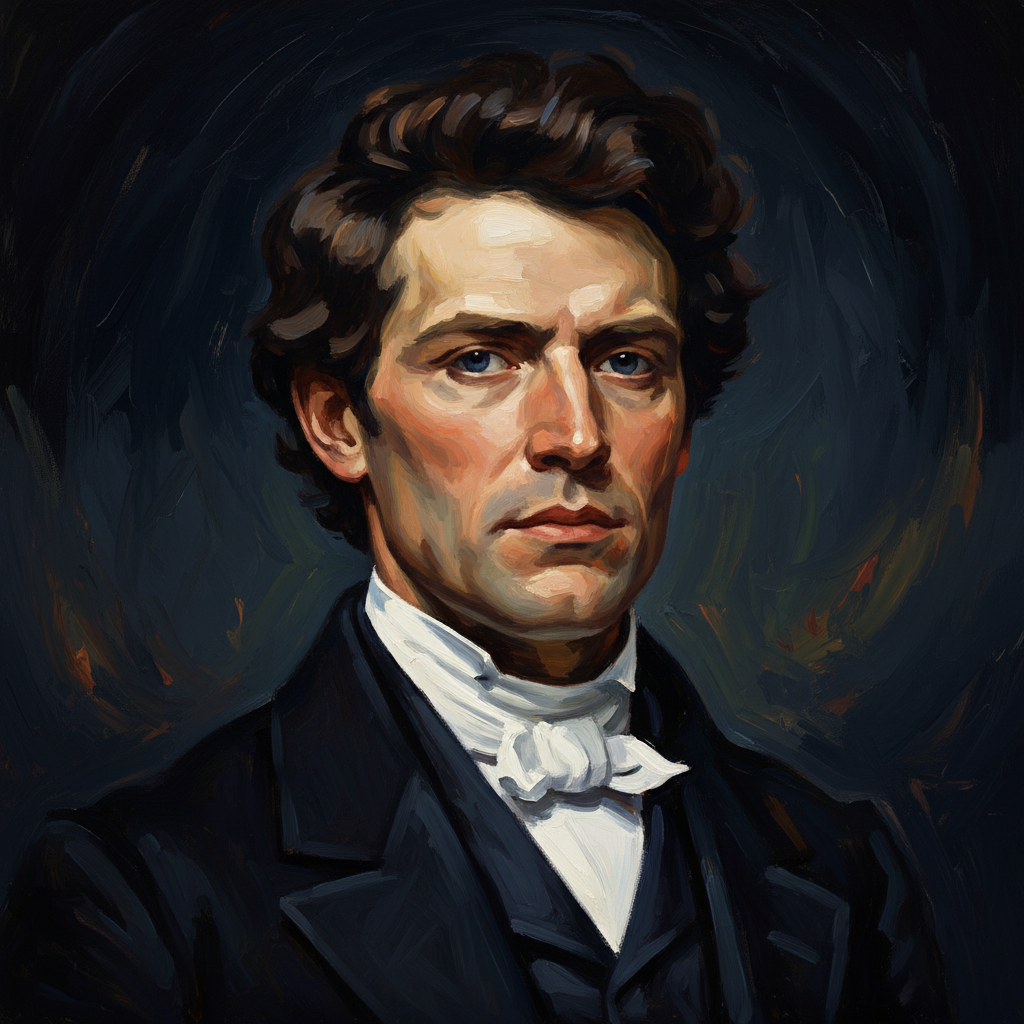
Joseph Smith — "I have done more than any man living to destroy the power of the devil."
I have done more than any man living to destroy the power of the devil.
I have done more than any man living to destroy the power of the devil.
Click any product to generate a realistic preview. Up to 3 at a time.
* Initial load can take up to 90 seconds — revising the preview in another color is nearly instant.
"I have the keys of the kingdom of God on the earth."
"It is our divine destiny to be heirs of eternal life, to become 'priests and kings . . . [and] gods, even the sons of God . . . [and to] dwell in the presence of God . . . forever and ever.'"
"I was answered that I must join none of them [the religious sects of the day], for they were all wrong; and the Personage who addressed me said that all their creeds were an abomination in his sight; …"
"I defy all the world to produce a greater work than the Book of Mormon."
"Come on! ye prosecutors! ye false swearers! All hell, boil over! Ye burning mountains, roll down your lava! for I will come out on the top at last. I have more to boast of than ever any man had. I am …"
Found in 1 providers: grok
1 source checked
Joseph Smith is asserting supreme spiritual effectiveness—claiming he has accomplished more than any living person to reduce the devil's influence on humanity. He believed founding the restored Church of Jesus Christ, performing saving ordinances, translating scripture, and organizing priesthood authority collectively dismantled Satan's grip on souls. The statement is a bold declaration of prophetic mission: that his specific religious work carries unique, unprecedented power against evil.
Smith founded the LDS Church in 1830, translated the Book of Mormon, and revealed dozens of canonized texts. He instituted temple ordinances—including baptism for the dead—which he taught broke Satan's hold on departed souls. His belief in restored priesthood authority meant he could perform binding spiritual acts no Protestant minister could. This sweeping claim mirrors his pattern of framing his prophetic role as uniquely transformative in cosmic spiritual history.
The 1830s–1840s saw America's Second Great Awakening—competing revivals, charismatic preachers, and new denominations all claiming spiritual authority. Religious ferment was intense; figures like Charles Finney drew thousands. Smith made this statement around 1844 in Nauvoo, Illinois, as Mormonism peaked in ambition and controversy. Amid political persecution, plural marriage debates, and mounting threats that would lead to his assassination, he portrayed himself as history's most consequential spiritual warrior.
AI-generated insights based on extensive research and information for context. Factual errors? Email [email protected].
Your cart is empty