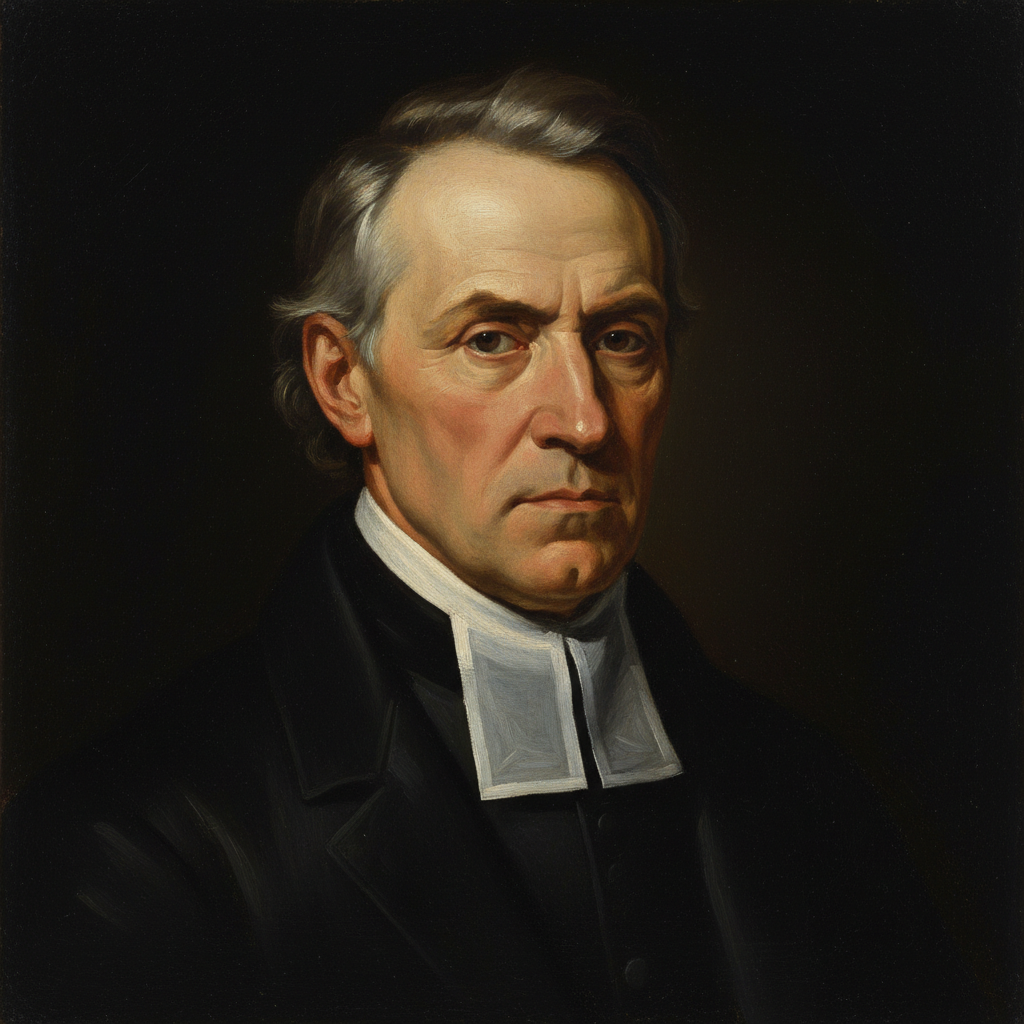
John Wesley — "I have often thought, that if I were to choose a profession, it should be that o…"
I have often thought, that if I were to choose a profession, it should be that of a physician.
I have often thought, that if I were to choose a profession, it should be that of a physician.
Click any product to generate a realistic preview. Up to 3 at a time.
* Initial load can take up to 90 seconds — revising the preview in another color is nearly instant.
"I have often thought, that if I were to choose a text to preach from, it should be 'God is love.'"
"I have not time to be busy."
"I have often thought that the greatest comfort in life, is to have a friend."
"I am a debtor to all the world, to do all the good I can, in every place, to every soul."
"My hair is much whiter than it was a year ago; but my eyes are not much dimmer, nor my natural strength much abated."
English Anglican cleric and founder of Methodism, whose open-air preaching and class-meeting structure created the largest 18th-century evangelical revival. Closely associated with Charles Wesley (his hymn-writing brother) and George Whitefield (early co-revivalist, later doctrinal opponent). For an intellectual contrast, see George Whitefield, Calvinist evangelical revivalist — Whitefield's predestinarian Calvinism vs Wesley's free-grace Arminian theology split the early Methodist movement permanently in the 1739-41 break. The founding evangelical Calvinist-Arminian schism — the two parallel evangelical traditions American Christianity descends from.
Found in 1 providers: grok
1 source checked
If given a free choice of career, the speaker would pick medicine above all others. The statement reveals a deep admiration for healing as a vocation — not merely as technical craft but as direct, practical service to suffering people. It positions medicine as the most meaningful work a person could do, combining intellectual rigor with immediate human impact and compassion in a way few other professions can match.
Wesley actually practiced folk medicine throughout his ministry, publishing 'Primitive Physick' in 1747 as a cheap medical guide for the poor who couldn't afford doctors. He ran free clinics and dispensed remedies to his Methodist societies. His drive to heal bodies mirrored his drive to save souls — both rooted in methodical care for the poor and marginalized. Medicine and ministry were, for him, twin expressions of the same Christian duty.
In 18th-century Britain, formal medicine was expensive and largely inaccessible to the working poor. Physicians served the wealthy; the laboring classes relied on apothecaries, folk remedies, and clergy. Wesley's era also saw early Enlightenment optimism about empirical science improving human welfare. Choosing medicine as an ideal profession reflected both genuine humanitarian concern and the growing cultural prestige of systematic, evidence-based approaches to natural philosophy and healing.
AI-generated insights based on extensive research and information for context. Factual errors? Email [email protected].
Your cart is empty