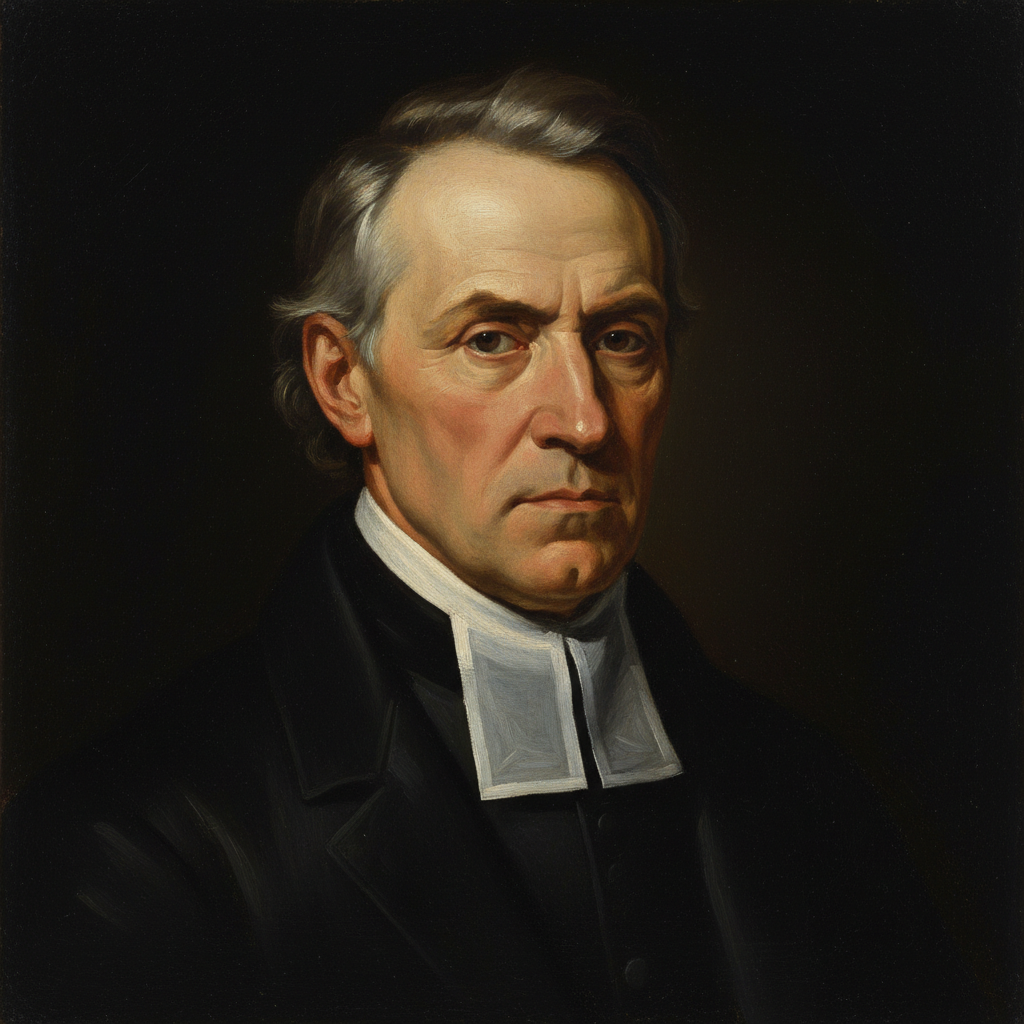
John Wesley — "I have often thought that the greatest comfort in life, is to have a friend."
I have often thought that the greatest comfort in life, is to have a friend.
I have often thought that the greatest comfort in life, is to have a friend.
Click any product to generate a realistic preview. Up to 3 at a time.
* Initial load can take up to 90 seconds — revising the preview in another color is nearly instant.
"I have often thought that the difference between the Church of England and the Dissenters is not so great as some imagine."
"I am not afraid of giving too much, but of giving too little."
"Beware you be not swallowed up in books! An ounce of love is worth a pound of knowledge."
"Give me one hundred men who fear nothing but God, hate nothing but sin, and are determined to know nothing among men but Jesus Christ, and I will shake the gates of hell."
"Beware of judging men by their outward appearance, but judge them by their fruits."
English Anglican cleric and founder of Methodism, whose open-air preaching and class-meeting structure created the largest 18th-century evangelical revival. Closely associated with Charles Wesley (his hymn-writing brother) and George Whitefield (early co-revivalist, later doctrinal opponent). For an intellectual contrast, see George Whitefield, Calvinist evangelical revivalist — Whitefield's predestinarian Calvinism vs Wesley's free-grace Arminian theology split the early Methodist movement permanently in the 1739-41 break. The founding evangelical Calvinist-Arminian schism — the two parallel evangelical traditions American Christianity descends from.
Found in 1 providers: grok
1 source checked
Having a true friend is life's greatest source of comfort and peace. Not wealth, status, or achievement, but genuine human connection matters most. A real friend offers understanding, support, and presence during hardship and joy alike. This reflects a universal truth: belonging and being known deeply by another person provides a sense of security and meaning that nothing else can fully replace.
Wesley spent decades traveling on horseback across Britain, preaching to thousands yet often isolated from intimate companionship. He founded Methodist societies partly as intentional communities of mutual support. His troubled marriage to Mary Vazeille was famously unhappy, making friendship all the more precious to him. His close brotherhood with George Whitefield and brother Charles Wesley shaped his entire ministry and theological development.
In 18th-century Britain, social bonds outside family and parish were fragile. Industrialization was uprooting communities, urban poverty was rising, and traditional support networks weakened. Wesley's Methodist movement deliberately countered this isolation through class meetings and bands — small accountability groups. His emphasis on friendship reflected Enlightenment ideals of emotional sincerity while responding to real loneliness spreading through a rapidly changing English society.
AI-generated insights based on extensive research and information for context. Factual errors? Email [email protected].
Your cart is empty