John Wesley — "I was much disgusted at the way in which the people sing here. They bawl as loud…"

I was much disgusted at the way in which the people sing here. They bawl as loud as they can, but it is without any taste or judgment. They have no notion of singing in tune, or time, or harmony; but only of making a great noise, which is still more disagreeable because it is generally a dull, heavy, stupid sound.
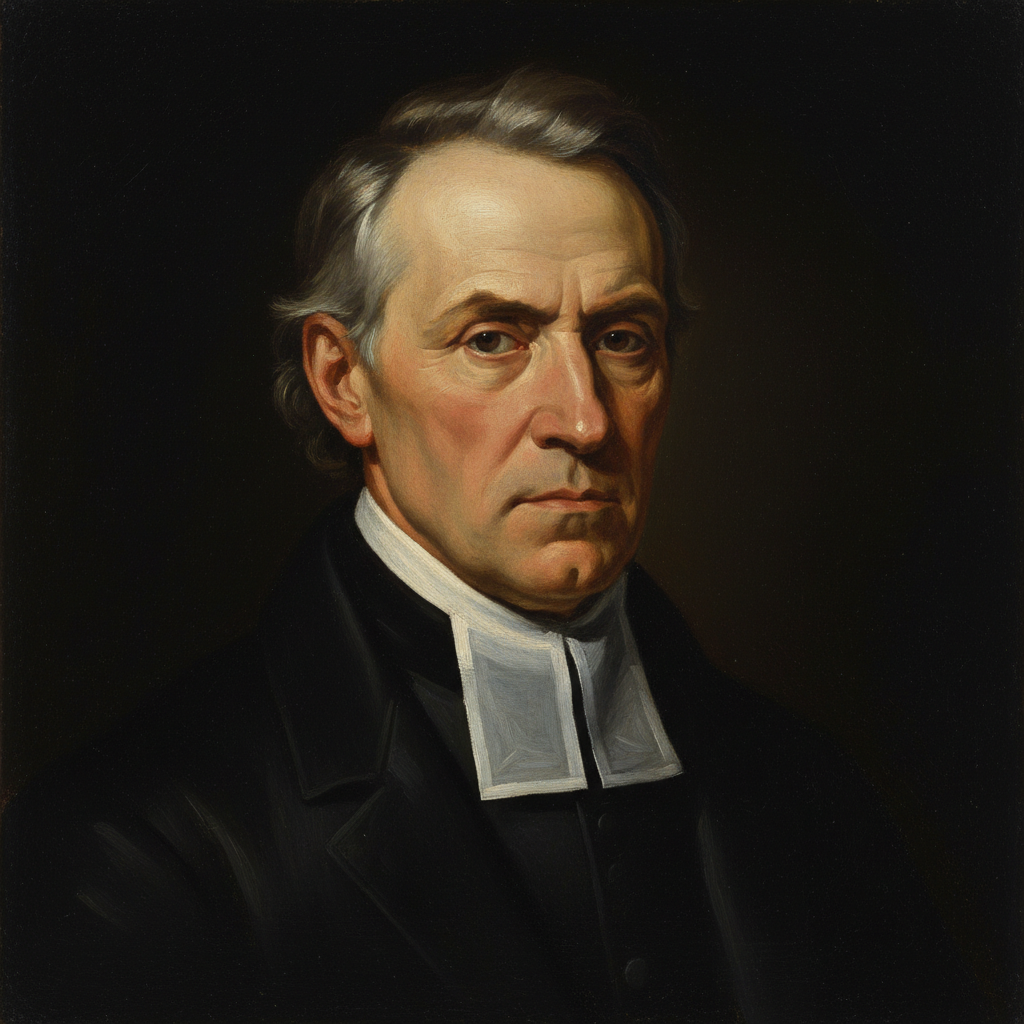
John Wesley — John Wesley Early Modern · Founder of Methodism

Get This Quote & Author's Image Illustrated On:

Click any product to generate a realistic preview. Up to 3 at a time.
* Initial load can take up to 90 seconds — revising the preview in another color is nearly instant.

Kitchen

Apparel

Other

About John Wesley (1703-1791)

English Anglican cleric and founder of Methodism, whose open-air preaching and class-meeting structure created the largest 18th-century evangelical revival. Closely associated with Charles Wesley (his hymn-writing brother) and George Whitefield (early co-revivalist, later doctrinal opponent). For an intellectual contrast, see George Whitefield, Calvinist evangelical revivalist — Whitefield's predestinarian Calvinism vs Wesley's free-grace Arminian theology split the early Methodist movement permanently in the 1739-41 break. The founding evangelical Calvinist-Arminian schism — the two parallel evangelical traditions American Christianity descends from.

Details

Journal entry describing singing in a church

Date: 1738

Self-Deprecating

Verification

Unverifiable

Found in 1 providers: grok

1 source checked

Understanding this quote

What it means

The speaker condemns congregational singing that prioritizes sheer volume over musicality, complaining that worshippers shout without pitch accuracy, rhythm, or harmony. The result is an unpleasant, dull roar rather than meaningful praise. True worship, the speaker implies, requires aesthetic discipline and musical competence, not just enthusiastic noise-making.

Relevance to John Wesley

Wesley was a meticulous organizer who believed orderly worship reflected theological seriousness. He compiled hymnbooks with his brother Charles, whose thousands of hymns were central to Methodist identity. Wesley insisted congregations learn to sing properly, viewing musical discipline as inseparable from genuine devotion—making this critique entirely consistent with his lifelong effort to reform church practice.

The era

Eighteenth-century Protestant worship was fractured between stiff Anglican formality and raw Dissenter enthusiasm. Methodist revivals attracted working-class crowds unschooled in choral tradition, creating chaotic congregational singing. Wesley deliberately introduced structured hymnody as a counter to both Anglican coldness and undisciplined enthusiasm, believing ordered, beautiful music could move hearts toward God without sacrificing reverence.

AI-generated insights based on extensive research and information for context. Factual errors? Email [email protected].
Your Cart

Your cart is empty