Martin Luther — "I would rather be a sow than a Christian if I had to believe that God is as crue…"
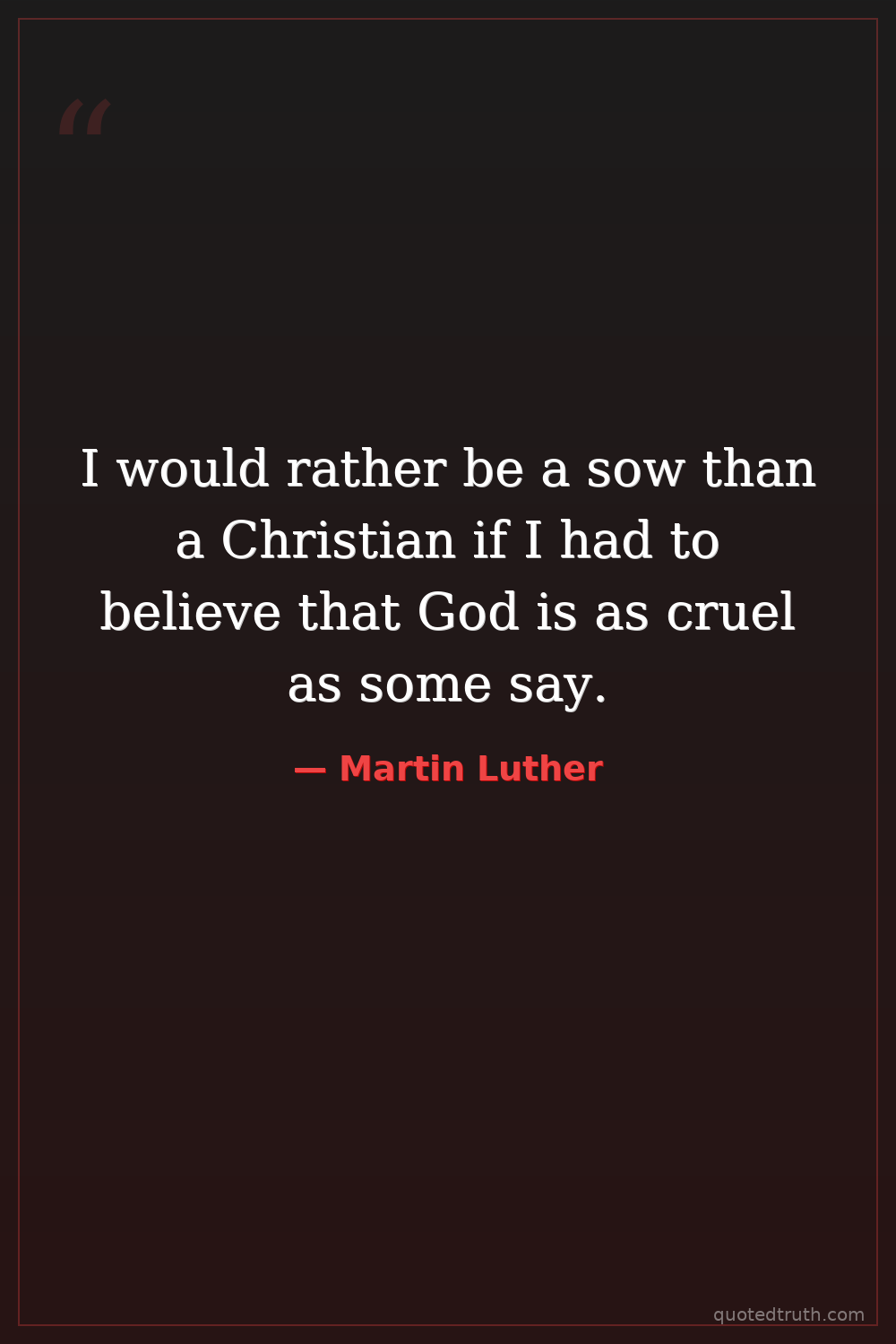
I would rather be a sow than a Christian if I had to believe that God is as cruel as some say.
I would rather be a sow than a Christian if I had to believe that God is as cruel as some say.
Click any product to generate a realistic preview. Up to 3 at a time.
* Initial load can take up to 90 seconds — revising the preview in another color is nearly instant.
"The greatest blessing of God is a virtuous and pious wife, who fears God and loves her husband."
"I never learned to pray as I ought until I had been scourged by the devil."
"He who does not love wine, women, and song remains a fool his whole life long."
"Mankind has a free will; but it is free to milk cows and to build houses, nothing more."
"I would have all Christians educated enough to be able to read the Bible. It is not for priests alone, but for all."
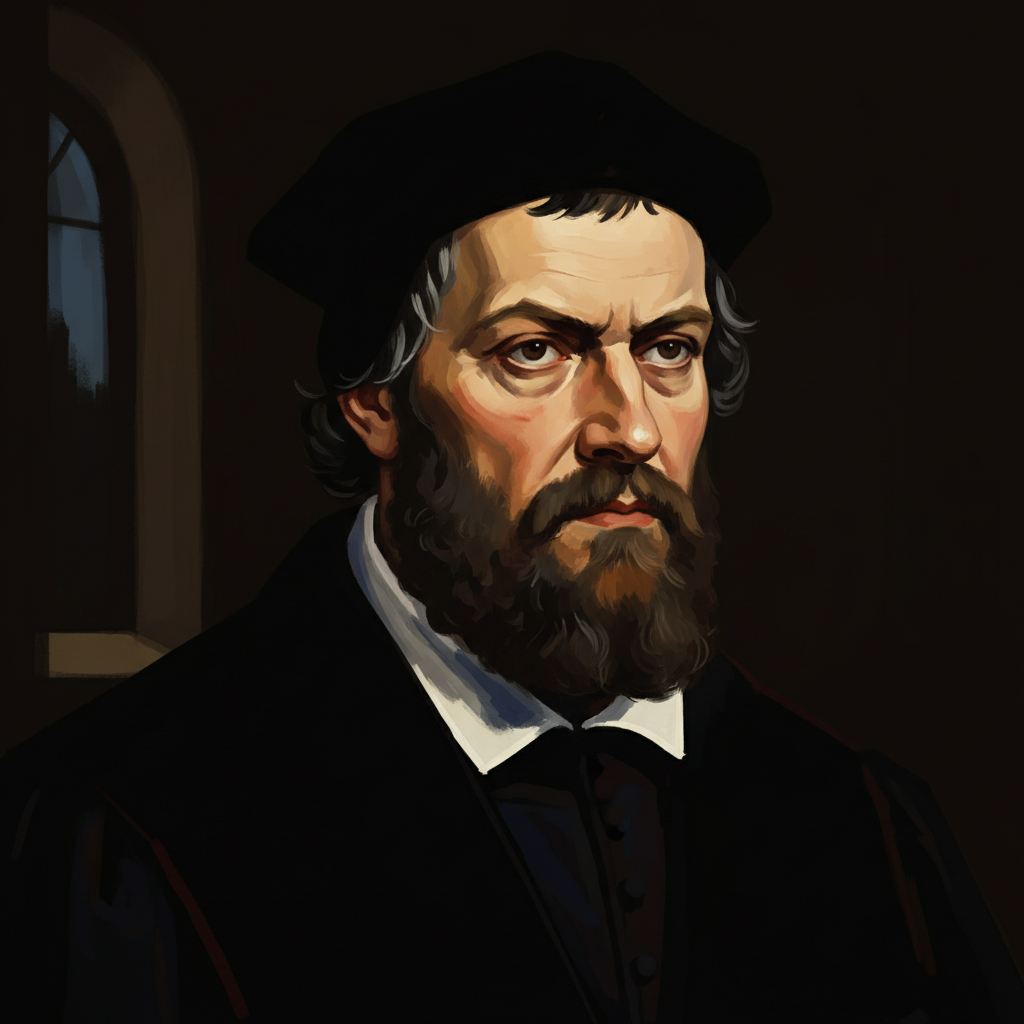
German theologian whose 95 Theses (1517) launched the Protestant Reformation and broke the Catholic Church's monopoly on Western Christianity. Closely associated with Philipp Melanchthon (Lutheran systematizer) and John Calvin (later Reformer who built on Luther's break). For an intellectual contrast, see Pope Leo X, Renaissance pope (1513-1521) — Leo X's indulgence sales triggered Luther's break and Leo excommunicated him in 1521 — Luther's entire Reformation is structured as a direct answer to the indulgence-funded Vatican Leo represented.
Found in 1 providers: deepseek
1 source checked
Luther is rejecting a harsh, tyrannical image of God. He says that if God were truly as merciless as certain preachers claim, existence as a mindless farm animal would be preferable to being a Christian bound to worship such a being. The statement defends a view of God as loving and just, and attacks theology that portrays the divine as arbitrarily cruel, vengeful, or willing to damn people without reason or mercy.
Luther, an Augustinian monk turned reformer, agonized for years over fear of a wrathful God before concluding salvation comes by grace through faith, not human merit. This quote captures his pastoral streak: he hammered preachers who terrorized congregations with images of a sadistic deity. It echoes his own breakthrough reading of Romans, where he rediscovered a God whose righteousness saves rather than crushes, reshaping his entire theology and preaching style.
In early-modern Europe, late-medieval Catholic preaching often emphasized hellfire, purgatory, and indulgences, leaving laypeople terrified of damnation. The printing press spread lurid sermons and woodcuts of torment widely. Luther launched the Reformation in 1517 partly to confront this climate, arguing ordinary believers were being spiritually abused by a system profiting from fear. His pushback against a cruel God-image was directly tied to the indulgence controversy and the broader religious upheaval of sixteenth-century Germany.
AI-generated insights based on extensive research and information for context. Factual errors? Email [email protected].
Your cart is empty