What it means
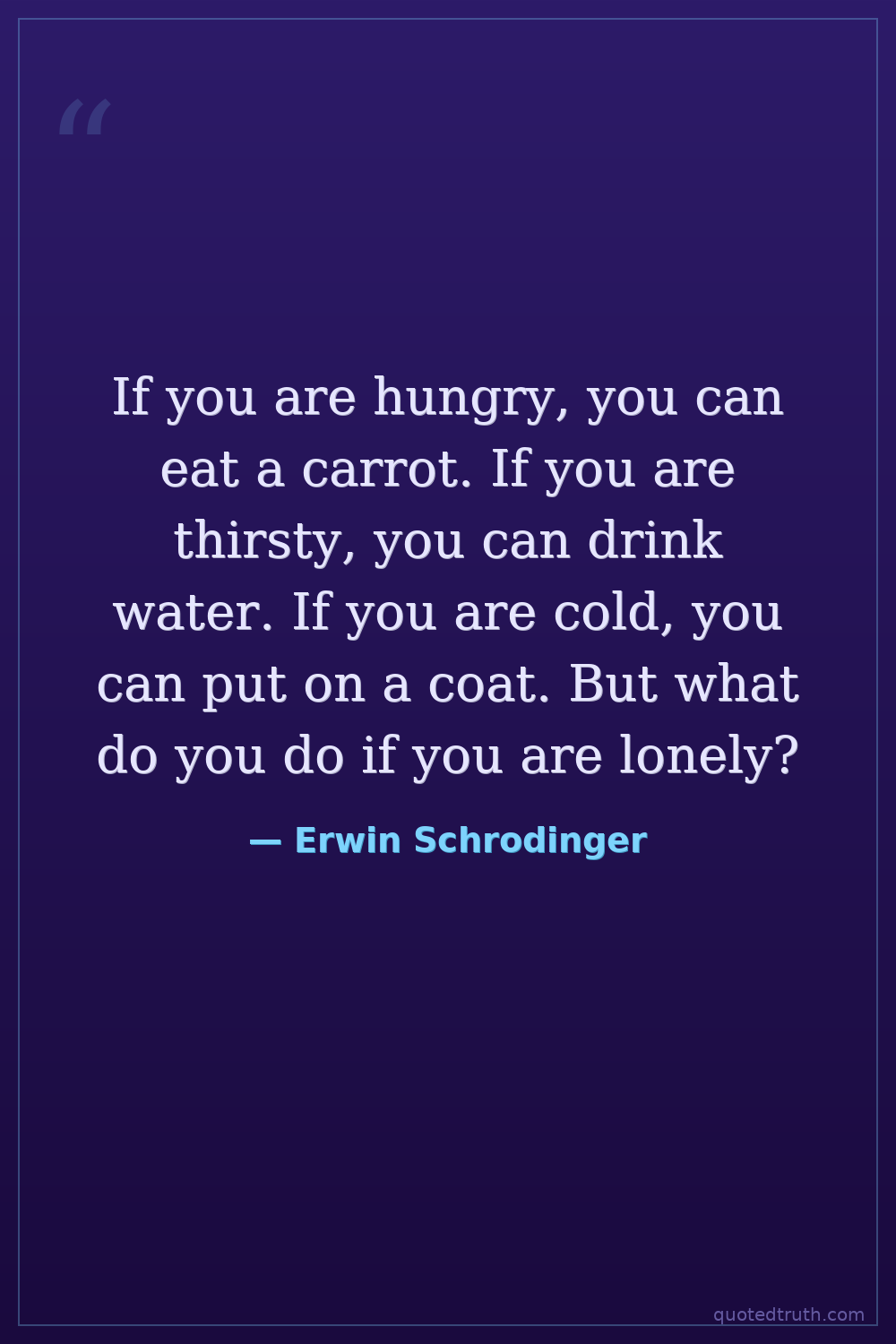
Basic physical needs have straightforward solutions — food, water, warmth. But loneliness is a different category of human suffering entirely. No simple remedy exists for it. The question exposes a gap between material and emotional existence, suggesting that connection and belonging resist the same transactional logic we apply to bodily needs. It highlights loneliness as perhaps the most intractable human condition.
Relevance to Erwin Schrodinger
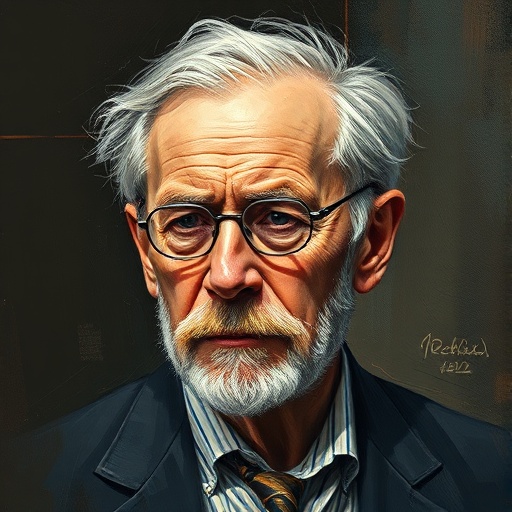
Schrödinger was a brilliant physicist who spent much of his life displaced — fleeing Nazi Austria, living in exile in Ireland at the Dublin Institute for Advanced Studies. His famous thought experiment about a cat captures isolation's paradox. His philosophical writings, especially 'What Is Life?' and 'Mind and Matter,' reveal someone preoccupied with consciousness, identity, and the inner life beyond physics.
The era
Schrödinger worked through the 1930s–50s — years of world wars, mass displacement, and the collapse of European intellectual communities. Scientists, artists, and Jews scattered across continents. The question of loneliness was existentially live: entire civilizations had been atomized. Simultaneously, quantum mechanics was dissolving classical certainties, making questions about inner experience newly urgent and scientifically respectable.
AI-generated insights based on extensive research and information for context. Factual errors? Email [email protected].