What it means
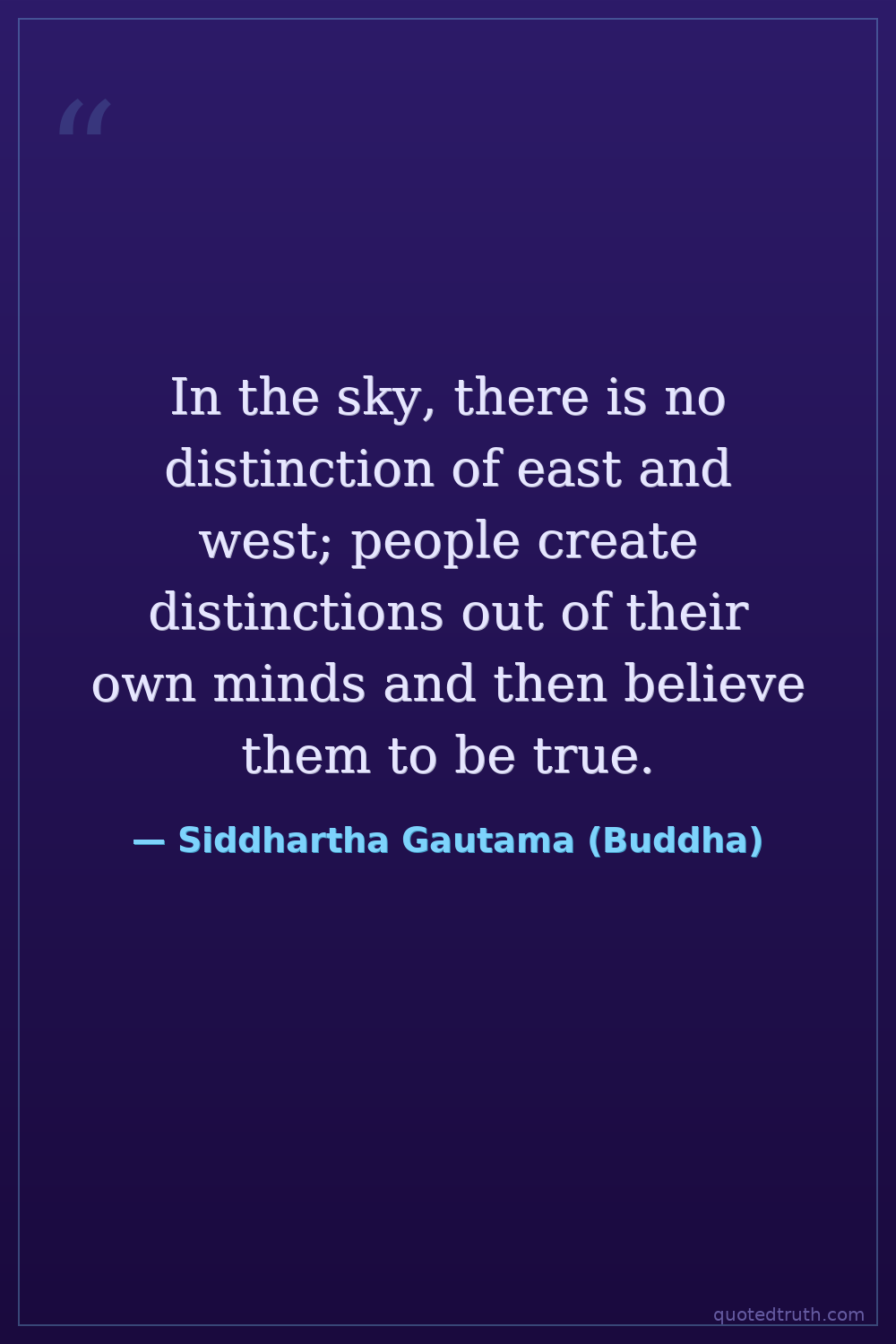
The sky itself has no inherent directions—east and west are labels humans project onto open space. In the same way, many of the categories we treat as real—good and bad, self and other, success and failure—are mental constructs we invent and then mistake for objective truth. Once a distinction feels solid, we react to it as if it were a fact about the world rather than a line drawn by our own thinking.
Relevance to Siddhartha Gautama (Buddha)
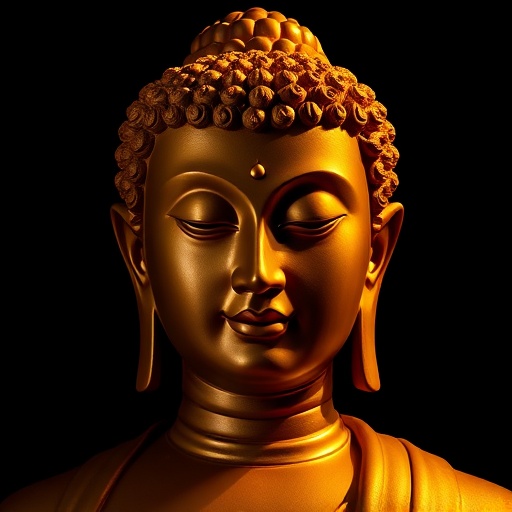
The Buddha built his teaching around exactly this insight. After leaving his palace and sitting beneath the Bodhi tree, he concluded that suffering arises from clinging to mental constructs—self, permanence, craving—that have no fixed reality. His doctrines of anatta (no-self) and sunyata (emptiness) argue that the divisions we perceive are cognitive, not inherent. Teaching wanderers across the Ganges plain for forty-five years, he urged disciples to examine the mind that draws the lines.
The era
In 5th-century BCE northern India, the rigid varna caste system and Vedic ritual hierarchy treated social divisions—brahmin versus outcaste, pure versus impure—as cosmic law. The Buddha preached during the Sramana movement, when wandering ascetics openly challenged these inherited categories. By pointing to a sky without directions, he undercut the brahminical worldview and offered a radical egalitarian alternative: the boundaries oppressing people were human-made, not divinely fixed, and therefore could be dissolved through insight.
AI-generated insights based on extensive research and information for context. Factual errors? Email [email protected].