What it means
Something expected to drop and fail instead soared, hit the ceiling, and drifted down slowly. The surprise isn't just that it flew — it's that flight exceeded every assumption the observer held. The moment captures how real discovery works: you predict one outcome, reality contradicts it completely, and that gap between expectation and event becomes the thing you spend the rest of your life chasing.
Relevance to Wright Brothers (Orville & Wilbur)
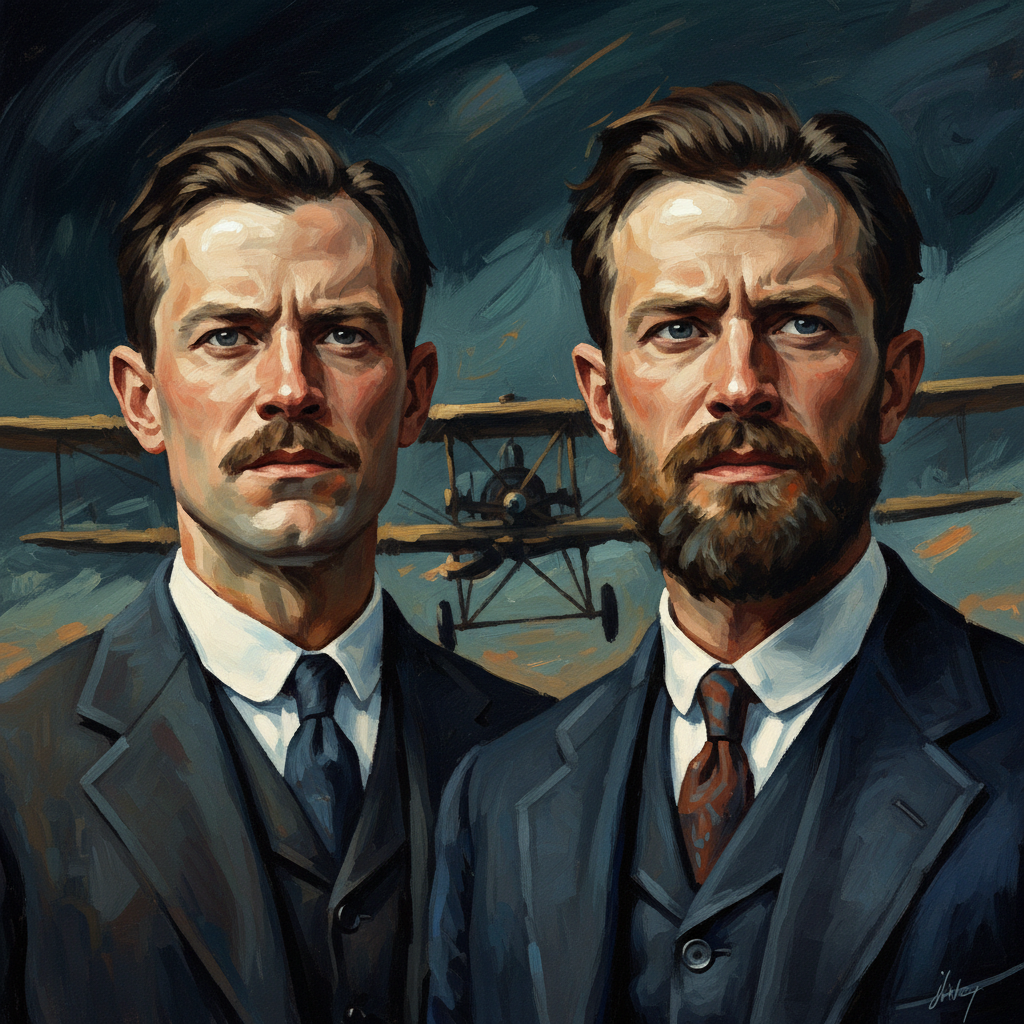
This describes the rubber-band-powered toy helicopter their father gave them around 1878 — Orville was seven, Wilbur eleven. That small balsa-and-cork model is the documented origin of their obsession with flight. Their phrasing 'as we expected' reveals their scientific instinct even as children: they had a hypothesis, the toy falsified it, and they never forgot. Decades later, that ceiling-striking flutter became Kitty Hawk.
The era
In 1878, heavier-than-air powered flight was considered physically impossible by most engineers and scientists. Otto Lilienthal's glider experiments were still a decade away. Steam dominated locomotion; the telephone had just been patented. The idea that humans could build machines that flew was fringe speculation. A toy defying gravity in a living room carried genuine wonder — there was no cultural framework yet to make it feel ordinary.
AI-generated insights based on extensive research and information for context. Factual errors? Email [email protected].