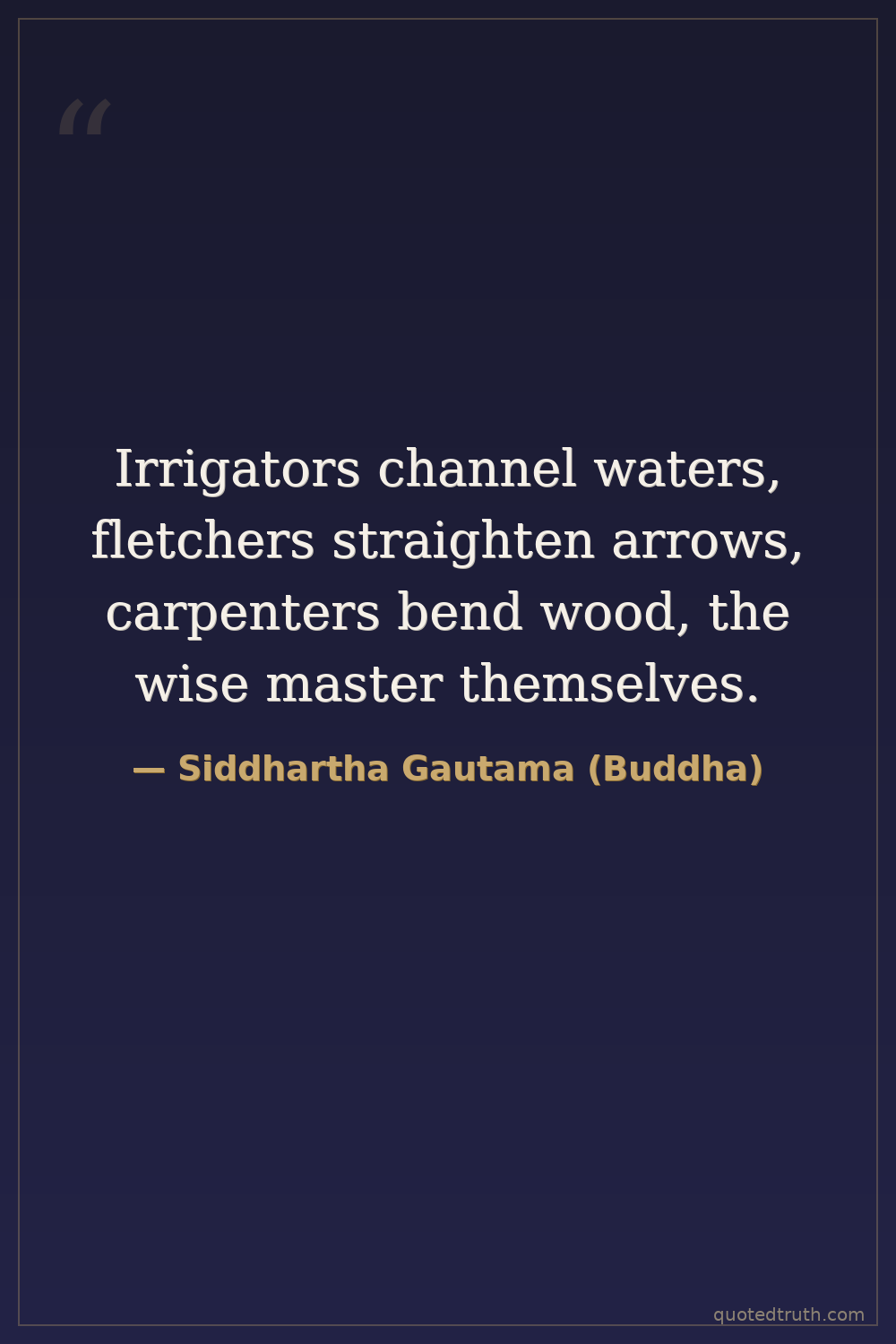
Siddhartha Gautama (Buddha) — "Irrigators channel waters, fletchers straighten arrows, carpenters bend wood, th…"
Irrigators channel waters, fletchers straighten arrows, carpenters bend wood, the wise master themselves.
Irrigators channel waters, fletchers straighten arrows, carpenters bend wood, the wise master themselves.
Click any product to generate a realistic preview. Up to 3 at a time.
* Initial load can take up to 90 seconds — revising the preview in another color is nearly instant.
"The wise ones who are intent on meditation, who delight in the peace of renunciation, such mindful ones, perfect in right understanding, cast off the net of Māra."
"Ardently do today what must be done. Who knows? Tomorrow, death comes."
"Should you find a wise critic to point out your faults, follow him as you would a guide to hidden treasure."
"There are only two mistakes one can make along the road to truth; not going all the way, and not starting."
"Even as a tree, though cut down, sprouts again if its roots are undamaged and strong, so also, if the roots of craving are not destroyed, suffering ever springs up again and again."
From the Dhammapada (Verse 145), a teaching on self-mastery
Date: c. 5th-6th Century BCE
PhilosophicalFound in 1 providers: gemini
1 source checked
Just as skilled workers shape their materials through disciplined effort, wise people shape themselves. Farmers direct water where they need it, arrow-makers force crooked shafts into straight lines, and carpenters force rigid wood into curved forms. All three involve deliberate work against a material's natural tendency. The wise apply that same patient craftsmanship inward, training their own impulses, thoughts, and reactions rather than being passively carried by them.
Buddha taught that suffering stems from untrained minds chasing craving and aversion. His Eightfold Path prescribed mental discipline—right effort, mindfulness, and concentration—as craft-like practices. Having abandoned princely luxury at Kapilavastu to pursue awakening through meditation, he knew self-mastery firsthand. His framing of liberation as skill rather than divine grace matches this verse from the Dhammapada, where spiritual progress is a trade learned through repetition, not a gift received.
In 5th-century BCE northern India, the Ganges plain was urbanizing, and Vedic Brahminism dominated religious life through priestly ritual and caste-bound sacrifice. Shramana movements—wandering ascetics including Jains, Ajivikas, and Buddhists—rejected hereditary authority and argued that anyone, regardless of birth, could achieve liberation through personal effort. Comparing wisdom to the trades of irrigators, fletchers, and carpenters was radical: it placed spiritual mastery alongside the skilled labor of common workers rather than reserving it for Brahmin elites.
AI-generated insights based on extensive research and information for context. Factual errors? Email [email protected].
Your cart is empty