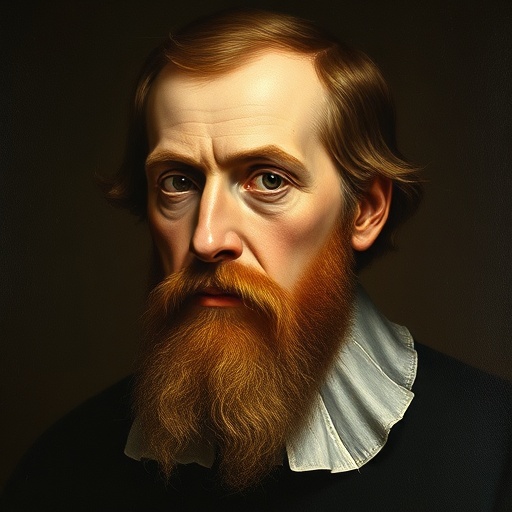
John Calvin — "Our salvation is assured, not by our own works, but by the election of God."
Our salvation is assured, not by our own works, but by the election of God.
Our salvation is assured, not by our own works, but by the election of God.
Click any product to generate a realistic preview. Up to 3 at a time.
* Initial load can take up to 90 seconds — revising the preview in another color is nearly instant.
"The fear of the Lord is the beginning of wisdom."
"But if we are elected in Christ, we cannot find in ourselves the reason of our election; neither can we, by any means, comprehend it in our own understanding."
"The whole life of a Christian should be a meditation on death."
"The will of God is the supreme rule of righteousness."
"We are saved by grace alone, through faith alone, in Christ alone."
French theologian whose Institutes of the Christian Religion (1536) systematized Protestant Reformed doctrine, including predestination. Closely associated with Martin Luther (Reformation founder, Calvin's predecessor). For an intellectual contrast, see Jacobus Arminius, Dutch Reformed theologian (1560-1609) — Arminius's rejection of strict double-predestination founded Arminianism — the theological tradition modern Methodism, most evangelicalism, and Pentecostalism descend from. The Calvinist-Arminian debate has divided Protestantism for 400 years.
Found in 1 providers: grok
1 source checked
Human beings cannot earn salvation through good deeds, moral behavior, or religious rituals. Instead, salvation is entirely a gift from God's sovereign choice — predestination — fixed before a person is even born. No individual holds power over their eternal fate. This eliminates both pride rooted in self-righteousness and paralyzing anxiety over whether one has done enough. Assurance comes solely from trusting in God's unchangeable, gracious decision.
Calvin built his entire theological system — Calvinism — on predestination, the belief that God sovereignly elects who is saved before birth. His landmark work, Institutes of the Christian Religion, codified this as a central pillar of Reformed Christianity. Having escaped Catholic persecution in France and governed Geneva as a near-theocracy, Calvin saw human will as totally corrupted. His rejection of works-based salvation directly challenged Catholic doctrine and fueled bitter disputes across Europe.
The 16th-century Protestant Reformation centered on the explosive question of how a person is saved. Catholic doctrine taught that faith plus merit-earning works secured salvation; the Church sold indulgences as literal certificates of forgiveness. Calvin's Geneva rose as a competing power center where Reformed theology replaced Roman authority. The Council of Trent (1545–1563) formally condemned predestinarianism, cementing the split. In this climate, asserting God's sovereign election over human works was a radical, politically dangerous declaration.
AI-generated insights based on extensive research and information for context. Factual errors? Email [email protected].
Your cart is empty