What it means
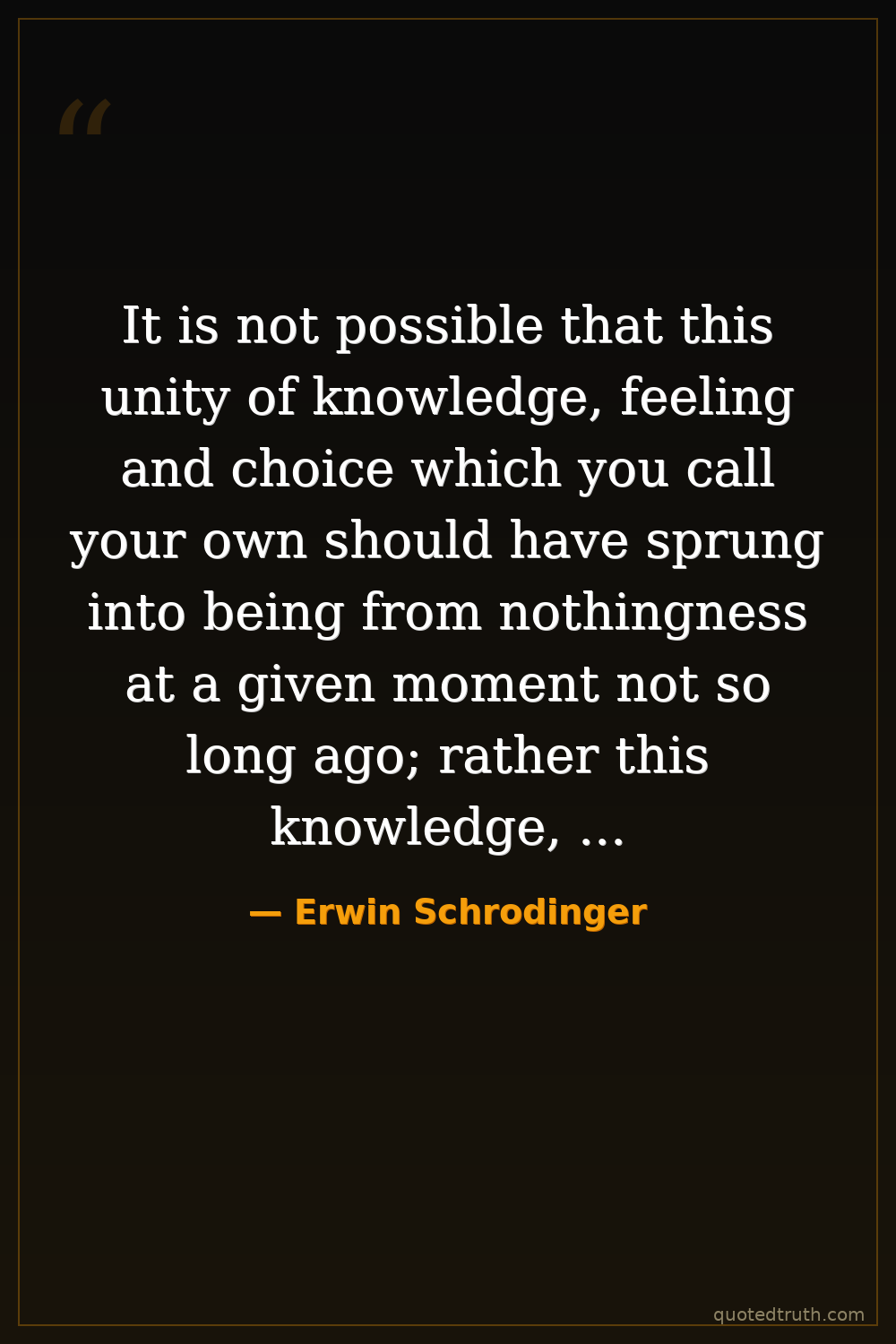
Your consciousness — your thoughts, emotions, and will — did not appear from nowhere when you were born. These qualities are eternal and fundamentally shared across all conscious beings. Individual awareness is not a separate, isolated event but part of one continuous, timeless whole. What feels uniquely yours is actually the same consciousness expressed through many forms.
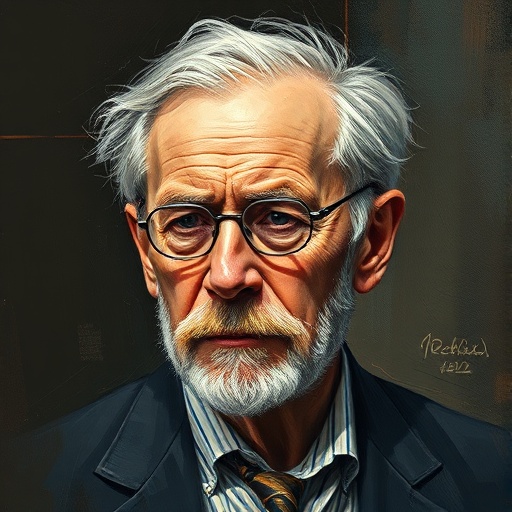
Relevance to Erwin Schrodinger
Schrödinger, architect of wave mechanics and quantum theory, was deeply influenced by Vedantic philosophy and the concept of unified consciousness. His 1944 book 'What is Life?' and later writings explored mind and matter together. He believed physics alone couldn't explain consciousness, and personally studied Hindu Upanishads, finding their monist view of mind scientifically compelling.
The era
Schrödinger wrote during the quantum revolution of the early-to-mid 20th century, when physics shattered classical determinism. As scientists dismantled the mechanistic worldview, questions about consciousness and reality resurfaced urgently. Eastern philosophy gained Western intellectual attention, and thinkers like Schrödinger, Bohr, and Heisenberg wrestled publicly with what quantum indeterminacy implied about the nature of the observer and mind.
AI-generated insights based on extensive research and information for context. Factual errors? Email [email protected].