What it means
Two people argue intensely, defending opposite views. After a long back-and-forth, they realize they've completely swapped sides without reaching agreement. Each is now passionately arguing what the other believed at the start. It captures how debate can shift perspectives so thoroughly that positions flip, yet consensus still escapes them. The humor lies in recognizing that heated disagreement can be productive even when it doesn't produce a winner, because both sides genuinely absorbed the other's reasoning.
Relevance to Wright Brothers (Orville & Wilbur)
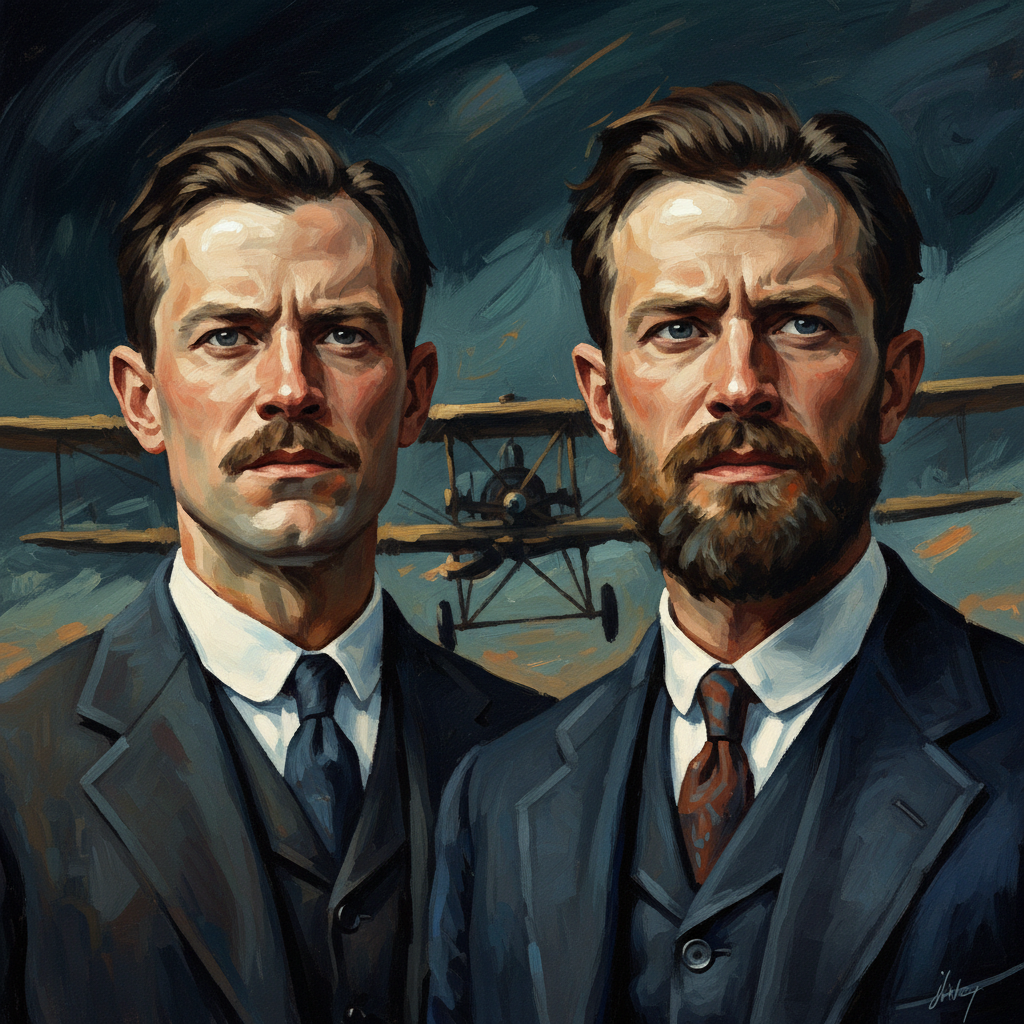
Orville and Wilbur were famous for relentless, sharp-tongued debates while designing their flyer in the Dayton bicycle shop. They deliberately argued opposing sides to stress-test every idea, from wing warping to propeller shape. Neither brother had formal engineering training, so rigorous verbal sparring replaced textbooks. This quote captures their working method: truth emerged through collision of viewpoints, not deference. Their willingness to abandon cherished positions mid-argument is precisely what let them solve flight when trained engineers failed.
The era
At the turn of the twentieth century, aeronautics was dominated by well-funded figures like Samuel Langley who relied on hierarchy and expert consensus. The Wrights worked alone in Ohio during an era of rapid industrial invention, when tinkerers and self-taught mechanics were reshaping transportation. Scientific method was becoming the gold standard, but most inventors still trusted intuition. The brothers' peer-based, argumentative approach mirrored emerging pragmatist philosophy (James, Dewey) that valued experimentation and revisable beliefs over fixed authority.
AI-generated insights based on extensive research and information for context. Factual errors? Email [email protected].